Having gone through something of the history of the Southwark Mint and its somewhat trepidatious old workhouse, I wondered if I might find anything of the spot today.
There are still several old workhouse buildings around but I knew that this one had long since vanished. What started off this whole escapade was this old photo below.
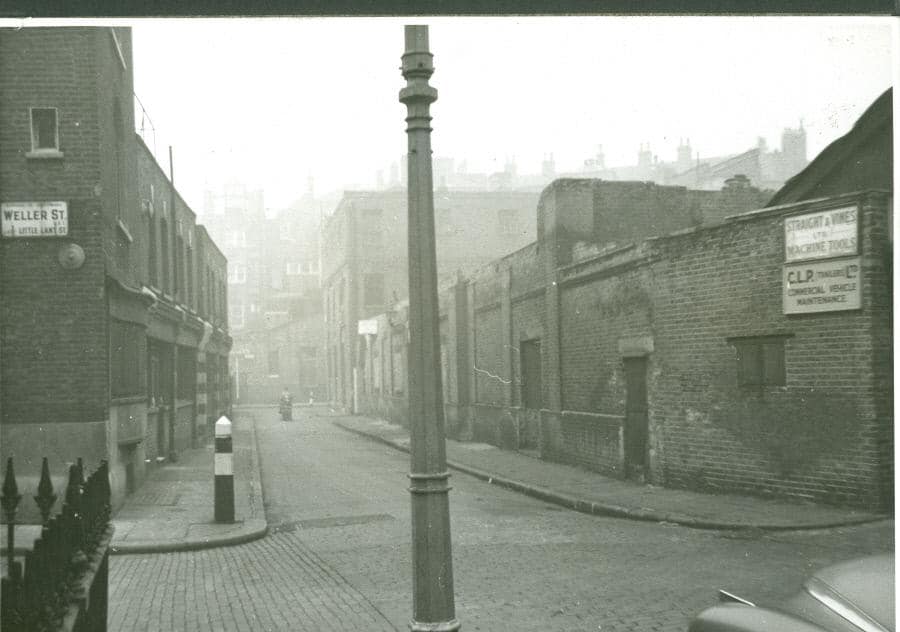
According to a heritage site, this was the location of the workhouse shortly after WW2. As mentioned in the previous post, the workhouse itself closed in the 1920’s and afterwards was converted into something of a storage area for Southwark Council.
However I read that though the site had been entirely re-developed, there is just a small stretch of wall left from the original workhouse.
What first struck me about the photo was how distinctive the building on the left was, specifically the tiny window.
What more normal people might have done would be to look at the street name below the window. That doesn’t always help as this street changed its name in the 20th century however in this case it does. The street used to be called Little Lant Street but then was renamed Weller Street, after Sam Weller in The Pickwick Papers.
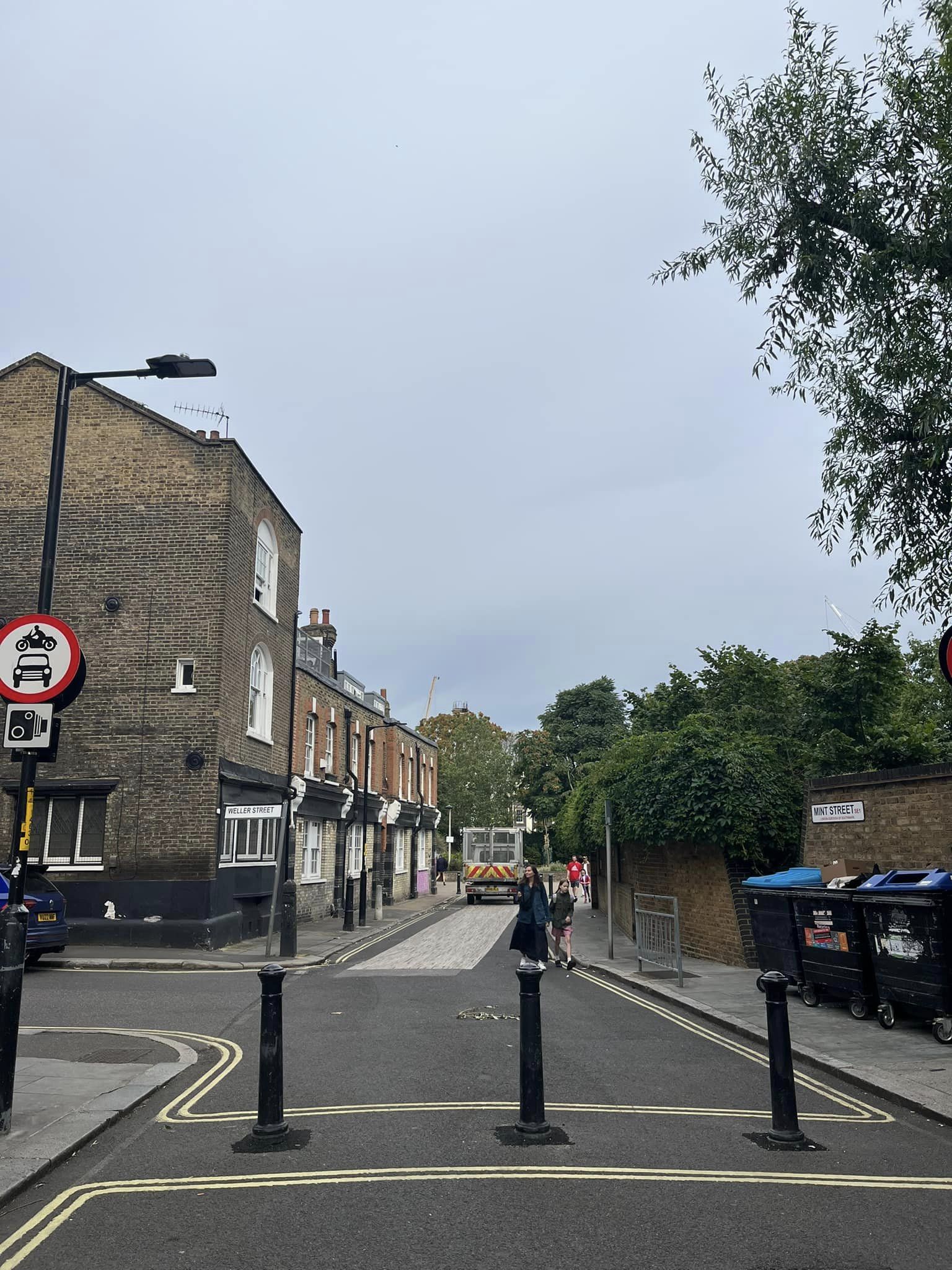
Before a tour last week, I headed off to see the sights. It should be said I had/have a chest infection and am on steroids and antibiotics and I knew I still have a 5 mile walk and talk ahead of me but in the one hour before meeting my tourists, I still walked 2 miles around and about the neighbourhood despite never being more than around 5 minutes walk from the starting point at the tube station.
It’s not just Charles Dickens who learned every street of London off by heart!
As you can see from the photo above that I took, the first building is clearly the same one as in the 1950 photo. Even in London, there are a limit on buildings of a certain age, having weird small windows that just happen to match centuries old road junctions.
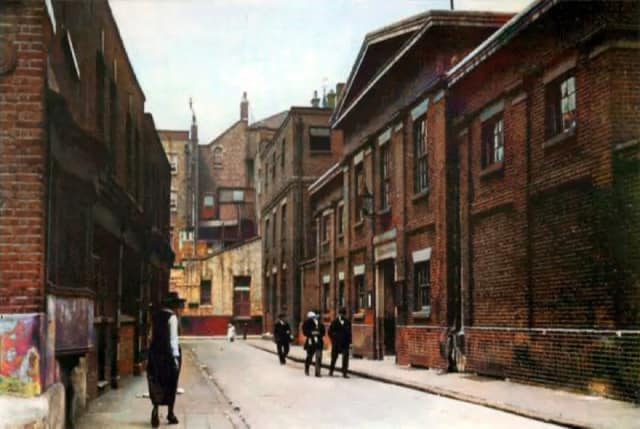
This is a colourised photo of the view back in 1907, obviously considerably modernised compared to a century or two earlier with pavements and proper roads.
It’s hard to believe one can stand exactly on the same spot where a photographer stood so long ago, where Charles Dickens himself would have regularly walked by and look upon buildings that Oliver Twist would have known.
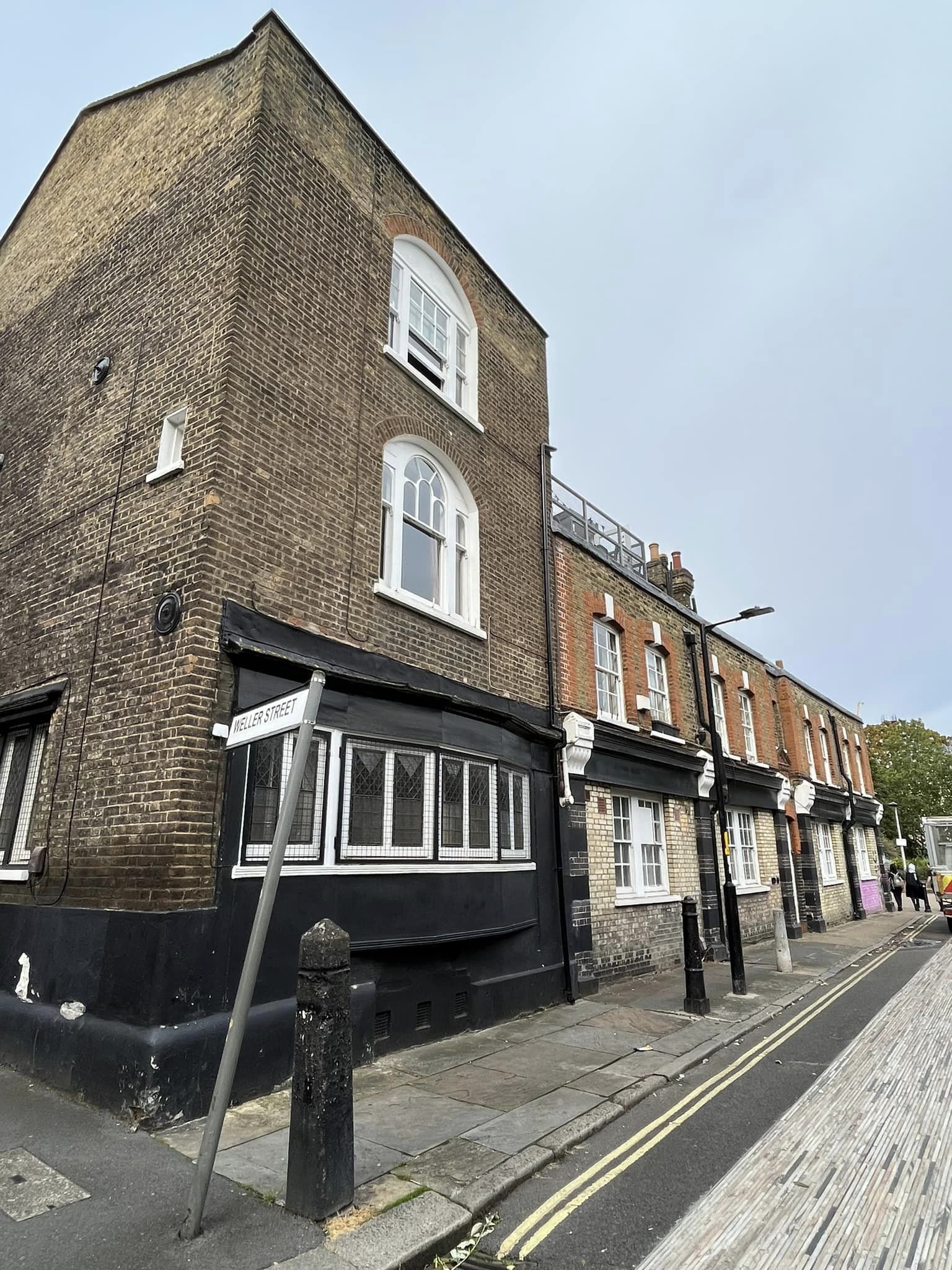
This photo I took shows the row of smaller houses, one time shops and later a missionary (now homes) were also in the old photos. You can see the white stones above the bedroom windows match up with those on the old photo.
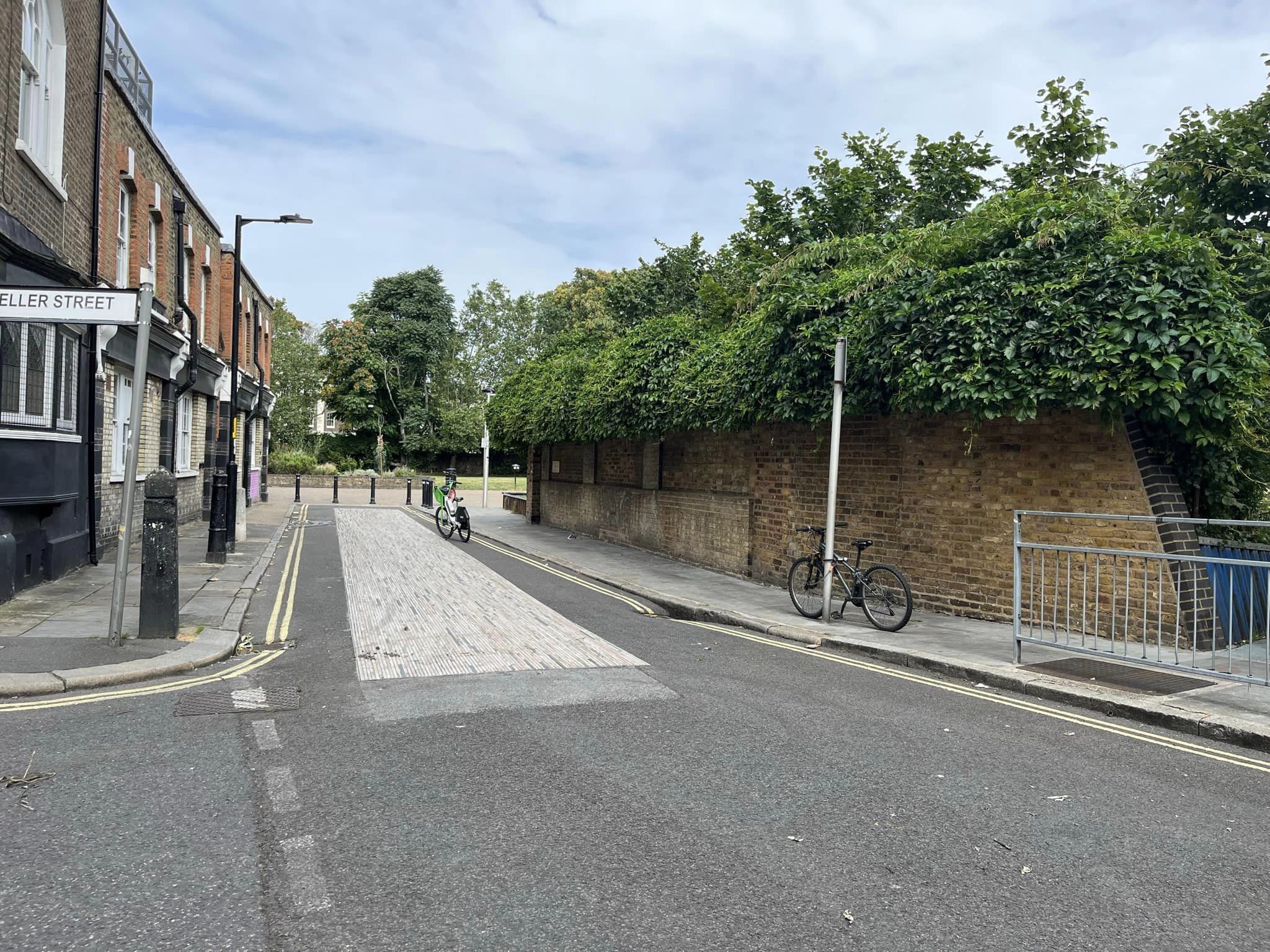
So there we have it, that little stretch of lower wall left of the parked bicycle is all that remains above ground of the old workhouse on Mint Street.
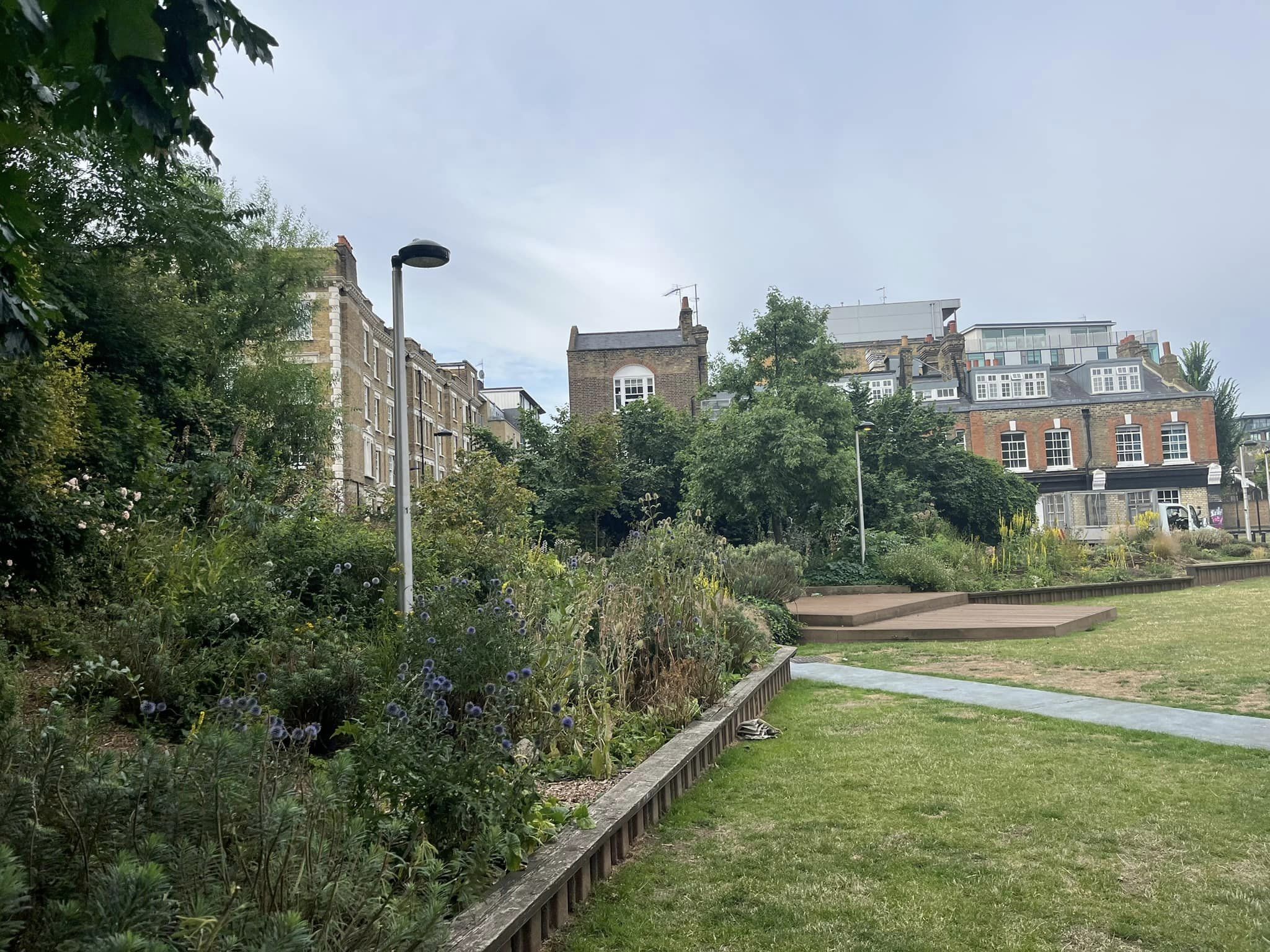
And where the Workhouse once stood where so many had lived, suffered and died is now a relatively new park which has even more recently been renovated.
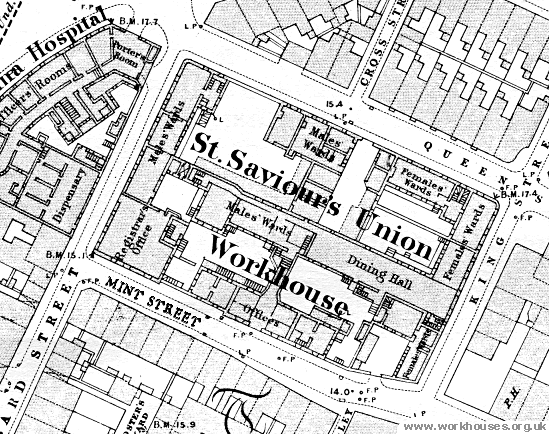
When I got home I found a more detailed plan of the workhouse itself and realised when I took the photo in the park I was actually standing in the Dining Hall which seemed most apt given my quest.
I had satisfied my curiosity over whether I could visit the spot where Oliver Twist had asked for more and not only become even more familiar with the streets and alleys but also been diverted on even more wild historical goose-chases.
London is like that though, always something to see. Always a reason the way something is or was, you just have to know it or at least deduce it. Lucky for my tourists they have the best guide in London and one who write their own history books rather than badly memorises poor scripts by others who also have never done any real research.
As my Charles Dickens tourists said after being suitably wowed… please sir, can I have some more? Lucky for them my private Charles Dickens Walking Tour was just getting started.
I hope you’ve enjoyed this little jaunt through 500 years or so of history of just part of a small street in London.

 Stephen Liddell
A lot is made these days of travelling to fancy places that are far away and can only be reached through expensive travel and hotel arrangements. I suppose a part of it involves saying that I can, so I do. I often think about the many places in our neighbourhoods that we ignore as being worthless, that have their own tales and stories, and we rarely stop to think about them. Only a few like you do.
LikeLiked by 1 person
Yes I agree. A large majority of people in the U.K. certainly only have a slight appreciation or understanding of what’s on their own doorstep. I also get people on tours who book a particular tour just because they’ve been told that they must visit a place but really they have no interest in seeing the Roman Baths or Stonehenge and just did so because they were told to. Especially these days with worries about pollution and global warming and incessant heatwaves and flooding, why not enjoy places closer to home. I’d definitely like to visit India, Ethiopia, Iran, Uzbekistan, South Africa and Peru one day but I still have one seen the highlife of the U.K. and not even all of them! There is a lot to be said for travelling and meeting new cultures etc but if you really want to know about yourself, you’d probably do well to explore home too. Even though I’m currently walking a Marathon every 2 to 3 days, after every tour I still don’t go home directly but wander to a more distant Tube station just to explore nooks and crannies and connect a little with the streets and the people who lived and died here through the millennia.
LikeLike