It used to be said that the streets are London are paved with gold. This was in reference to how for centuries London has been a place where not just the rich and powerful live and work but how the city attracts people from across the country and indeed the world in the hope that they too will one day be rich and living the good life.
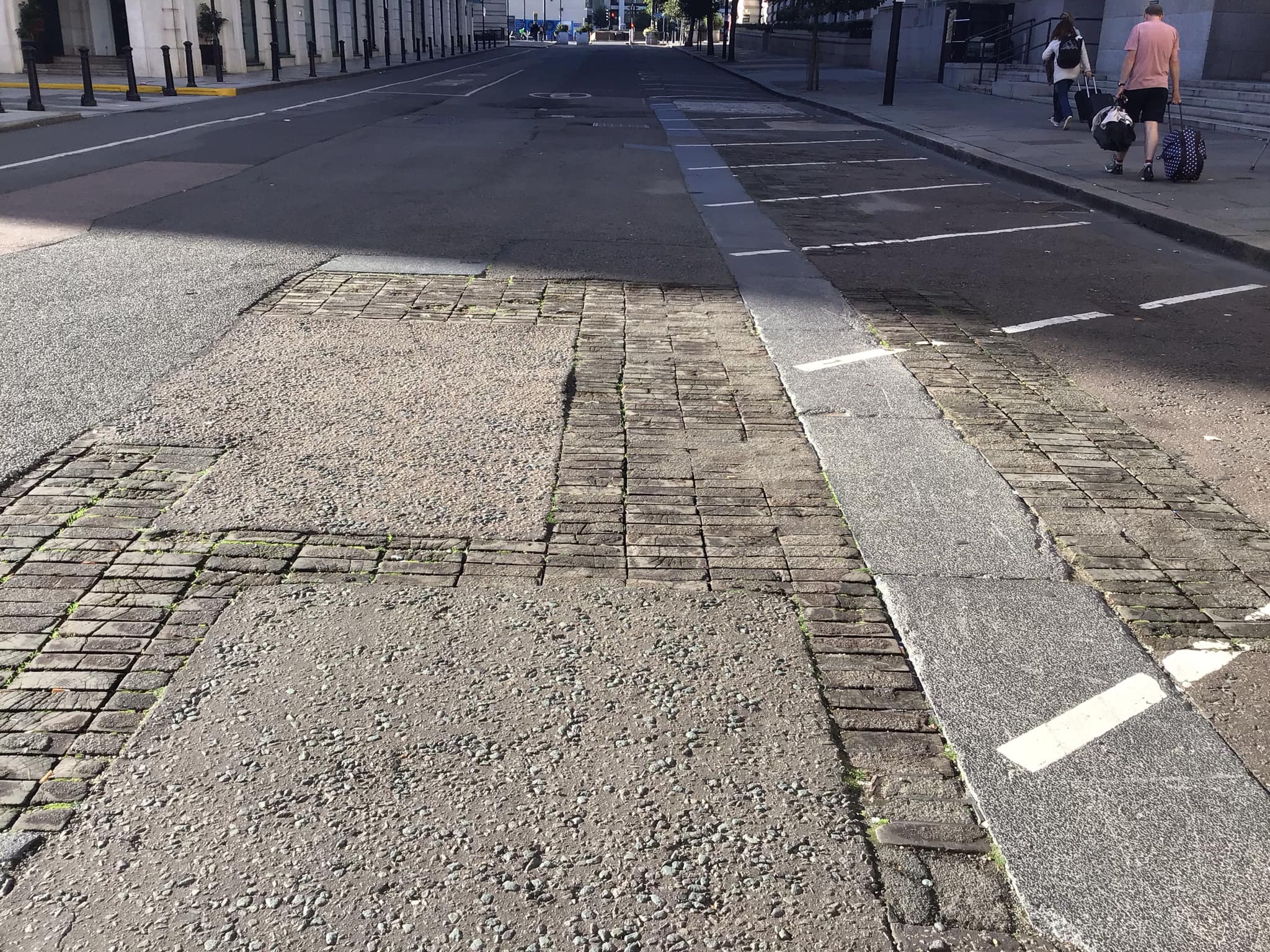
While I was out and about on Sunday before meeting my tourists for the day, I took the time to take some photos of a bit of road I’ve walked down many times but never had time to properly study before.
Most people will be familiar (even if just from period drama shows) with stone setts or cobblestones as everyone calls them. In Victorian London however, wood overtook cobblestone as the favoured road-building material.
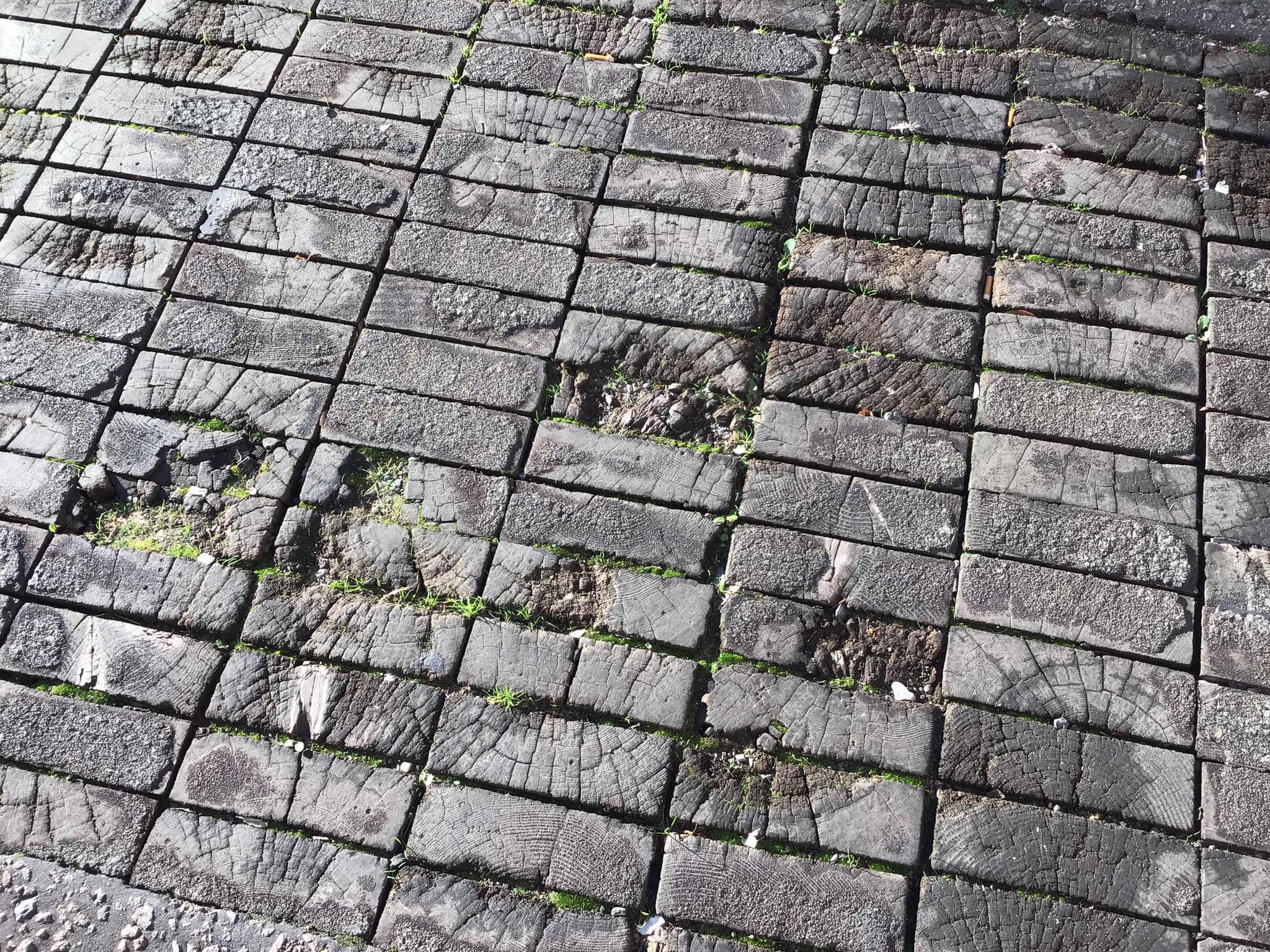
As horse and cart traffic increased throughout the city, the sounds created by their passing over the stones became a major nuisance. In order to reduce the sin , woodblock paving was introduced and heralded for its sound-dampening qualities.
One survey suggested that wood also provided a better foothold for horses during wet weather, allowing them to safely travel long distances across the city. Wood was also prized for its durability and could reduce the cost of maintenance. Given these benefits, wood was quickly used to repave many of London’s busiest streets.
But before long, the city’s needs changed again. With the introduction of cars, horses became less common and modern construction materials overtook old paving methods. The wooden blocks often became damp, absorbed smells, and were found to be difficult to clean. The wooden streets were therefore removed—although not without incident.
It’s said that it caused a period of minor chaos, as London residents were allowed to take the old wooden blocks. This caused a bit of a struggle amongst the masses as residents tried to claim as much wood as possible to use as firewood.
These days there aren’t many remnants of these road surfaces left. Those that weren’t dug up had tarmac laid on top though from time to time they re-appear to the surprise and joy of those into such things. Mostly they can be found in low traffic areas and for some reason on various manhole covers, perhaps because it was too much effort to remove them and fit or adapt new lids.

 Stephen Liddell
Not a bad thought. Even today with all the damned potholes.
LikeLiked by 1 person
Definitely. I always think its funny how the Roman road underneath the Roman Baths in Bath is in better condition than some modern ones!
LikeLiked by 1 person
I’ve heard of other such cases.
LikeLike