When was the last time you received a Postcard? When did you last write one, perhaps some younger readers never had.
In the 1980’s when I was growing up, Postcards were all the rage. It didn’t matter even if the traveller was only away for a week and even if they had just gone 100 miles away, it seemed to be everyones duty to write out postcards. From what I remembered, most people enjoyed receiving them too and it would make most peoples day in some small way.
I know I haven’t written a post card out for many years but that’s because I’ve not been on holiday for over a decade and I guess everyone else thinks a Facebook update does the same job so thats their excuse and they are sticking to it!
Recently I came across these rather early colour postcards with photos on London on the front. People would write a message to their friends or family on the reverse and post it off. Whether the postcard arrived back before the traveller often depended on the country they were posted from.
I find it fascinating that every single spot is still totally recognisable albeit often much busier and more congested and with added skyscrapers.
Perhaps as they were for holidays, the photographer largely took the time to photograph at more sedate times of day as I’m pretty sure many of the places here would have been even busier 120 years ago than they are today.

The image above of Marble Arch is the one that I think has changed the most. The arch is still the same and largely surrounded by some horrendously busy multilane roads with Huge Park behind it, Oxford Street to the left as we see it and behind us to the right is where the hangings at Tyburn used to take place at the foot of the long straight Roman Road, in that part known as the Edgware Road.
Going straight on beyond Marble Arch on this postcard takes you down to Hyde Park Corner.

Hyde Park Corner is something of a byword for traffic hell in the modern day. There are more lanes of traffic today but a marginally less confusing road plan though that is partly down to a tunnel that passes from left to right.
The first large building in the background on the left is Apsley House, one time home to the Duke of Wellington and still there today. The building next to it is where the young Queen Elizabeth was to grow up until it was bombed out. On the left is an old hospital building which is still there.
The biggest change I think here is that this area is now full of war memorials from WW1 and WW2.
If you were to go right and along past the Duke of Wellingtons home then you’d arrive at Piccadilly Circus.
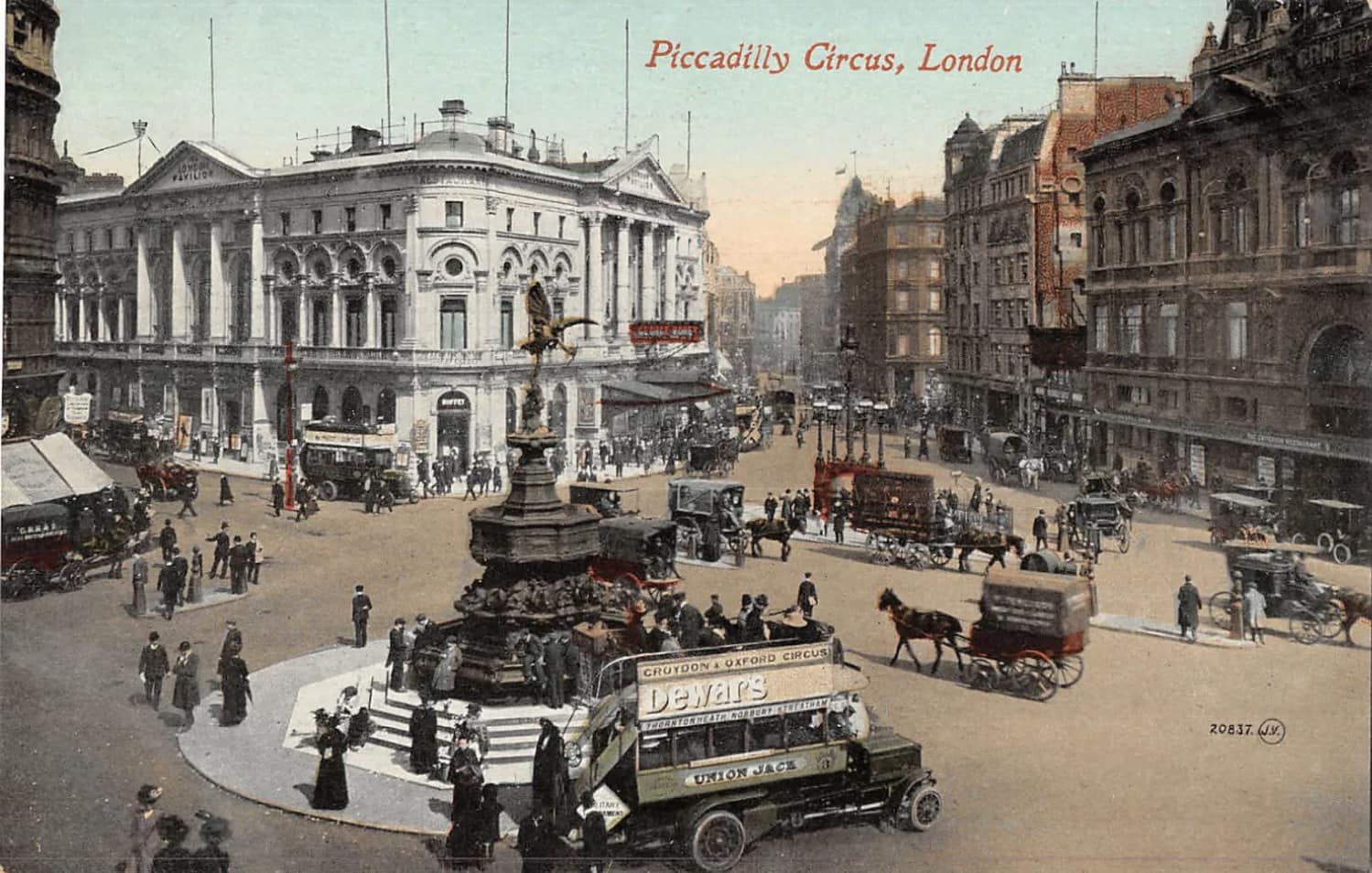
Deeper into the West End and you will get to Piccadilly Circus which is really the very centre of the West End of London. The big white building on the left is largely still there today whilst I meet people for my Winston Churchill tours where the big archway on the right is.
This is one of the calmer photos I’ve seen of Piccadilly Circus and now the statue has been moved to the right with the right side largely pedestrianised.
Looking in the distance you can see Leicester Square.
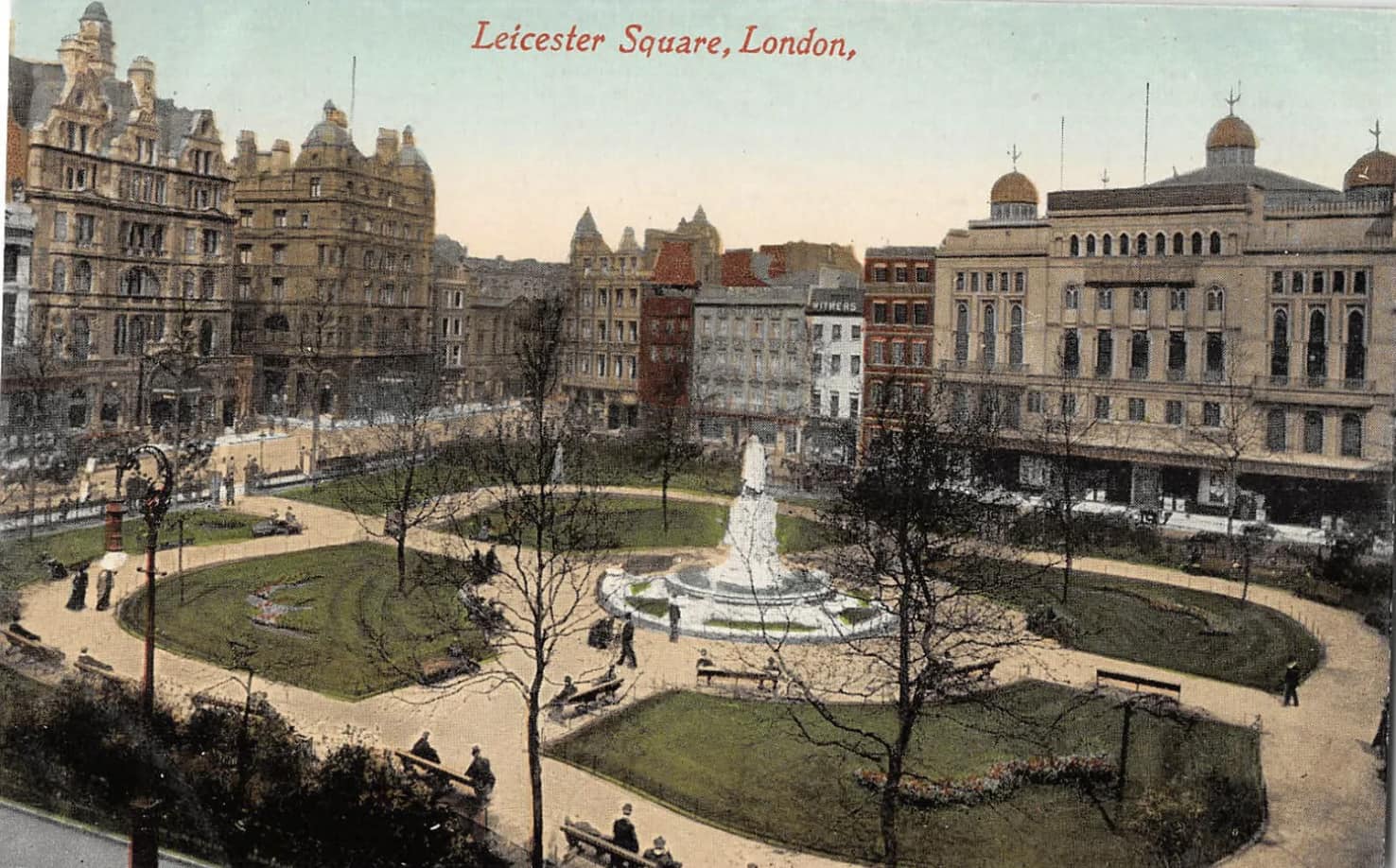
Leicester Square today has remnants of the architecture left as seen above but it has been incredibly developed though in recent years if they have made some effort to bring the park back to prominence.
This is where all the big film premiers in London and indeed Europe happen and today there are various statues around of legendary actors including Charlie Chaplin who I guess may be one of the figures in Leicester Square back then.
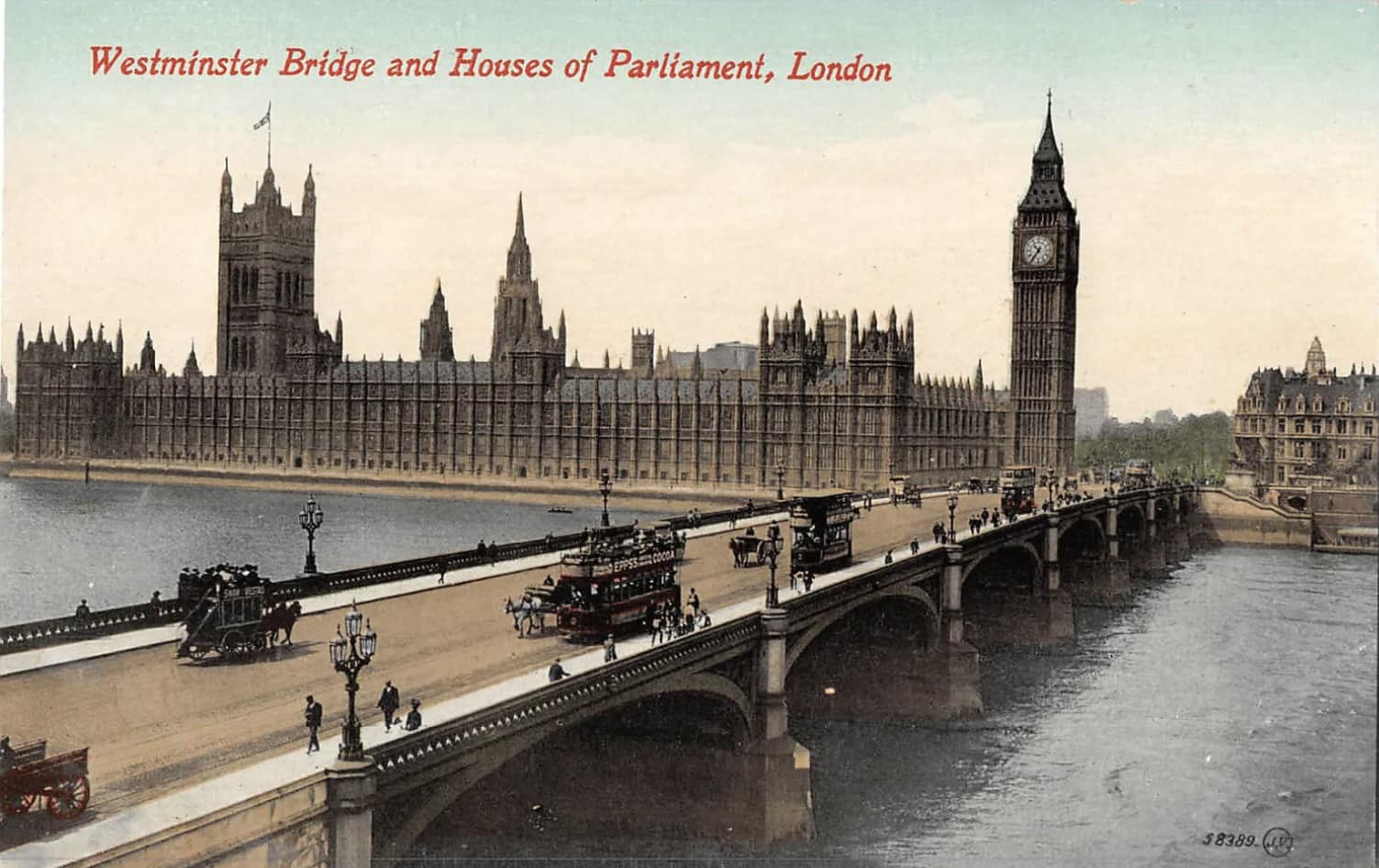
How dirty the Palace of Westminster, Houses of Parliament look back then even given the old style of photo. I must say I prefer the old road layout without all the street furniture to deter terrorists and marking out various bus and cycle lanes.
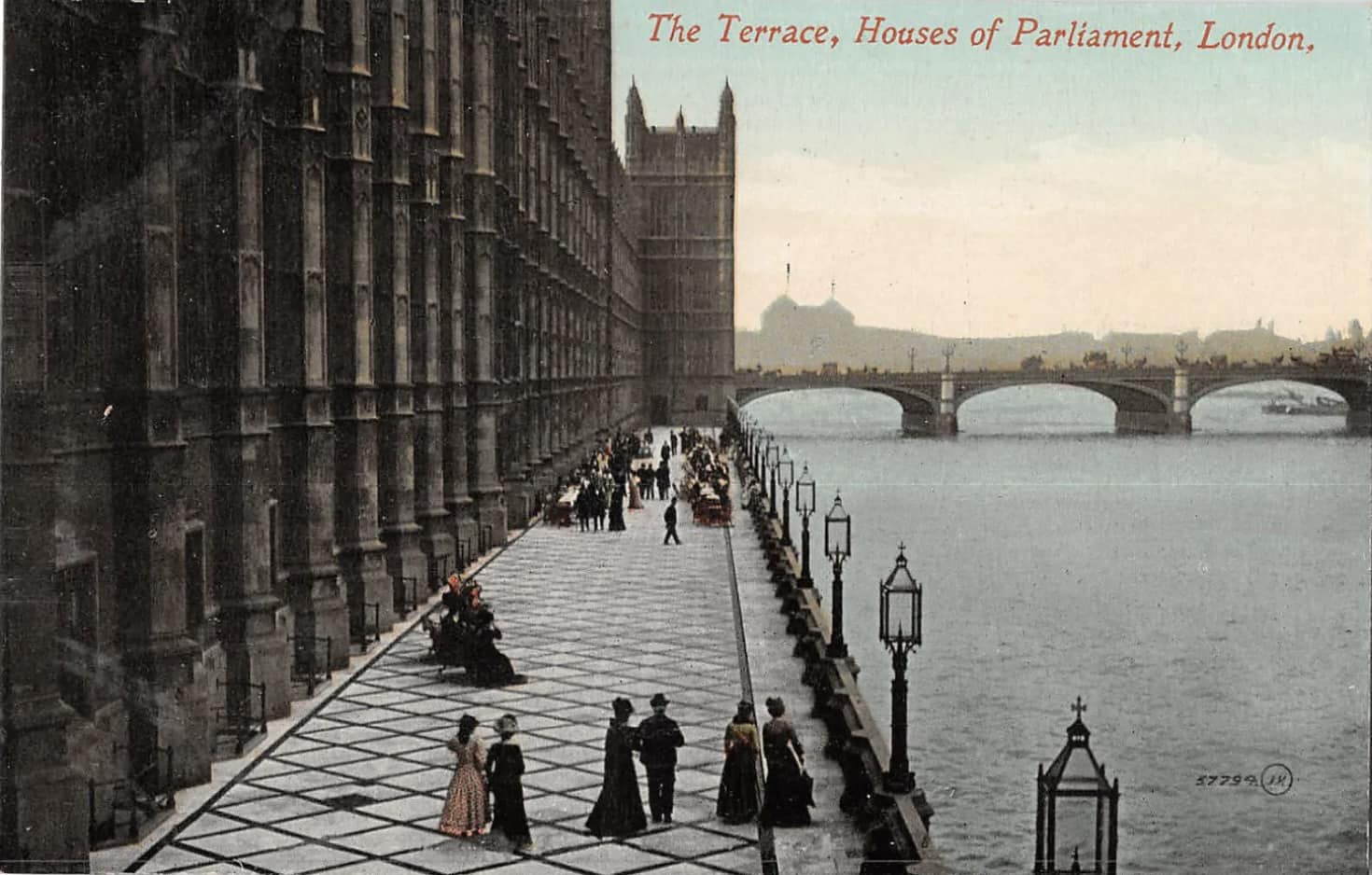
The post card above shows the terrace by the Houses of Parliament which is still there today though often covered in part by restaurants and cafes for Parliamentarians.
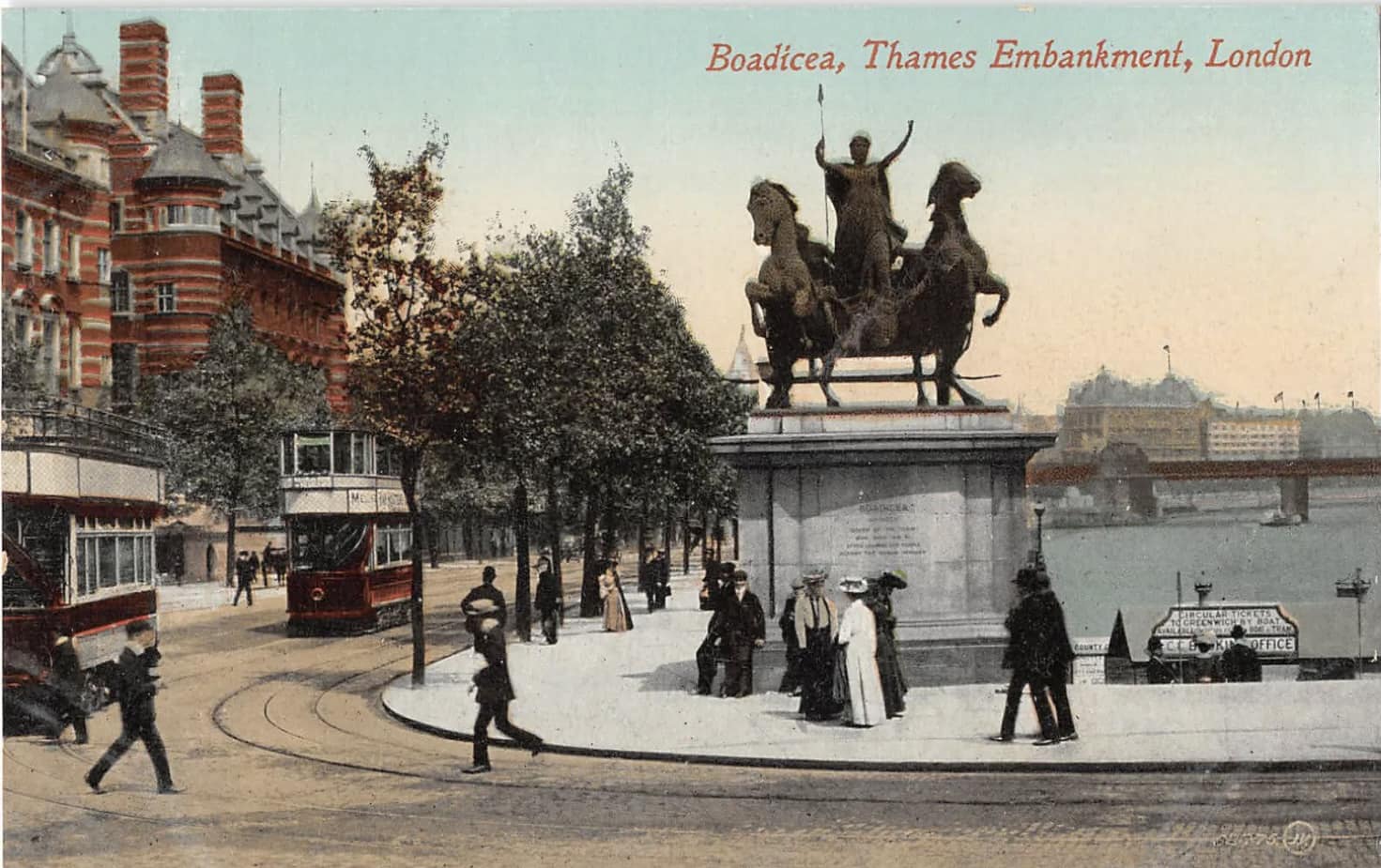
Just across the road from Big Ben and at the north base of Westminster Bridge is this incredible statue to one of our legendary British warrior queens, Boudicca. She looks even better back then without the tacky stalls selling stuff that no-one needs and blocking up a very busy pavement.
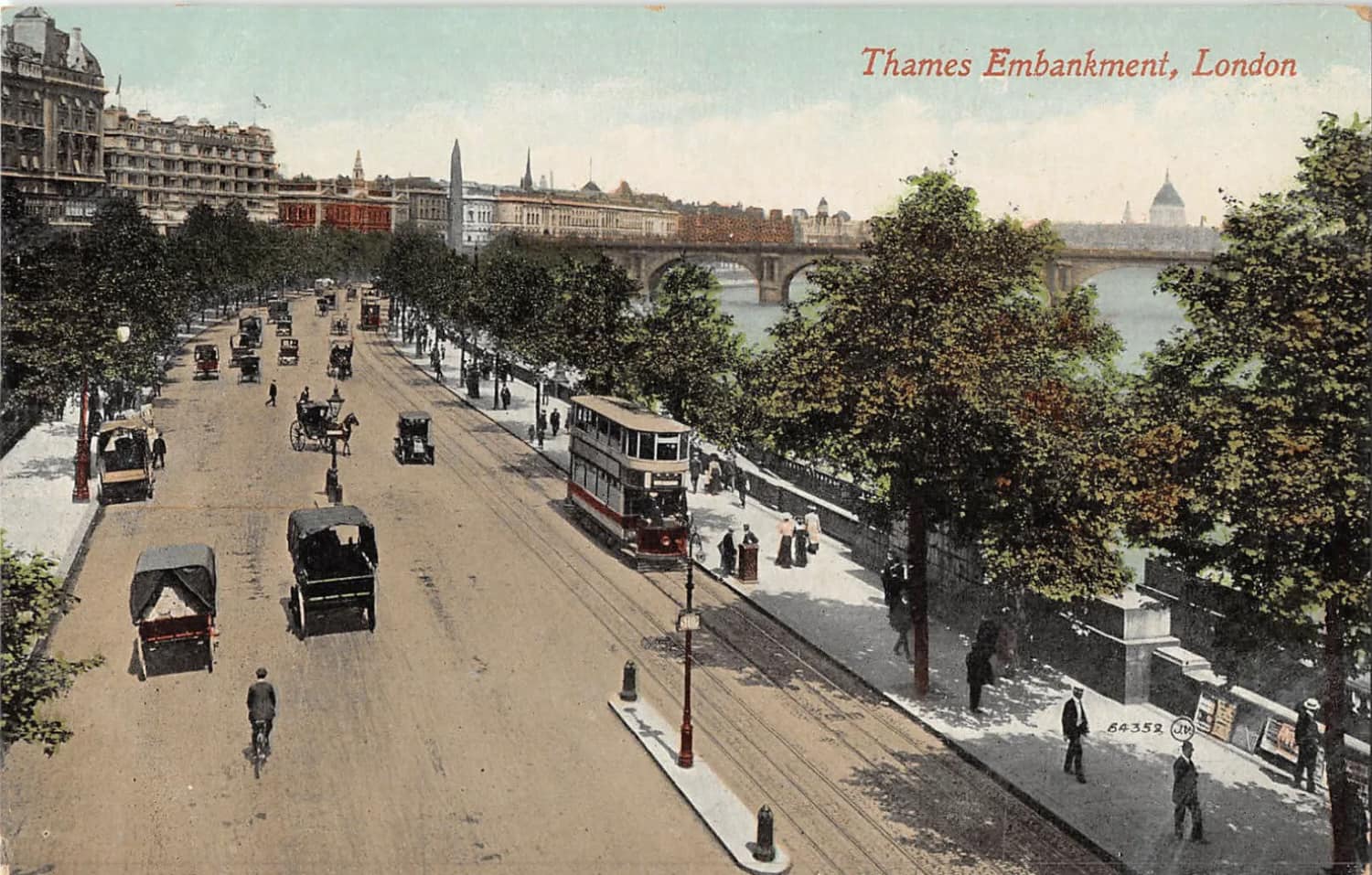
Going down behind Queen Boudicca you pass along Embankment. This road was relatively new back then following the the then recent installation of the London Underground lines, the narrowing of the Thames and the replacement of the old Roman sewers by state of the art Victorian ones.
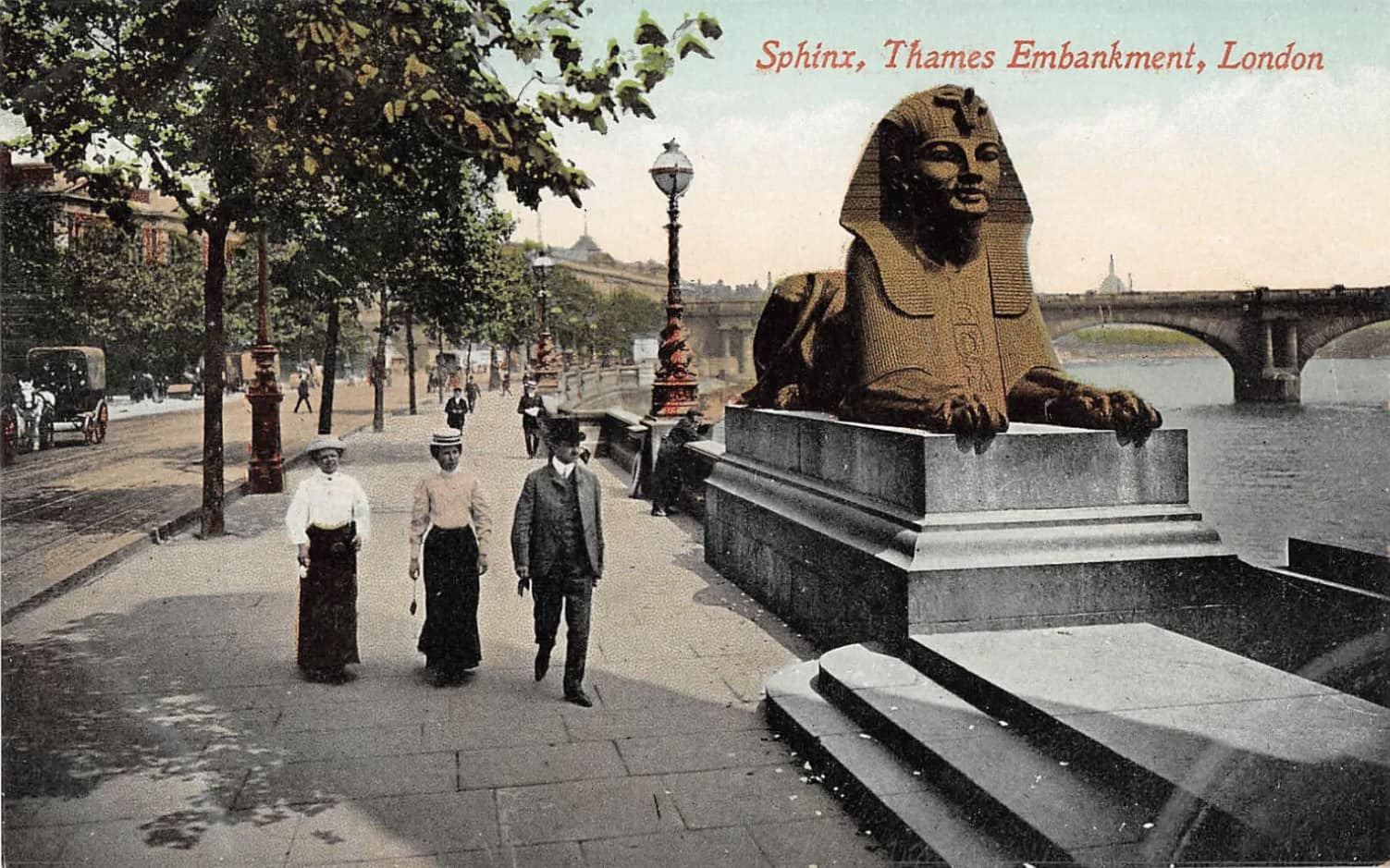
Just behind and to the right of the photo is Cleopatra’s Needle and on each side is a Sphinx. This image is interesting as these days there are shrapnel holes in it from German bombardments.
If you look above the arch of the bridge you can just see the top of St Pauls Cathedral.
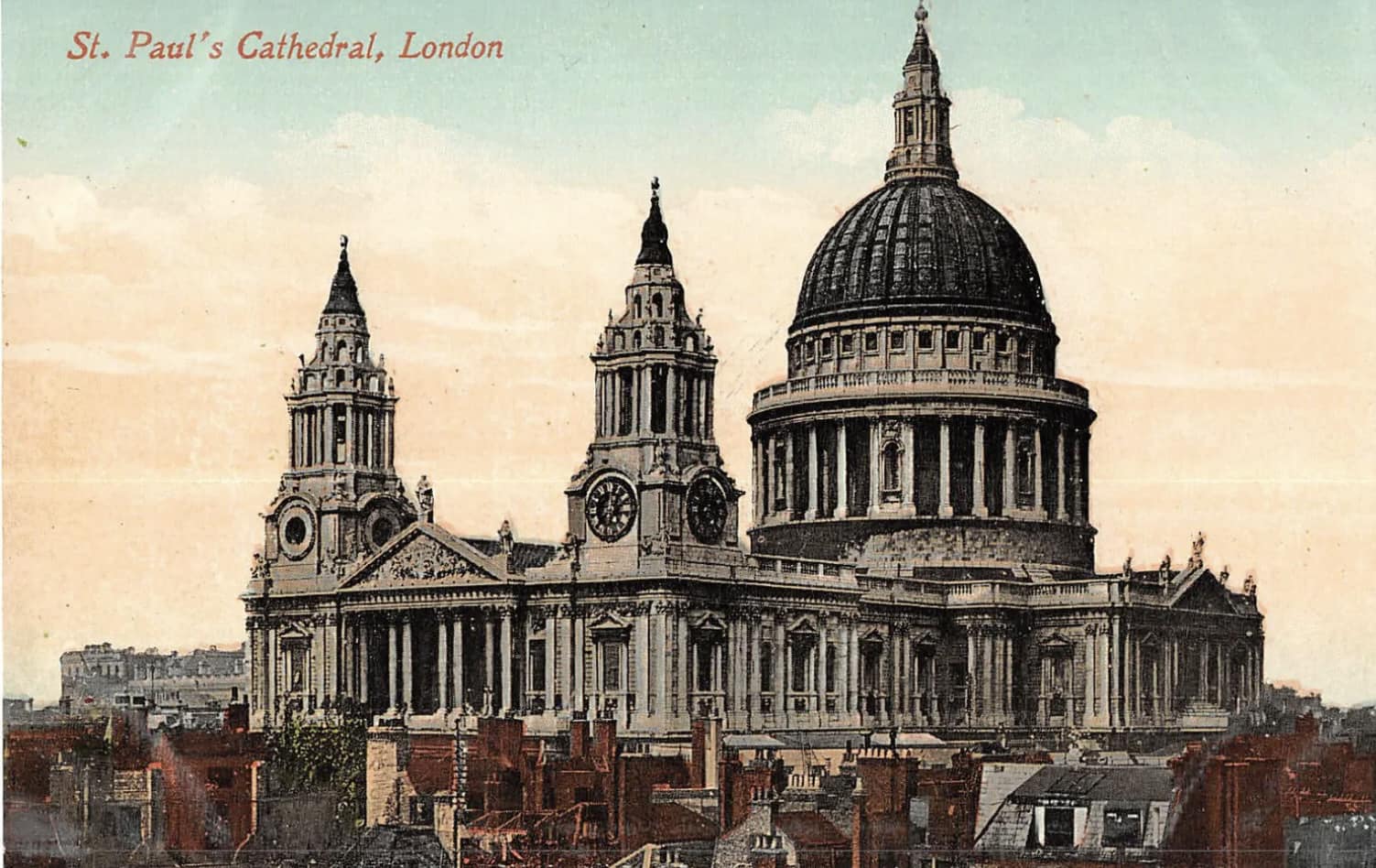
And here is St Pauls. Though miraculously St Pauls has barely changed except for looking much cleaner, almost the entire surrounding area was flattened and burned out during the Blitz.
These days St Pauls is largely surrounded by beautiful parks and landscaped urban squares with ginormous 21st century towers clustered all over the places just half a mile or so away.
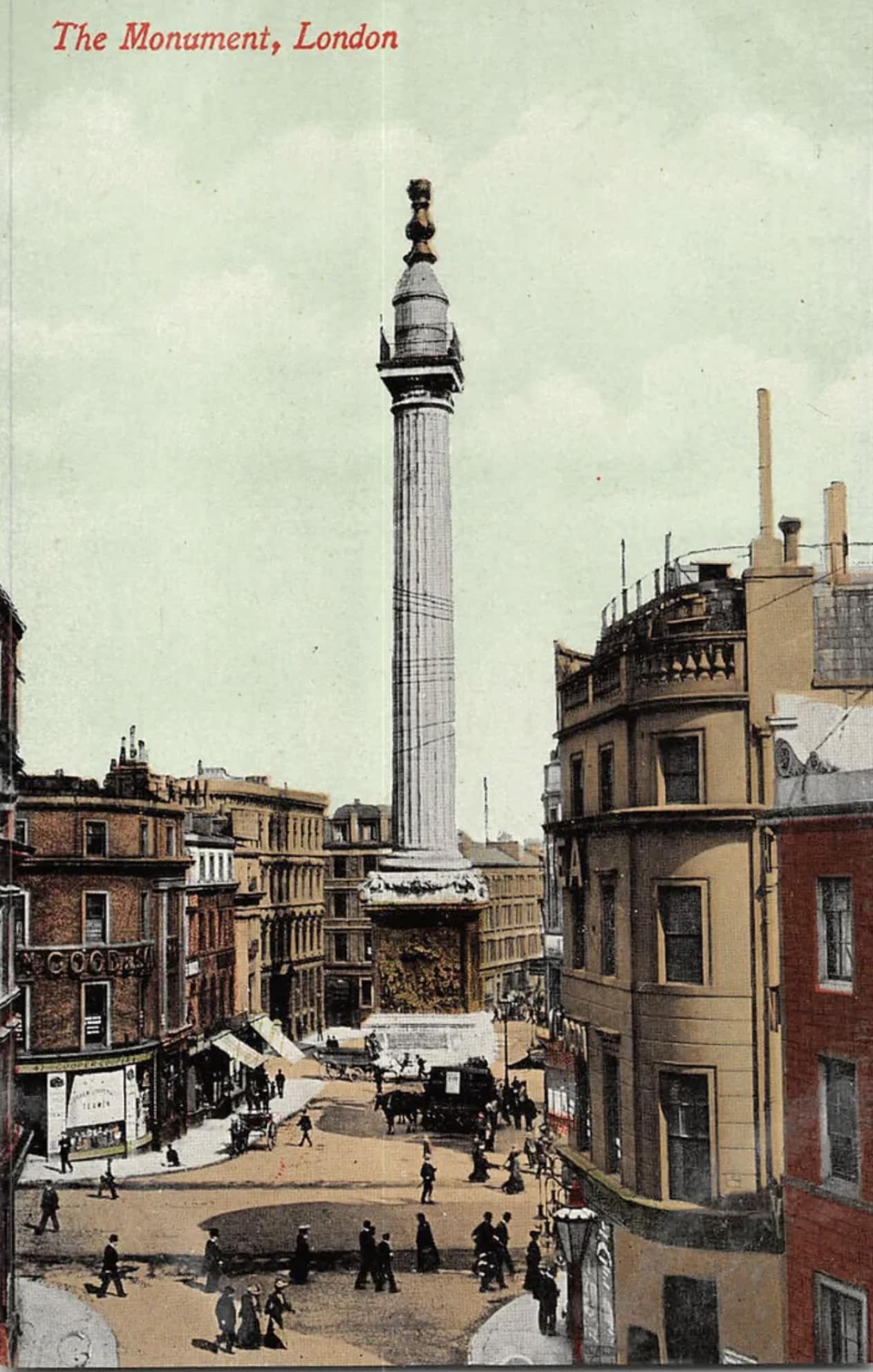
There have been countless really massive fires in the history of London but the only one that was more destructive than the Blitz was the Great Fire of London.
Pass along to the right of St Pauls and down Cannon Street then you will soon arrive at this spot and be awestruck by the Monument to the Great Fire of London.
From what I can tell, though the road plan is recognisable, every building in the old postcard was destroyed in WW2 and a mostly intact Monument is the only thing that made it through.
These days the immediate area around the Monument is pedestrianised. I always think its funny there is a restaurant next to it called the Hydrant as a few feet away is where the Great Fire of London started.
If you turn right just before the Monument then you’d soon find yourself walking over London Bridge.
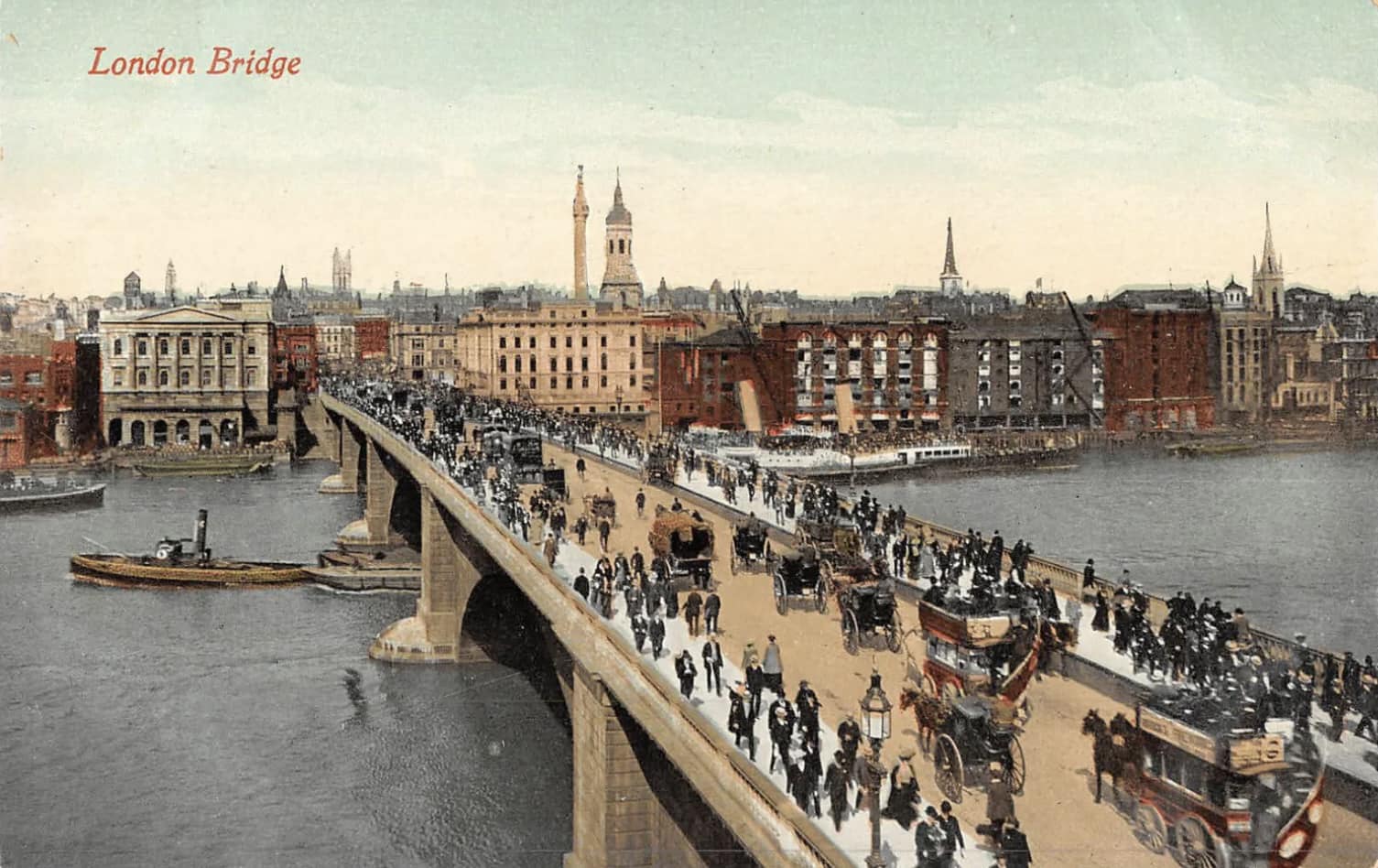
You can see the Monument in the distance. London Bridge now as then is a very busy place though the bridge itself re-incarnated itself in the early 1970’s and is currently cluttered with anti-terrorist equipment as it has been for a number of years now.

 Stephen Liddell
A great reminder of an era gone by. It was almost a duty, when on a longish tour, to buy a set of local postcards and send one home every day or every few days.
LikeLiked by 1 person
Yes I remember that. And coming home from school to see a postcard waiting was always exciting.
LikeLike
Another fascinating piece Stephen. So nice to see the Monument not surrounded by high rise buildings. Would love to have been a tour guide at that time. No fumes from traffic to speak of just the smell of manure😀
LikeLiked by 1 person
Yes, now you can only see the very top of the gold artwork from across London Bridge. I wonder if they are pulling down that eyesore by the riverbank whether they will open it up a little bit. I wonder what the mayor would do about manure problems? I always laugh that where the National Gallery is, used to be the Royal Stables and whenever it rained the manure would wash down the hill to Parliament. and people used to make jokes up about it even 400 years ago 🙂
LikeLike
Hi Stephen Liddell, so beautiful Postcard . Very like.
LikeLiked by 1 person
I’m glad you like them.
LikeLiked by 1 person