Though we’ve been here several times before, particularly when someone is selling a book, a former police volunteer claims to have discovered the identity of the figure behind some of the most shocking crimes in history, unmasking the 19th-century murderer who terrorised the nation as Jack the Ripper.
Sarah Bax Horton has unearthed compelling evidence that matches witness descriptions of the man seen with female victims shortly before they were stabbed to death in 1888 in the East End of London. What makes her research particularly extraordinary is that it was prompted by her chance discovery in 2017 that her own great-great-grandfather, Harry Garrett, had been a Metropolitan Police sergeant at Leman Street Police Station, headquarters of the Ripper investigation. He was posted there from January 1888 – the murders’ fateful year – until 1896.
Sarah’s investigations led her to Hyam Hyams who lived in an area at the centre of the murders and who, as a cigar-maker, knew how to use a knife. He was an epileptic and an alcoholic who was in and out of mental asylums, his condition worsening after he was injured in an accident and unable to work. He repeatedly assaulted his wife, paranoid that she was cheating on him, and was eventually arrested after he attacked her and his mother with “a chopper”.
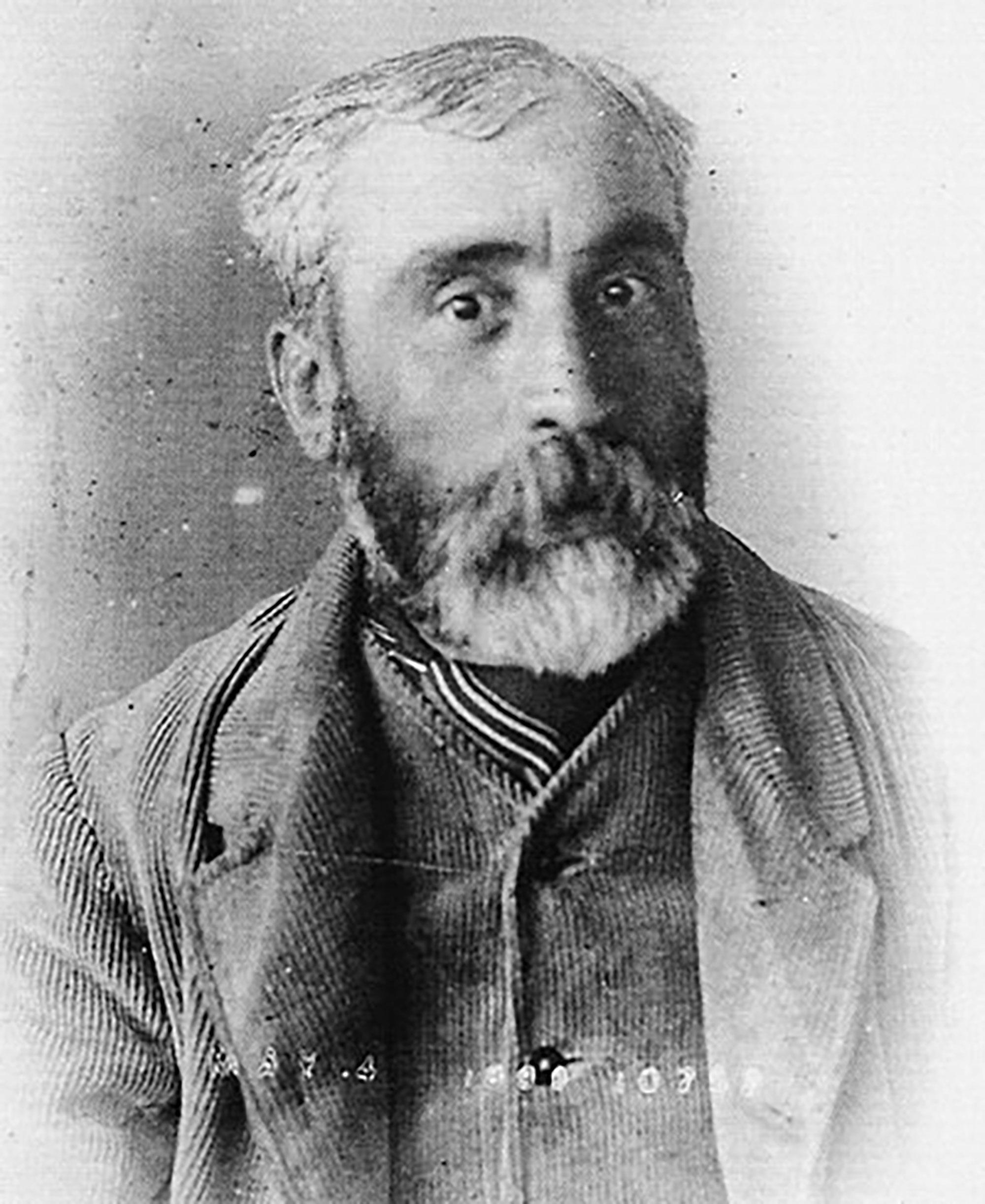
Significantly, Sarah Bax Horton gained access to his medical records and discovered dramatic details. She told The Telegraph: “For the first time in history, Jack the Ripper can be identified as Hyam Hyams using distinctive physical characteristics.”
Witnesses described a man in his mid-thirties with a stiff arm and an irregular gait with bent knees, and Ms Bax Horton discovered that the medical notes of Hyams – who was 35 in 1888 – recorded an injury that left him unable to “bend or extend” his left arm as well as an irregular gait and an inability to straighten his knees, with asymmetric foot dragging. He also had the most severe form of epilepsy, with regular seizures.
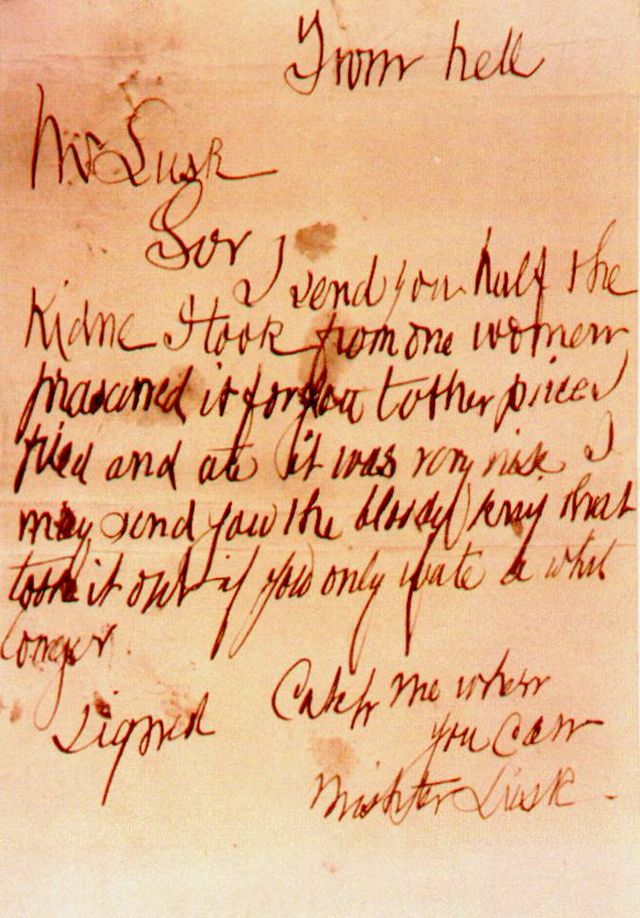
The victims were prostitutes or destitute. Their throats were cut and their bodies butchered in frenzied attacks with the authorities received taunting anonymous notes from someone calling himself Jack the Ripper. They are some of the most infamous unsolved crimes.
At least six women Martha Tabram, Polly Nichols, Annie Chapman, Elisabeth Stride, Kate Eddowes and Mary Jane Kelly – were killed in or near Whitechapel between August and November 1888.
Hyams’ medical notes, taken from various infirmaries and asylums, reveal that his mental and physical decline coincided with the Ripper’s killing period, escalating between his breaking his left arm in February 1888 and his permanent committal in September 1889.
“That escalation path matched the increasing violence of the murders,” said Ms Bax Horton. “He was particularly violent after his severe epileptic fits, which explains the periodicity of the murders.”
She added: “In the files, it said what the eyewitnesses said – that he had a peculiar gait. He was weak at the knees and wasn’t fully extending his legs. When he walked, he had a kind of shuffling gait, which was probably a side-effect of some brain damage as a result of his epilepsy.”
Witness accounts of the man’s height and weight were similar to the details in Hyams’ medical files, Ms Bax Horton discovered.
“They saw a man of medium height and build, between 5ft 5in. and 5ft 8in. Tall, stout and broad-shouldered. Hyams was 5 foot 7 and a half inches, and weighed 10 stone 7 lbs… His photograph demonstrates that he was noticeably broad-shouldered,” she said.
She has concluded that Hyams’ physical and mental decline – exacerbated by his alcoholism – triggered him to kill. The murders stopped at the end of 1888, around the time Hyams was picked up by the police as “a wandering lunatic”. In 1889, he was incarcerated in the Colney Hatch Lunatic Asylum, north London, until his death in 1913. Jack the Ripper never struck again.
Various suspects have previously been suggested as the man behind the killings, including the artist Walter Sickert, who painted gruesome pictures of a murdered prostitute.
Hyams had been on a “long list” of around 100 culprits, but Ms Bax Horton said he had been discounted because he had been misidentified. “When I was trying to identify the correct Hyam Hyams, I found about five. It took quite a lot of work to identify his correct biographical data. Hyam Hyams has never before been fully explored as a Ripper suspect. To protect the confidentiality of living individuals, two of the Colney Hatch Asylum files on patients, including Hyams, were closed to public view until 2013 and 2015.”
As with some other suspects, elements of the case against Hyam Hyams can be dismissed or downplayed. On the other hand, Hyams’ mental condition – with violent attacks on family members and health personnel, and time spent in various lunatic asylums as this condition worsened – cannot. He is exactly the type of individual who should be investigated more closely when searching for possible suspects in the Whitechapel murders.
If the killer was not actually Hyam Hyams, it was most probably someone like him.
If you’re in London and you’d like to follow in the footsteps of Jack then do book my Jack The Ripper Daytime Walk or check out these two old posts which are just some of those I have written in the last decade or so. Elizabeth and John Sodeaux – Two unintended victims of Jack The Ripper and An eerie old mortuary from Jack The Ripper and the world’s oldest Police.

 Stephen Liddell
Hi Stephen,
Many thanks for your very interesting posts. I always enjoy reading them.
You may recall that we âmetâ online a few years ago when my book, âThe Man who Broke the Bank at Monte Carloâ appeared, and you posted some extracts.
Just to let you know, Iâve written a revised and expanded version of the book, this time in paperback format. Release date is 3 August, and the publisher is The History Press.
My website has had a makeover to celebrate the occasion! http://www.robin-quinn.co.uk
Best regards,
Robin Quinn
LikeLiked by 1 person