Recently I’ve been doing quite a few Charles Dickens Walking Tours for my little company, Ye Olde England Tours. I’m always improving all my tours, it’s my job! I have done a 3 hour walk for six or seven years and this summer started offering the option of a 5 hour version as well as tour more specifically focused on The Christmas Carol.
I wanted to supercharge my offerings even further. Charles Dickens would spend much of his life walking around London, exploring every street and lane. People watching and just generally engrossing and immersing himself in London and it is something I have pretty much done every day for a decade so we have that much in common at least.
There are hundreds of Dickens related locations in London but though I like traipsing around the streets, tours have to be more organised and have a relatively high density of sights. I like to mix my Dickens story locations with real life history and social history and things that you can see or connect with back to the man himself.
My first memory of Charles Dickens was like many, Oliver Twist, and I knew where many story locations took place. Just a few minutes from where my tour starts off from, there is a high number of Dickens spots but they are in the wrong direction so never fully investigated. Bizarrely some weren’t there a few years ago either and being better at my job now than I was when I started, I decided I wanted to thoroughly the Southwark Mint and pin down the spot where Oliver Twist had dared to ask for more. I’d been through the streets and alleys more than most but I really wanted to go to down on it and explore a neighbourhood even today most have never heard of, let alone been to and the reason goes back centuries.
Though the City of London may have long been the richest square mile in the world, it was surrounded by Liberties and Sanctuaries where things were a little less well policed and rife with criminalty.
Many such areas though having lost lost their official status, remain some of the most characterful parts of the centre of London. They alleyways between Fleet Street and the Thames were one such no-go area for the state and indeed respectable people.
Another was just across the river and centred upon the Southwark Mint area. Santuaries often started off as somewhat anomalous from the general rules. Sometimes they fell under religious jurisdiction such as the still name Sanctuary outside Westminster Abbey.
Others gained their original legitimacy from local charters or agreements that granted a certain level of self governance, separate from the centres of power.
The Southwark Mint was one of London’s oldest ‘sanctuaries’. Those who lived there claimed certain rights and liberties, most notably to be free from being arrested for debt which was of course very important if you were a down on your luck penniless soul just trying to muddle through in life before succumbing to some horrendous disease or crime.
Though its ultimate legality was frequently somewhat questioned, it was a very strong and widespread concept particularly until the 1720’s. As we know today though, the perception of a right or freedom doesn’t necessarily mean very much if it isn’t written in stone and those who were owed money obviously felt aggrieved by such a concept.
Southwark Mint covered quite a wide area amongst the lands once owned by the Earls of Suffolk, the Brandon family running westwards from Borough High Street, not too far from St George the Martyr church.

The Southwark Minters claim to operate under another legal jurisdiction arose from a 1550 exemption from local jurisdiction when king Henry VIII set up a ‘mint’ at Brandon House to cast silver coinage,(supplementing the main Mint in the Tower of London).
The area was then known as the Liberty of the Mint. Liberty indicating the exemption or freedom from City of London control. Bizarrely the physical Southwark Mint only ran for a year and closed in 1551.
However the area of the Mint retained its name when shortly thereafter York Diocese obtained the land and gained permission to build houses on it. Sadly the housing was largely cheaply constructed and not of a great quality which resulted into the area quickly becoming a slum and for the next 300 years or so it only got worse. Overcrowded, filthy, a resting place for the dregs of even the lowest classes that called London home.
If you were a criminal (petty or otherwise), had no morals or indeed hope and knew how to survive with nothing but your brains, fists and a good pair of legs then Southwark Mint would be your sort of place. It was as Charles Dickens might have said, a sanctuary for ne’er-do-wells .
How did this all come about? It all stems from the small print of the Mint’s 1550 charter had turned this small area into a ‘Liberty’ outside the jurisdiction of the City Corporation, with residents afforded some protection from prosecution.
The perception that living there gave some sanctuary against the normal run of law gradually led it to become a place of refuge, to some extent for robbers, rebels, deserters & malcontents, but mainly for debtors trying to evade imprisonment for debts they owed.
London has always been a city that revolves around commerce. I wrote years ago how the first written document which mentions London is a Roman one which is effectively an ‘I owe you’
Due to the scarcity of physical coins, many transactions had to be made on credit. Technically this made many law abiding people into debtors of sorts, even if they were owed more than they were owing at any given time.
Because claiming back debts this was a civil process, not a criminal one, everyone was at the mercy of their creditors, who had a powerful legal arsenal at their disposal. Imprisonment for debt was a constant threat for nearly everyone in eighteenth century London.
Debtors could be imprisoned before any hearing into the case was ever held. Release could only be obtained through settling the debt, even though imprisonment could mean earning the money necessary to do so was impossible. No determinate sentence was set, and time in jail did not work off any of the sum owed. Consequently, debtors could find themselves locked up for very long periods for trifling sums. Charles Dickens father himself found himself in a Marshalsea Debtors Prison for a very minor financial transgression.
Many creditors resorted to the law, and many people suffered for it. In 1817, 9,030 people were in London debtors prisons. There were 9 or 10 in London and Middlesex above the river and several more south of it in Southwark which gives a further idea of what life was like here. In fact there were 200 debtors prisons across England and Wales and from time to time the injustice of it all caused terrible riots.
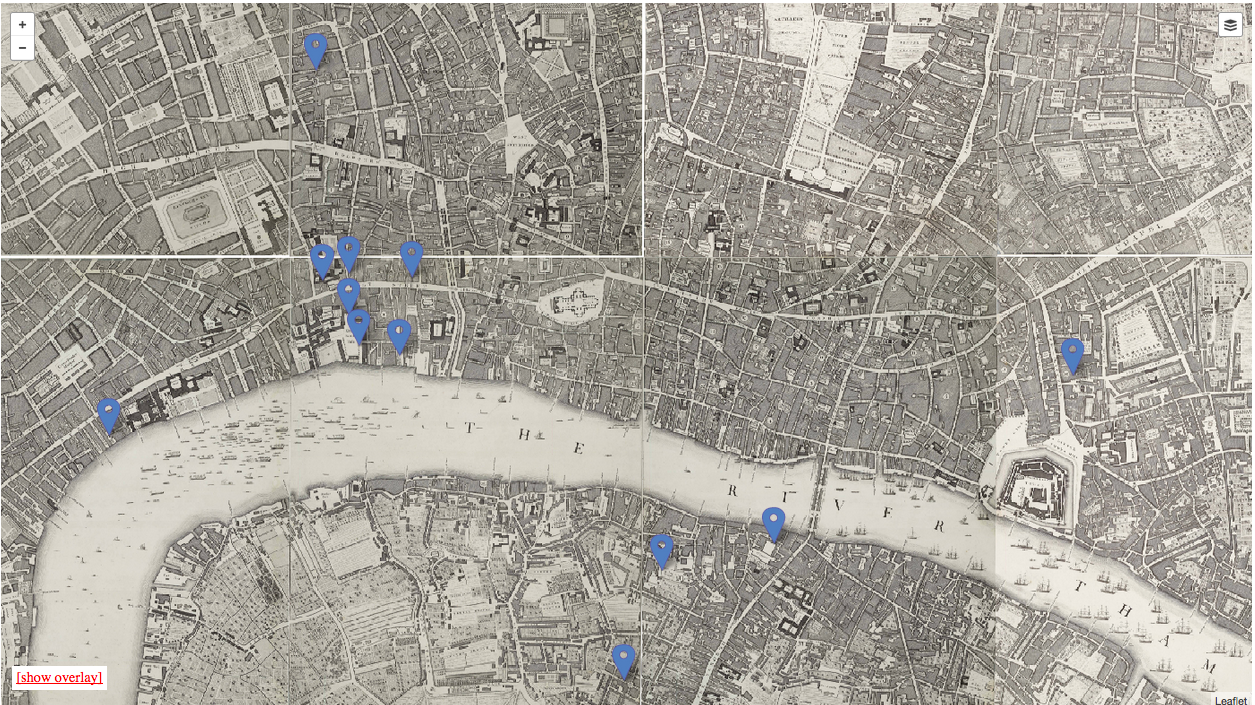
One way of avoiding prison was by taking refuge in the sanctuaries. There were eleven of these active in London and surrounds in the 1670s: on the north bank of the Thames in Farringdon Ward Without were Whitefriars, Ram Alley, Mitre Court, and Salisbury Court; on the north side of Fleet Street Fullers Rents; the Savoy off the Strand, the Minories by the Tower, Baldwin’s Gardens in Middlesex, and in Southwark Montague Close, The Clink and The Mint. All here because of a real or perceived legal loophole over the power of the state.
What all the Sanctuaries had in common was not just a population of criminals and desperate debtors but a swarming mass of tough people who would take a one for all and all for one attitude and physically fight the bailiffs who dared to enter the absolute maze of alleys and courts within them. This made arrests all but impossible.
Sometimes bailiffs were known to be dunked repeatedly in animal troughs full of water and then made to kiss excrement covered bricks before promising on their life to never return…. surely a practice we should think of reviving for big business and corrupt politicians. Boris, Rishi, Oily Dowden… where for art thou? 🙂
A man contemporary to the time, William Harrison Ainsworth labelled the area “The Grand Receptacle of Superfluous Villainry” and describers what would go on: ‘Incursions were often made upon its territories, sometimes attended to with success but more frequently with discomfiture, and it rarely happened that any important capture could be carried be effected. In order to guard against accidents, or surprises, watchmen or scouts were stationed at the three main outlets of the sanctuary, ready to give the signal – ‘a blow on a horn’… bars were erected which in case of emergency could be stretched across the streets, doors were attached to the alley and were never opened except with due precautions; gates were affixed to the courts, wickets to the gates and bolts to the wickets. The back windows of houses were strongly barricaded … and furthermore, the fortress was defended by high walls and deep ditches in those quarters where it appeared most exposed. There was also a maze into which a debtor could run, the intricacies of which it was impossible for any Officer to follow him’.
Local women were decidedly not to be messed with and they were known to be amongst the keenest and dogged people when it came to resisting the law. Sometimes pressgangs would enter looking to recruit men into military service. If the youngest and strongest men were dragged out, who would use and pay the prostitutes? So women very much were in the vanguard of things.
Occasionally the mayhem of the Mint would spill out of its area such as in May 1718 an immense plum pudding weighing close to 1000lbs was paraded through the streets near the Mint, a number of the residents of the Mint stormed the procession and stole the magnificent pudding before taking it back into the Mint where it was speedily devoured by those who resided within it.
In April 1721, the Minters took up “Arms in defence of Liberty” & expelled press gangs from Southwark.Press gangs, forcibly impressing men into the navy, were a hated enemy of the London poor. Women often took the leading part in battles against them: especially prostitutes, many of whom lived with sailors, the most vulnerable to navy press gangs.
History suggests that those who lived in the Southwark Mint sanctuary weren’t entirely without morals. A murderer looking to escape justice in the Mint may not receive anything like the same protection as those with a debt on their shoulders.
Most of the sanctuaries were dissolved by statute in 1697; the Mint persisted a few decades longer.
In 1722-3, the Mint’s ambiguous legal status was specifically dealt with in special legislation. Any anomalous right of sanctuary, real or perceived, was specifically abolished in 1723. Residents from the Mint petitioned Parliament against this abolition of what they saw as ancient rights to sanctuary.
Perhaps not unexpectedly Parliament refused a request by what it saw as criminals, to further exempt criminals though a £50 debt relief was granted to those in the Mint at the time which 6,000 people applied for.
The area remained a notorious slum for almost another 200 years until the late Victorians, 20th century reformers and indeed the Luftwaffe forced through further re-landscaping.
It still is a little rough around the edges but I like it and feel at home there.

 Stephen Liddell
1 comment