It probably says more about what I watch on television or in the cinema that so many people seem to wear cloaks. We tend to think of cloaks as a little Medieval but both ancient Greek and Roman men and women wore cloaks. The Greek-styled Roman cloak, or pallium, was shaped like a square and sat on the shoulders. Romans of the Republic would wear a toga as a formal display of their citizenship, a habit that may have started with Numa Pompilius.
Cloaks used until the Renaissance were simple in design. There are very few examples of hooded cloaks although some cloaks were worn with separate hoods, either over or under the cloak.
The initially simple medieval cloaks became more luxurious with the arrival of new materials. The wealthy, the royals and the church made hooded cloaks, capes, tunics and more from different textiles and in a variety of bright colours. Many of these materials were introduced from Asia and new textiles were invented in Europe.
The Medieval Cloak was worn over indoor clothing and protected the wearer from the cold, rain, or wind. Over time, cloak designs changed to match fashion and available textiles.
During the Early Anglo-Saxon period, a short, fur-lined cloak was designed so that the animal’s skin faced outward and the fur brushed against the undergarments. The cloak opened either at the front or the right shoulder and was fastened with a brooch, usually circular in shape. Cloaks could also be closed by tying, lacing, or using a clasp made of thorn, bones, wood, or horns.
The word cloak comes from Old North French cloque meaning “travelers’ cape,” literally “a bell,” due to the garment being bell-like shape.
The most popular materials for medieval cloaks were wool, silk (taffeta, damask and velvet, only for the wealthy), linen and fur. Cloaks in the middle ages could be dyed in bright colours using roots, lichen, bark, insects, and molluscs – but most garments were undyed beige and off-white.
- Button-Shoulder Cloaks: Worn exclusively by men, these cloaks were closed on the right shoulder, usually with buttons. This style of cloak seems to be the descendant of the Greek chlamys.
- Mantles: A cloak style with a center-front closure, usually with a cord attached to metal mounts. This style of the cloak is the only style that appears on women. Men used it too, in particular for ceremonies.
- Royal Cloaks: A type of fur cloak with a fur capelet. This style seems to be worn only by men and evolves in the 15th Century into a ceremonial-only garment for kings and noblemen.
Cloaks in the Middle Ages were mostly made of wool. Wool was a good way to protect from the cold, and was commonly available locally especially in the British Isles. Although woollen cloaks were worn by both rich and poor, the wealthy had a larger selection of fabrics, colours, and garment styles. This was especially the case after 1200 AD, when trade flourished thanks to increased stability among European cities.
The wealthier became more interested in novel outfits as a way of showing off their status and wealth. Many hats, cloaks, tunics, and gowns began to include gold and fur trims.
Wool was used for a variety of medieval outfits such as hooded cloaks and outer garments. Wool could be knitted or crocheted and could be made thin or thick depending on its purpose (thicker garments were warm and thin ones were delicate and light). Scarlet was luxurious; Royalty and the wealthy wore scarlet because of its bright colour and connotations of high status. The fabric was dyed with kermes. Russet was a coarse cloth made of wool and grey or brown in colour. The material was used as a sign of humility.
Linen very popular too and likely the second most common material as cotton was hard to propagate in Europe.
Cloaks were all ready falling from fashion in Victorian times as the industrial revolution and later sewing machines enabled more complicated coats to be more easily and cheaply produced. Once the military stopped issue cloaks as a standard item then civilian fashions followed. Police and nurses would wear cloaks past WW2 and some senior figures up towards the 1980’s but alas no more.
However, outside of a very few occasions. In the U.K. more than most places you might still see cloaks on cavalry soldiers and related paraphernalia as well as fancy dress costumers but aside from that, it is about it.
Whilst it is still acceptable and indeed from time to time, trendy, to wear a waistcoat if you a man, wearing a cloaks seems that step too far. I’ve only ever seen one man wearing a cloak in London for no good reason though I suppose some fashionable ladies can wear them on occasion.
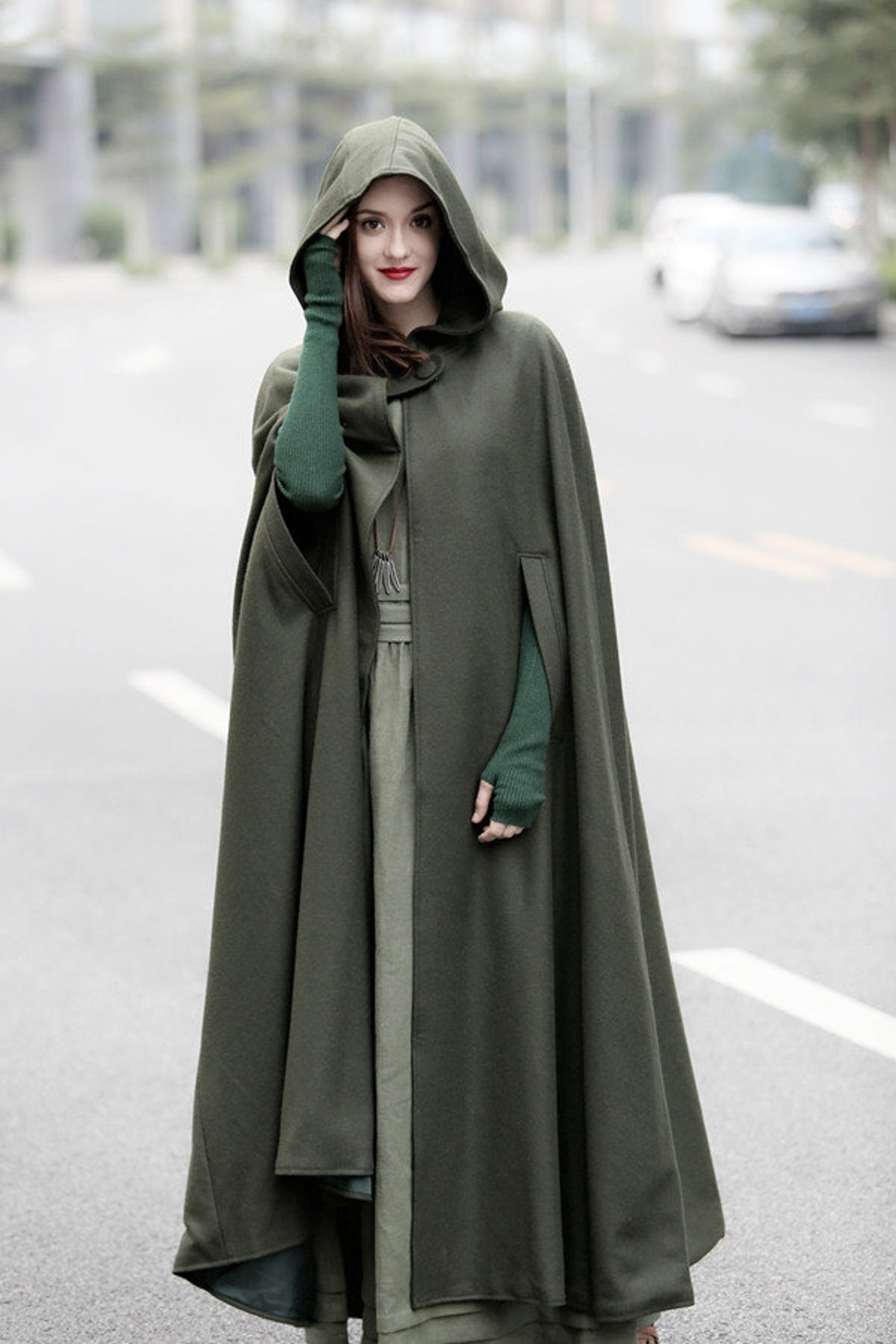
One of the reasons that coats took off was that they did most things that cloaks did but better, particularly allowing your arms to stay warm and dry when doing things. However as a tour guide, I can spend hours every day walking around, often with my arms at my side. In fact rather weirdly, even when I’m striding, I keep my arms at my side and perhaps they would be warmer and more comfortable in a cloak.
I’m pretty sure a good cloak could keep your legs warm and dry too which isn’t often the case except with long coats meant only for the depths of winter.
It just feels like a shame that in a time when people can look and wear almost anything (and indeed nothing at all) that wearing a cloak would mean you’re thought of as being on a quest to take over the world. If you’re weren’t though, wouldn’t they look cool as you dash up and down on the escalators of London Underground!

 Stephen Liddell
What a good idea. Bring them back in fashion &
LikeLiked by 1 person
I’m sure you could find a good seamstress or tailor to make you a cloak. I made myself a kelly green one in high school & wore it until it was worn out.
LikeLiked by 1 person
Oh wow! Would you ever wear one now?
LikeLike
Absolutely for sure!
LikeLiked by 1 person
Now you are talking my passion: Clothing history. Nothing wrong with looking like you want to take over the world, especially when you are doing walking tours. It seems like a practical garment. Go for it. Start designing it in your head, or on paper, then show it to someone who sews. The possibilities are endless. You can make it look plain and inconspicuous, or arrange motifs on it to look military, Royal, football teams, or an ad for your business. Just start putting down ideas.
LikeLiked by 1 person
That sounds just up my street. There must be someone in London who actually makes them all ready!
LikeLiked by 1 person
It does look chic, at least on the lady in the pic.
LikeLiked by 2 people
Yes, I’m not sure it would look so good on me!
LikeLiked by 1 person
Also used by the Romulans
LikeLike