Even though I work every day in London and surely spend more time walking its streets and alleys than anyone but the most enthusiastic police officer, I never really get to enjoy the attractions of London. I’m always busy. I see what things are coming months or even years in advance but always working so never get to see many of the things I end up dropping my tourists off at after our tour.
This week I made an exception however as I went to see the incredible Executions exhibit at the Docklands Museum of London.
Over the years I’ve written several pieces about King Charles I and indeed see the re-enactors every year taking him to meet his demise and tell the story several times a week of how his execution went. Upon hearing that an undershirt is on display at the Executions exhibition got me off my behind to see this incredible historic artefact.
On 30 January 1649, King Charles I of England took to the scaffold outside the Banqueting House in London’s Whitehall. He had requested two shirts to prevent himself from shivering from the cold, a reflex he thought could be mistaken for fear. He knelt in front of the crowd and placed his head on a block. Moments later, the axe fell.
374 years later, the pale blue vest worn by Charles during his execution is on display at the Docklands Museum of London . “This undergarment would have been a good thing to wear in January because it is knitted silk, so it would have been a warm garment,” said Meriel Jeater, a curator at the museum.
The silk vest is the star attraction of the Executions exhibit which closes on the 16th April and looks at public executions in London from 1196 to 1868. The latter date marks the last such execution – that of Michael Barrett, who was hanged for murder at Newgate prison after being found guilty of involvement in a bombing.
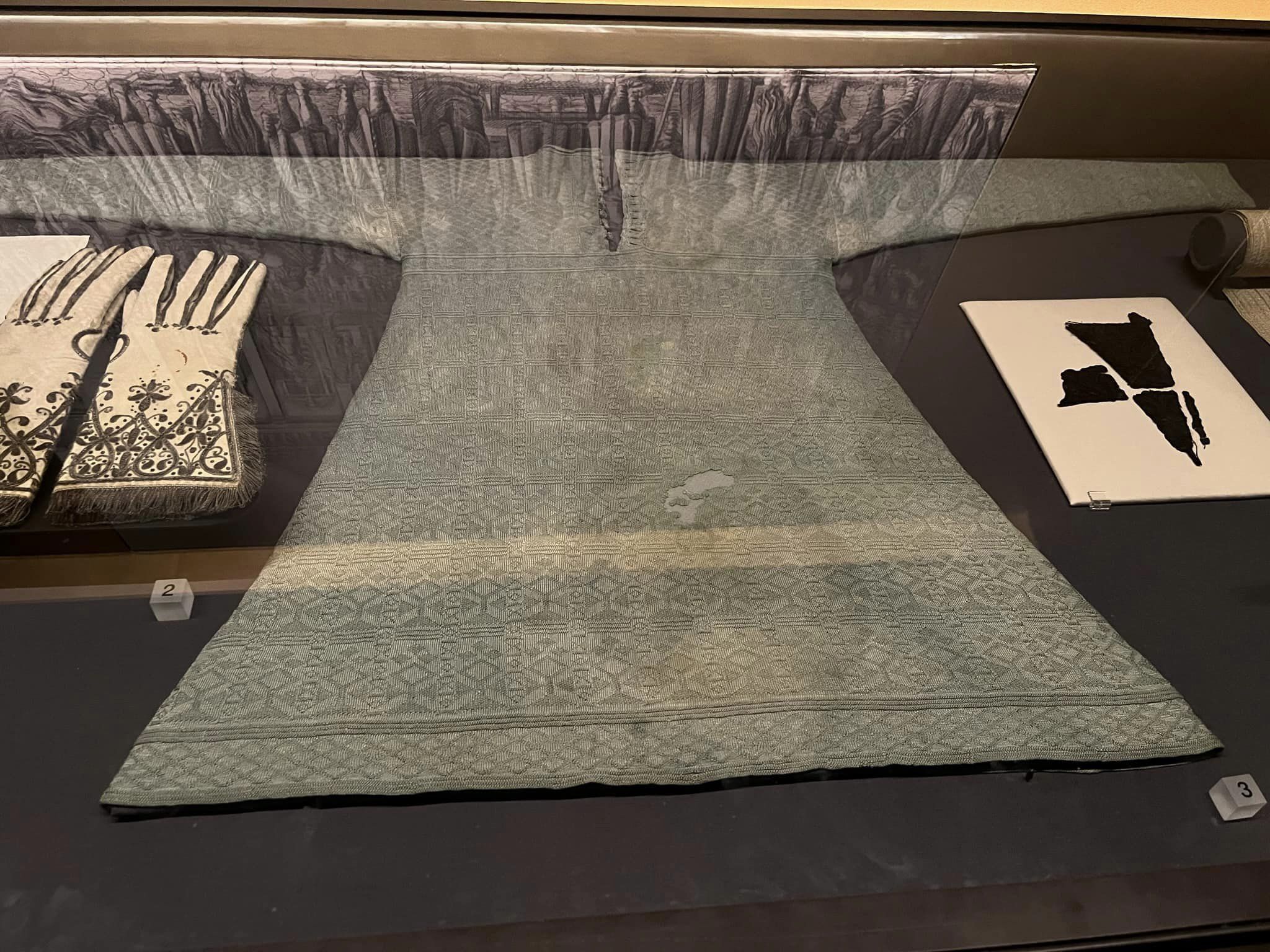
The vest is notable for its stains but whether they are the marks of a sticky end or the contents of a terrified king’s stomach remains unclear. “We have had tests done on them by forensics labs to try and work out if they are blood, but they were inconclusive,” said Jeater, noting that the stains fluoresce under UV light – as would be expected for sweat and vomit but not blood. However, experts suggested the passage of time may have changed the composition of the substances, she said.
The exhibition also contains other effects of the “traitor” king, including gloves and a handkerchief. “We can’t absolutely prove they were there on the day, but that is the story that has been handed down with these things,” said Jeater, noting that many were passed down from people connected to Charles. For example, the vest is thought to have been given to the king’s physician.
I must say, I found it quite incredible to see it up close as well as a number of other personal items from the King. It’s not every day you get to see a relic of one of the most infamous executions in history and for me it is curiously part of my job.
To spend a few hours visiting some of the most infamous crime locations and indeed places of Execution but from the comfort of home then why not try my Great Crimes and Punishment 360 degree Virtual Video Tour or see the gruesome sights in person with Crimes & Punishment Tour.

 Stephen Liddell
Gruesome, but fascinating! 😀
LikeLiked by 1 person
Yes it is 🙂
LikeLiked by 1 person