Last week to get away for a change of scene, I went to spend a few days in my childhood city of Newcastle Upon Tyne, to meet an old friend and some new ones who made an epic 12 hour return car journey to drop off food for me during the height of Covid and my being Excluded.
I had a room with one of the best views over the river and the city and due to the city rather unusually in Britain, being sat high above the river rather than on it (hence the Upon Tyne name), I had the chance to try out five or six of the iconic bridges there.
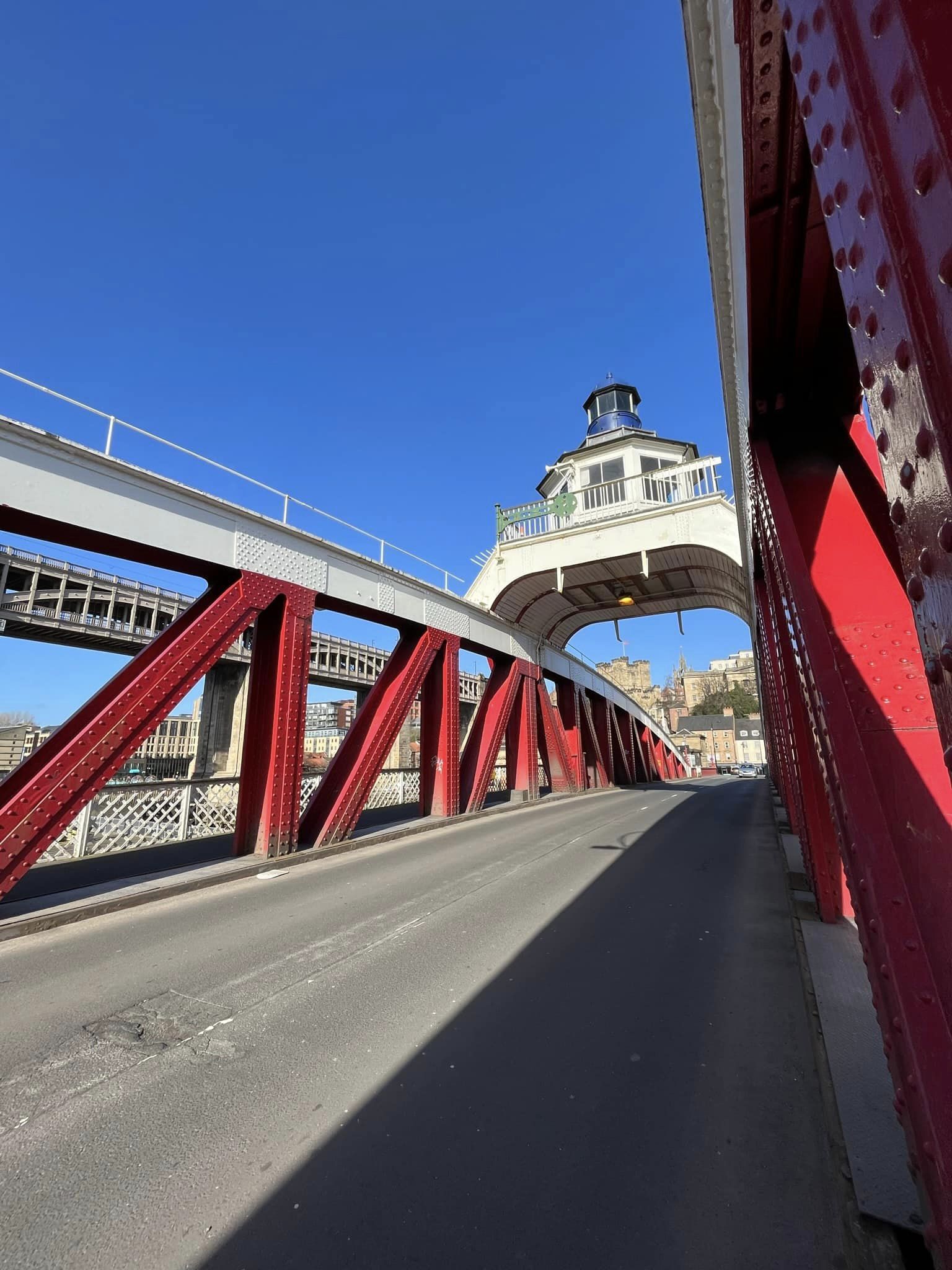
One of the most historic if perhaps one of the least well known is the Swing Bridge which spans the River Tyne is one of the region’s must-see heritage landmarks. The Swing Bridge was built by the River Tyne Commission, under powers conferred by the Tyne Improvement Act of 1861, as part of their overall plan to improve navigation and expand trade by opening the upper reaches of the river to larger vessels. Work on the bridge began in 1873 and it was designed and constructed by Sir W.G. Armstrong and Company Limited of Elswick.
One of the industrial wonders of the Victorian age, the Swing Bridge connecting Newcastle and Gateshead was a product of the visionary engineering genius Lord Armstrong.
It was designed to improve navigation and expand trade by opening the upper reaches of the river to larger ships.
On completion in 1876, at 171 metres long and 14 metres wide it was the world’s largest swinging bridge. The Swing Bridge uses pressurised water to power hydraulic engines that turn the 3,000 tonne central span of the bridge.
It was first used for road traffic on the 15th June 1876 and opened for river traffic on the 17th July 1876. The Swing Bridge is the fourth bridge to have been built on the same site over the Tyne at Newcastle. The first, constructed of wood and stone in 120 A.D. by the Emperor Hadrian, was known as PonsAelii, Aelius being the patronymic of the Emperor. This bridge stood until 1248 when it was destroyed by a fire, that also destroyed a great part of the town.
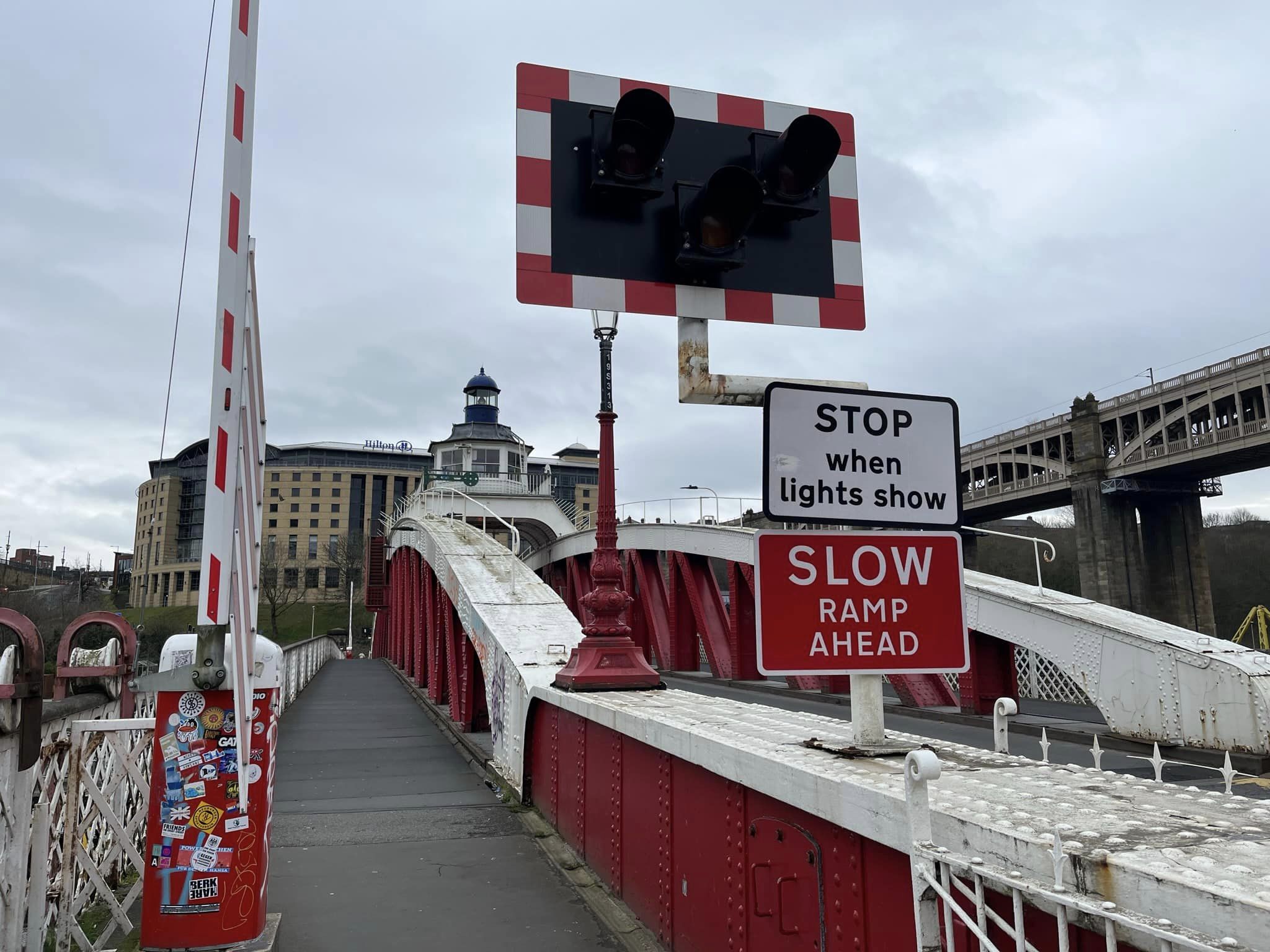
The second or Mediaeval Bridge was of stone construction and stood from 1320 until 1771 when a section was washed away in the great flood of 1771. The remaining portions had to be removed and the third bridge, constructed of stone with nine arches, was completed in 1781. This bridge was removed by the Commission to make way for the construction of the Swing Bridge.
Up to the the 31st December 1981 the Bridge opened 286,281 times enabling 448,090 vessels of over 220 million total net tonnes to pass through. In contrast, today the Bridge opens approximately 4 times per week.
For about a century the bridge was at risk of becoming inoperable in a heatwave as the heat would expand the metal components and make the mechanisms jam but in the 1960’s it was painted with a special sun reflective and heat dissipation paint which means that is no longer an issue.
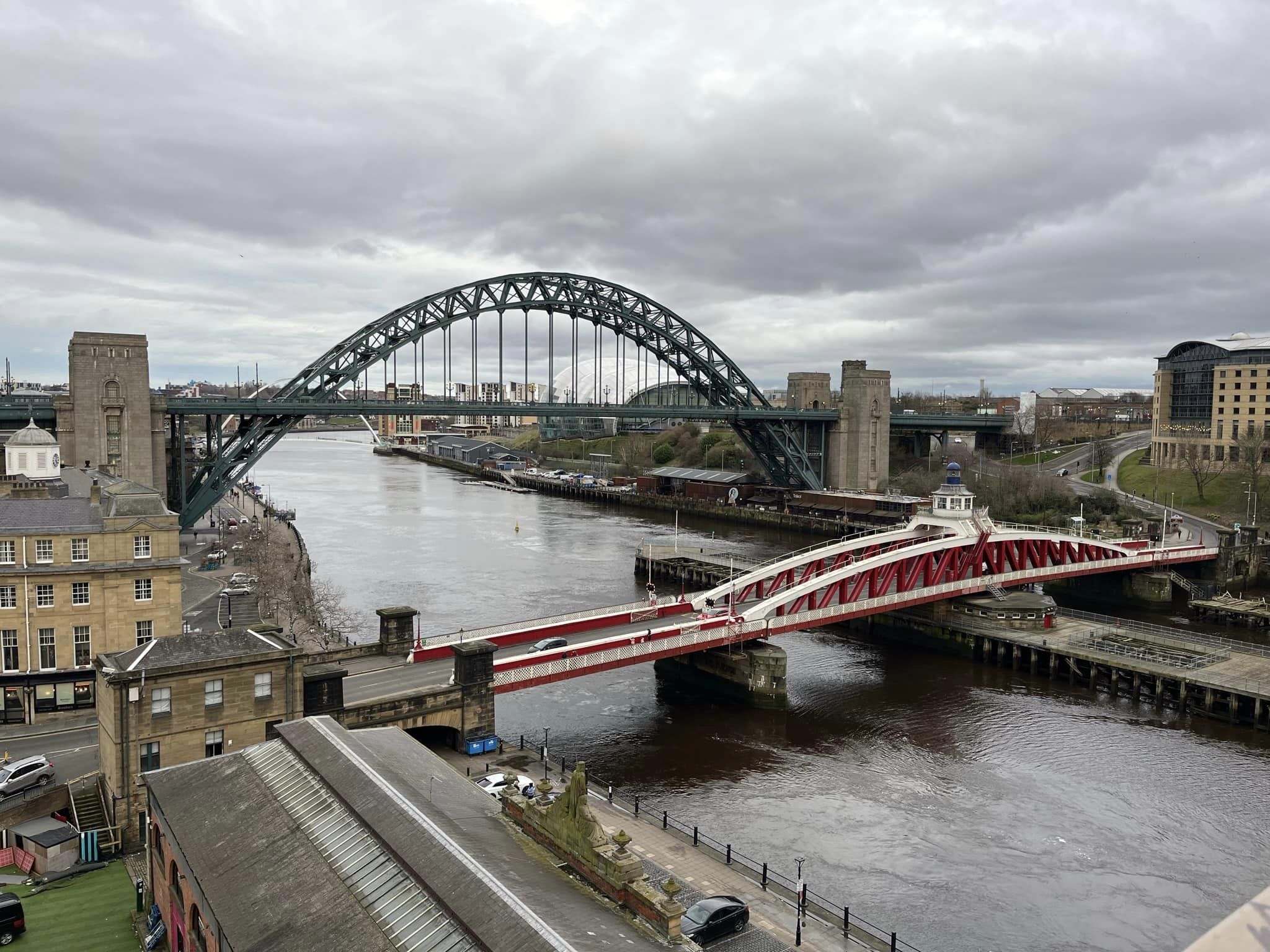
It’s a wonderful bridge to cross and on more than one occasion I have seen it used in police shows where the bridge is swung round to trap a fleeing villain!
You can see the bridge swinging round to allow a ship to pass in the Youtube video below.

 Stephen Liddell
2 comments