In my last post I mentioned in jest about there were several ‘heads of John the Baptist’ and I thought I might try and see how many I could quickly find. It should be noted that there are some photos of 2,000 year old dried out skulls below so if it’s not your thing then please come back next time! Like other major quasi-legendary Christian relics (think, for example, of the Holy Grail or the Spear of Longinus), the head of John the Baptist quickly gained an almost mythical, larger-than-life stature over the centuries, due to the prophet’s importance not only for Christians but also for believers of other monotheistic Abrahamic faiths.
Christian scripture tells the story of how John was sentenced to death and subsequently beheaded by Herod Antipas around the year 30, after John rebuked him for divorcing his wife Phasaelis and then unlawfully wedding Herodias —who had previously been married to his brother, Herod Philip I. The testimony of the Gospels is echoed by Josephus, who also mentions John in the Antiquities of the Jews, and states that he was executed by order of Herod Antipas in the fortress at Machaerus —on a hilltop in Madaba, Jordan, around 16 miles from the eastern shore of the Dead Sea.
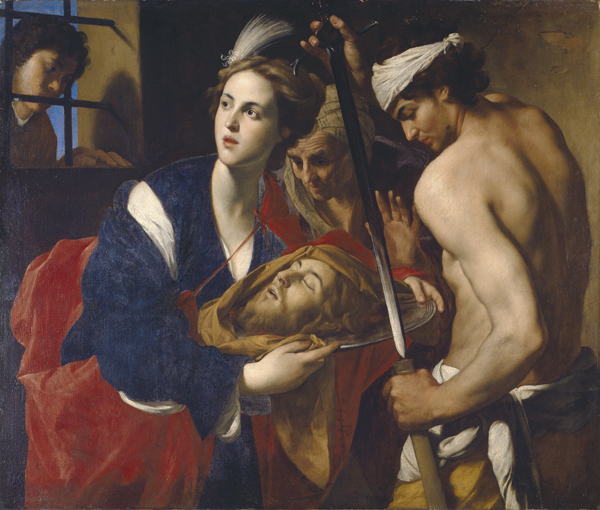
The Gospels of Matthew (Matthew 14:1–12) and Mark (Mark 6:14–29) recorded that Herod Antipas initially resisted killing John, because of his status as a holy man. But after his stepdaughter (Salomé) danced for him at his birthday party, he offered to give her anything she desired. Prompted by her mother (who resented John’s judgment of her marriage), Salomé requested the head of John the Baptist on a platter.
There are few mentions of what happened after this event with some mentioning the burial of John and so much of the below depends on having a somewhat open mind, faith perhaps! Whilst it is possible to trace some of the heads back 1,000 or even 1,500 years back, we have to take on trust that those involved 1500 years ago could track the head the 470 years or so back to Salomé.
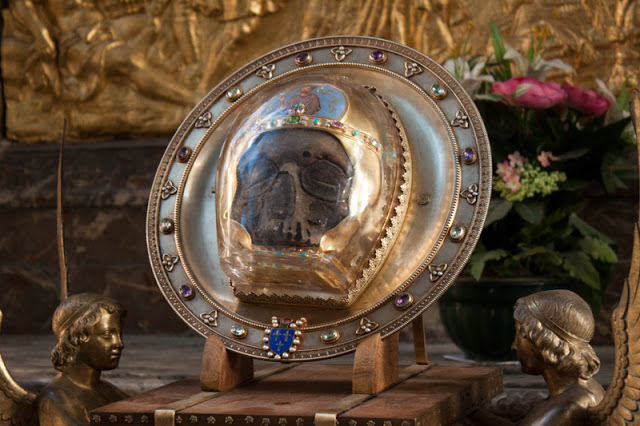
Different monasteries in Istanbul, Egypt, and Montenegro (among others) claim to have some of the Baptist’s relics. In fact, his right arm and right hand, with which he baptized Jesus, are still kept in the Topkapi Palace Museum, in Istanbul. The head of the Baptist that is preserved today in Amiens was originally in Istanbul (then Constantinople) alongside this right arm, but the noted Crusader Wallon de Sarton brought it with him to France in the year 1206. Amiens Cathedral was then built to house the relic, and immediately became a major pilgrimage destination. I did visit the cathedral at Amiens a decade or so ago and if I saw the head of John the Baptist then I didn’t realise what it was. Looking at the photo, it’s hard to imagine forgetting it in a hurry.
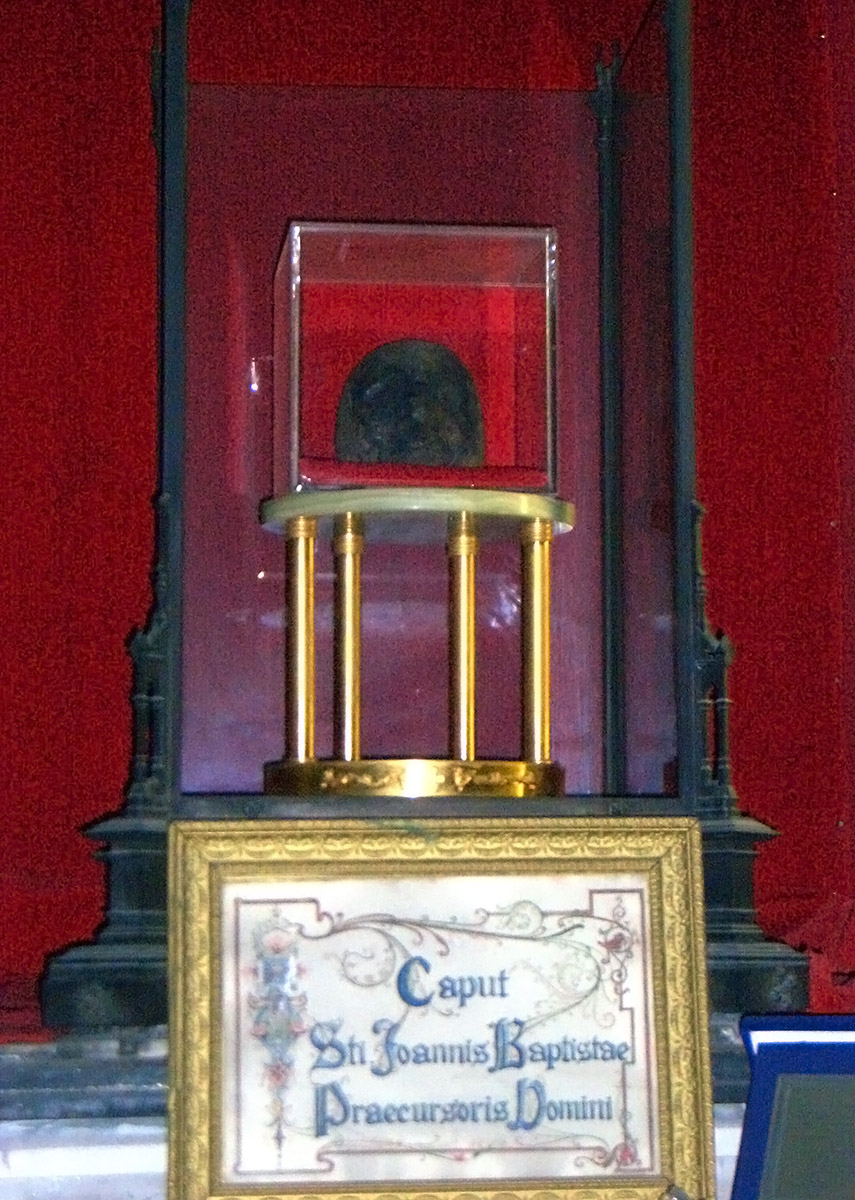
There are countless things to see in Rome and yet so few people make a beeline to another claimed head of John the Baptist which you will find in the relatively minor basilica of San Silvestro in Capite, in Rome. The church, dedicated to Pope Sylvester I (hence, “San Silvestro”) was built in the 8th century as a shrine to keep relics from saints and martyrs originally held in various Roman catacombs. The purported head of the Baptist is kept in a separate chapel to the left of the main entrance of the basilica.
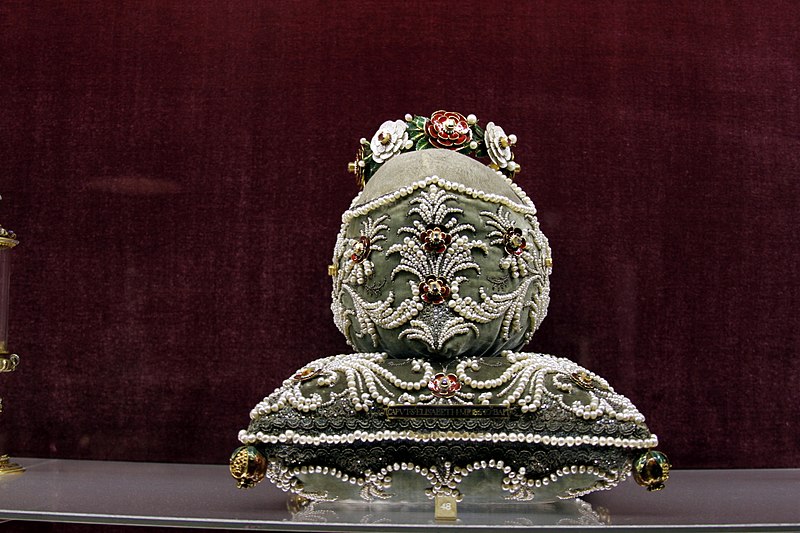
The third alleged head of the Baptist is kept not in a church, but in the Residenz Museum of Munich, Germany. The Munich Residence has been open to the public as a museum since 1920, and is considered to be one of the most important palace museums in Europe nowadays. The building belonged to the House of Wittelsbach, who governed Bavaria first as dukes, from the 17th century onwards as electors, and from 1806 to 1918 as kings. One of these dukes, Duke Wilhelm V of Bavaria, collected a number of relics in the mid-16th century, the Baptist’s head among them.
It shouldn’t be a surprise that John the Baptist is mentioned five times in the Quran. Muslims revere him as the prophet (Prophet Yahya) who heralded the coming of Isa ibn Maryam —Jesus, son of Mary.
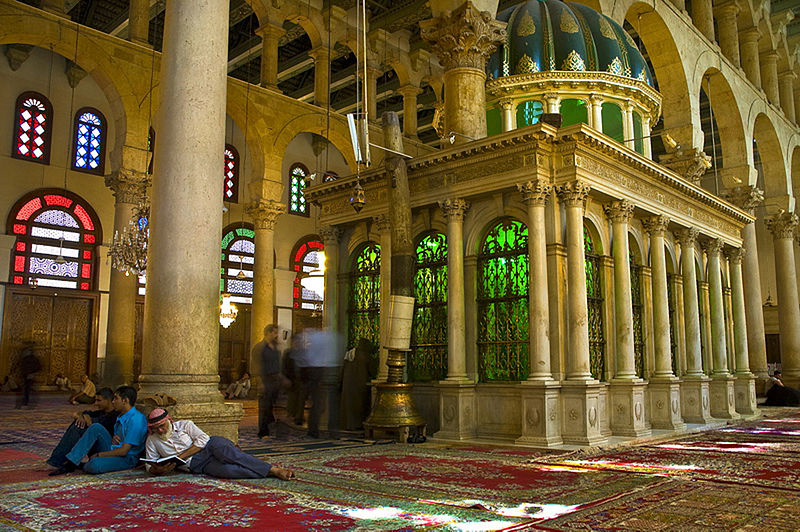
It is no wonder then that one of the heads considered to be that of the Baptist is preserved in a major mosque in Damascus —the great Umayyad Mosque. The fourth head is kept in the Umayyad Mosqu which is also known as the Great Mosque of Damascus. Iit is one of the largest and oldest mosques in the world, and the fourth holiest site of Islam, because of its historical and eschatological implications: the mosque is believed by Muslims to be the place where Jesus will return before the End of Days, and the mausoleum containing the tomb of Saladin is in a small garden, by the north wall of the mosque. After the Muslim conquest of Damascus in 634, the mosque was built on the site where a Christian basilica dedicated to John the Baptist already stood. In it, according to tradition, the head of John the Baptist was already preserved.
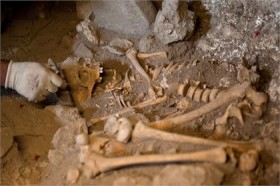
One might think that 2,000 years of history would have been enough time for all any and all possible heads to make an appearance but in 2010, Bulgarian archaeologists found a reliquary containing some bones in the ruins of a medieval monastery on Sveti Ivan (Bulgarian for “Saint John”), an islet in Bulgaria’s southern coast, in the Black Sea. Because a later monastery there was dedicated to John the Baptist, the researchers suggested these were likely the saint’s remains. Moreover, radiocarbon dating and genetic testing also revealed the bones belonged to a man who lived in the Middle East in the first century. However, whereas it is os course possible no matter how unlikely that these could be John the Baptist’s remains, there is really no conclusive way to prove it.
For something similar but with considerably less skulls then why not read Did Jesus Christ visit England?

 Stephen Liddell
There’s a church in Trimingham, Norfolk, dedicated to St John the Baptist’s Head. It used to have a mediaeval shrine in the undercroft where pilgrims could see John’s head when he was a child and also after his execution (that’s correct: two heads!).
LikeLiked by 1 person
That’s fantastic! I wonder how they explained that. Reminds me of Basil Fawlty and the 2 psychiatrists and his comment so you’re three doctors!
LikeLike