Do you have a favourite ancient civilisation? Probably you’ve never really thought about it. There are so many to choose from though the mainstream media seem to obsess over the Ancient Egyptians and Ancient Greeks and of course those pesky Romans get everywhere.
There are so many more major civilisations to learn about and they are spread across most of the planet in China, India and even ancient Britain let alone those who either didn’t leave behind much evidence of their existence or those that were largely destroyed through the millennia.
I always think the Romans, Greeks and Egyptians are the McDonalds of ancient history. They are everywhere, everyone is a little familiar with them but just as few would clam a Big Mac to be the best food ever, there are other old civilisations that are so rewarding to learn about. (Is this a good place to mention an old post Why is there no history on History TV?)
I’m not quite sure why but my favourite Ancient civilisations have always been in Iran, the Levant and Fertile Crescent or Lebanon/Syria/Iraq/Iran to dispense with he flowery language.
There wasn’t just one civilisation in each of these places but several, sometimes competing against each other and at times more or less peacefully progressing from one to the next.
I’ve always had a soft spot for the Assyrians and Babylonians amongst many others. Not only hugely sophisticated themselves with their fantastic Cuniform script but one way or the other they influenced so much else from everything from Mathematics to the Old Testament.
A few days ago I visited the British Museum in preparation for a special tour I will be giving and I thought I might write a few small posts on some of my favourite objects out of the millions of items on display and in holdings. Given that, I thought I might start with perhaps my two favourite artefacts in the world.

These are known as Lamassu or Shedu and once stood at the gates of the citadel for the Assyrian King, Sargon II (721-705BC) in the city of Khorsabad. Their features include a human head with the body of a bull with wings and they acted as powerful magic guardians against misfortune.
One can only imagine what it would have been like to see them nearly 3,000 years ago. As imposing and terrific as they undoubtedly are (and there are many similar creatures even in the British Museum, let alone elsewhere), sadly for King Sargon their magic clearly only worked within the citadel walls as he was unexpectedly defeated in battle.
The city of Khorsabad was upended and relocated just a few miles away to the more widely known ancient city of Niniveh (both in modern day Iraq). Khorsabad is now just a tiny village with barely a clue as to fact that at one time it was home to perhaps the most powerful man on Earth, Niniveh itself has largely gone the same way.
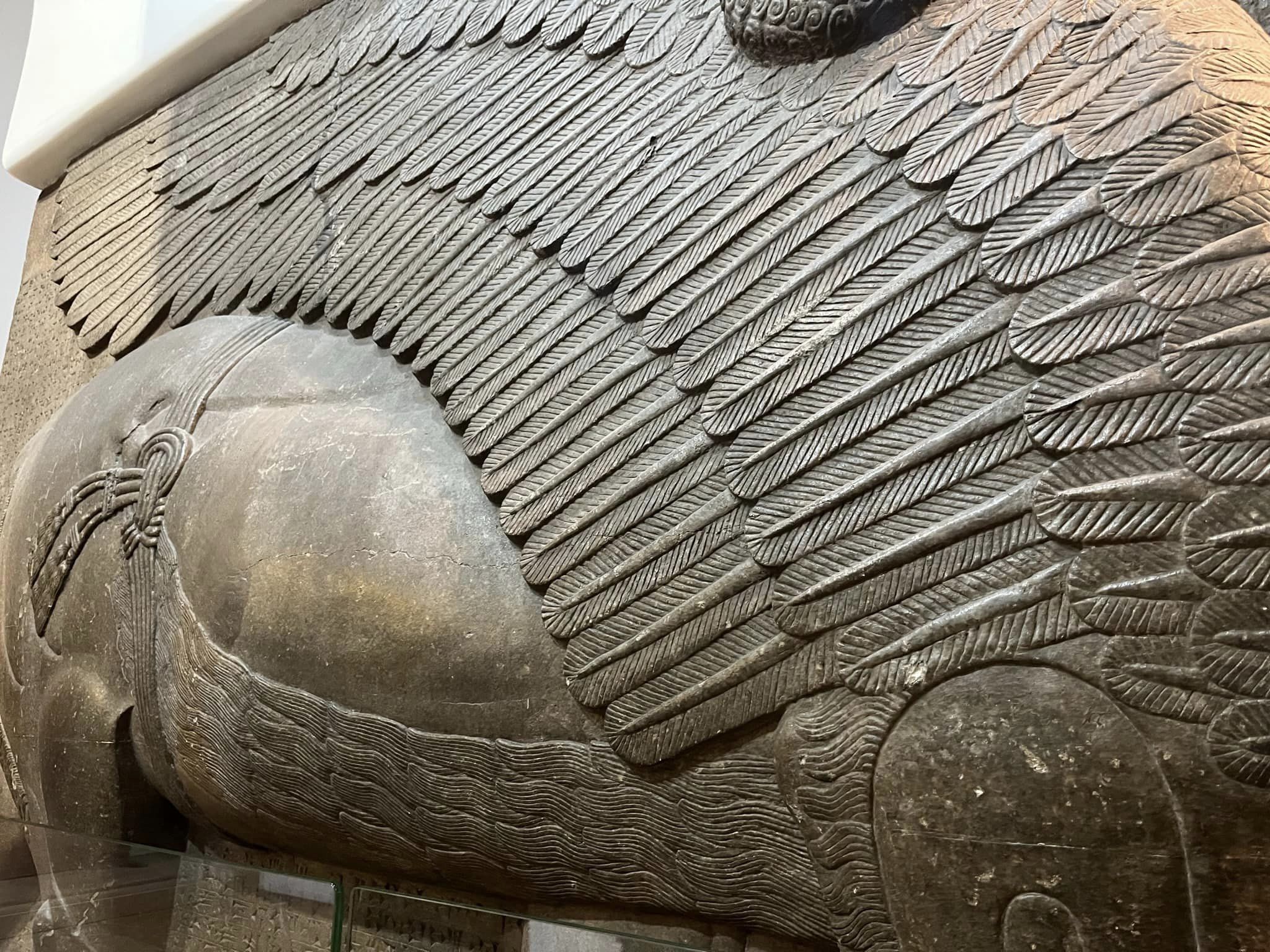
Standing at around 4.5 metres tall and incredibly detailed, I think they are wonderful and there are hundreds of feet of related carvings along the walls around and about.
Whilst they understandably make people stand in awe of them when in their presence, I find it a bit sad that the wider civilisation has almost zero recognition compared to others of a similar time.
Do you have a favourite museum or gallery work of art?

 Stephen Liddell
MY HEADU IS A SHEDU………..😂😂😂
LikeLike
My website will interest you. Search: haitheory
LikeLiked by 1 person