St Mary le Strand is a justly celebrated architectural gem and a widely recognised landmark building. It has a grand and dignified worship space which makes it a sanctuary and place of peace in the heart of the district. After the Great Fire and the subsequent rebuilding of St Paul’s Cathedral, the City Commissioners proposed a scheme to build fifty new churches for London, of which St Mary’s is the first. The original church of St Mary le Strand was demolished in 1549 to make way for Somerset House. In 1711, the parishioners successfully petitioned the Commissioners that a church should be reinstated in the Strand and work begun in 1714. The new church was consecrated on 1st January 1724.
The church is a fine and beautiful example of baroque design by James Gibbs, an architect of high technical competence and originality, informed by a sophisticated knowledge of ancient, Renaissance and contemporary European architecture. The church in its landmark setting in the middle of the Strand is a magnificent and memorable sight, enhanced by the important visual connection with St Clement Danes Church, a short way to the East.
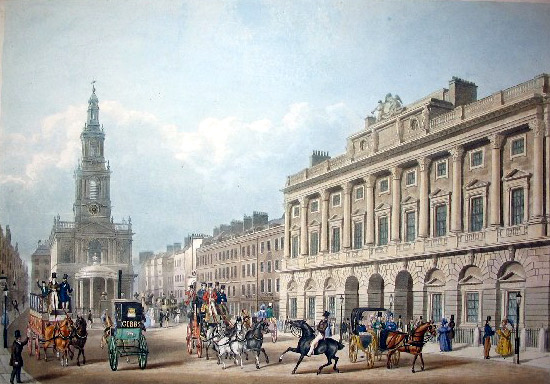
The architecture of St Mary le Strand proved controversial from the outset, and the architect later expressed unhappiness at the way that his plans had been altered by the Commissioners. According to Gibbs, the church was originally intended to be an Italianate structure with a small campanile over the west end and no steeple. Instead of the latter, a column 250 feet (76 m) high surmounted with a statue of Queen Anne was to have been erected a short distance to the west of the church. A great quantity of stone was purchased and brought to the spot, but the plan was abandoned on the death of the queen in 1714. Instead, the architect was ordered to reuse the stone to build a steeple, which fundamentally altered the plan of the church. Gibbs explained:
The building being then advanced twenty feet above ground, and therefore admitting of no alteration from east to west, which was only fourteen feet, I was obliged to spread it from south to north, which makes the plan oblong, which should otherwise have been square
The extravagant Baroque ornamentation of the exterior was criticised at the time, and matters were not helped when one of the decorative urns surmounting the exterior of the church fell off and killed a passer-by during a procession in 1802.
The Church’s prominent location in the heart of the metropolis, on the processional route from Westminster and Buckingham Palace to the City of London, is just part of its wider significance than the purely local.
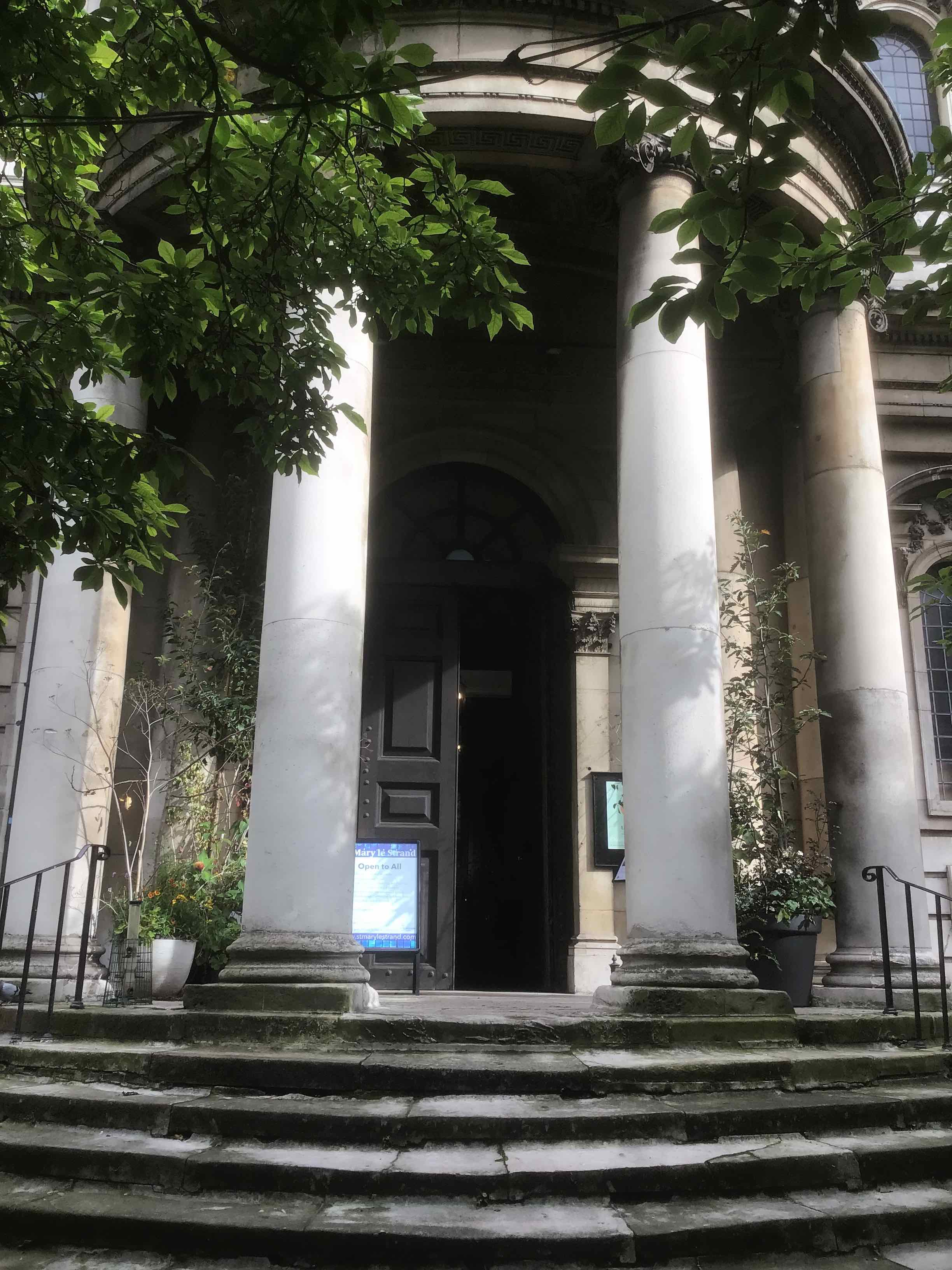
Yet despite this, out of all the churches in London, this is perhaps the one I feel the most sorry for (The forlorn church of St Mary Somerset is one of several I’ve written about). There are one or two hidden away that are in a sorry state but St Mary le Strand isn’t hidden away at all, it’s at the very heart of the ancient Strand, the road that links the cities of London and Westminster.
For centuries it has been an island in a very busy thoroughfare and even in the 18th century, parishioners complained of the traffic noise. As such, Gibbs designed the ground floor without windows as to keep the noise of traffic out.

I hadn’t even managed to get into the church until the latter stages of Covid, such an impenetrable barrier was the road traffic to casual passersby. It looked like its best days were far behind it with the ingrained dirt from the traffic and centuries of pollution.
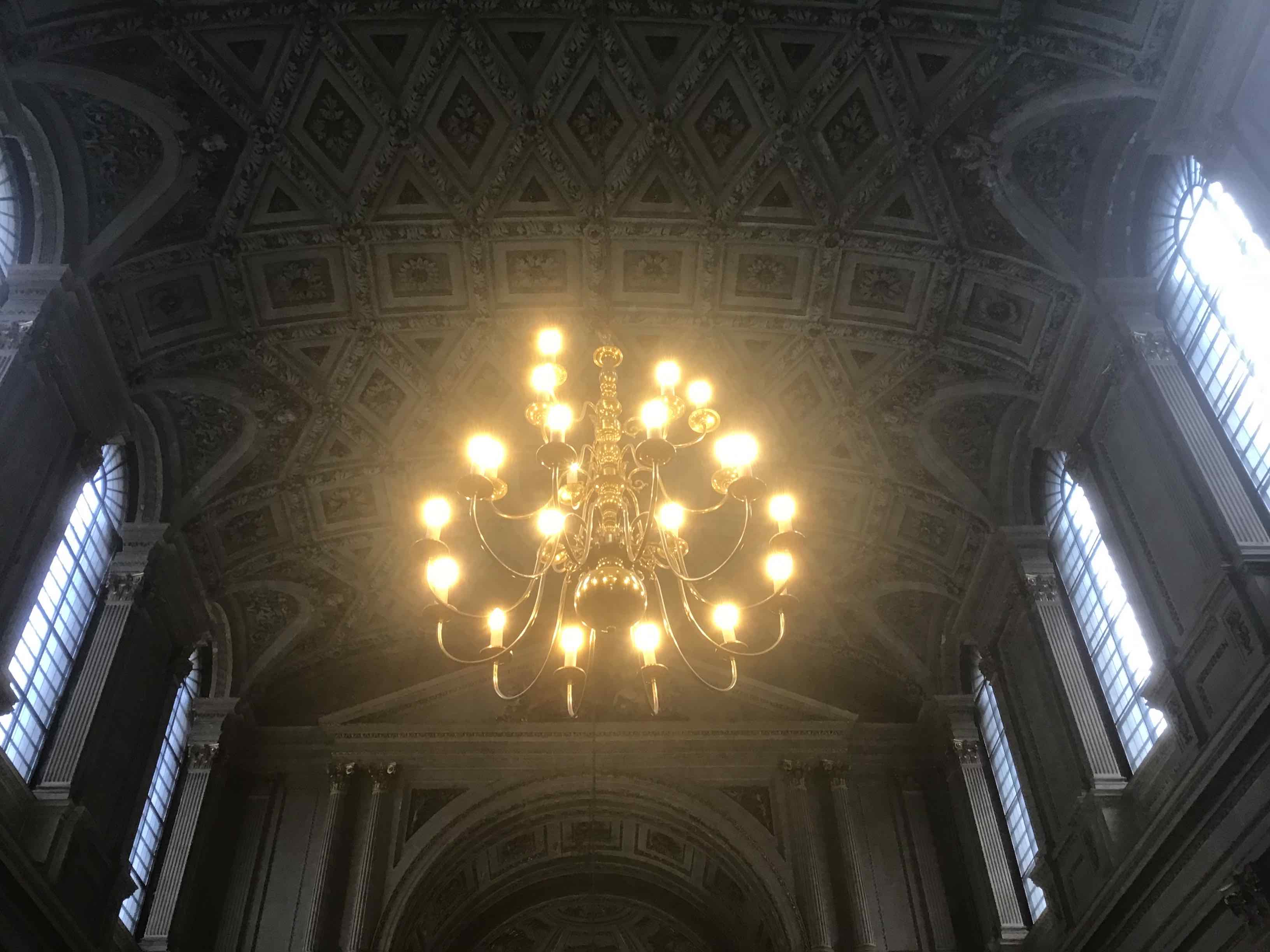
The inside however is glorious albeit it again having something of faded glory. Perhaps hardly surprising giving its location. It narrowly being avoided being wiped out by the Luftwaffe and then later the council proposed to demolish entirely to widen the road further because 6 or lanes of traffic obviously wasn’t enough!
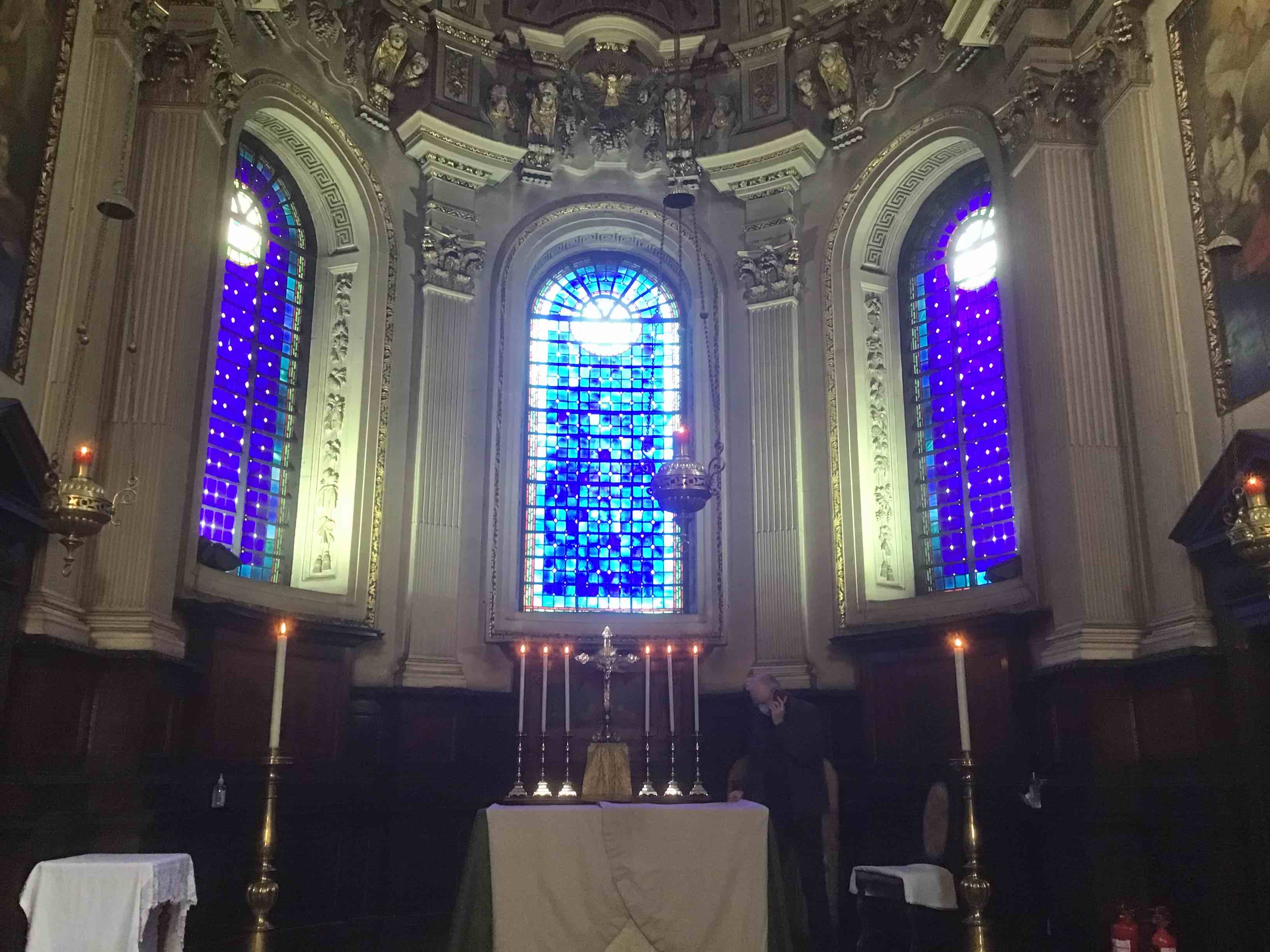
A few decades later and things have changed on the traffic front with the whole area being for people instead.
The church has drawn up plans for the Restoration and Development of St Mary le Strand to make it safe, accessible and fit for purpose in its new role as the centrepiece of the newly pedestrianised East Strand piazza. The plans include creating step-free access and making the body of the church more flexible, including facilities to make the church more suitable for hosting a wider range of events. We plan to make safe the high-level stonework and clean the outside of the building. We also hope to adapt the crypt space underneath the church.
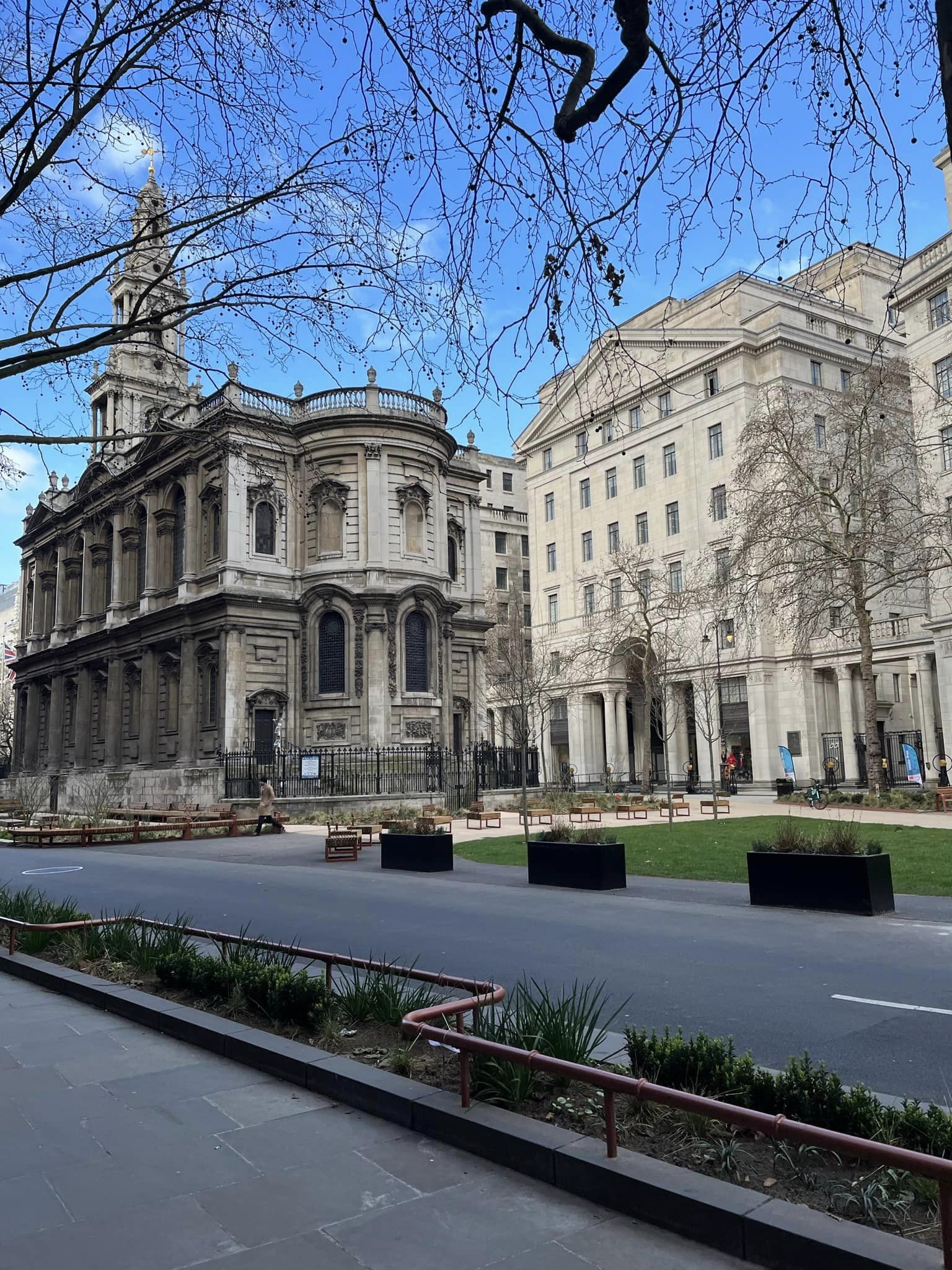
One day soon the church will live up to its moniker of being the jewel in the strand.

 Stephen Liddell