Whilst I was out looking for my beigel a few weeks ago in Spitalfields, I decided to do a bit of a detour to look for an old ruin which if not quite in plain sight then is at least walked over by thousands of people every day without their ever really knowing.
I’ve written lots of posts about Spitalfieldsas it is one of my favourite areas of London even though it is comparatively off the beaten track for most people. For a place which is most famous for Jack The Ripper, it shouldn’t come as too much of a surprise to learn that it has a long history relating to bodies and cemeteries that goes back at least until Roman Times.
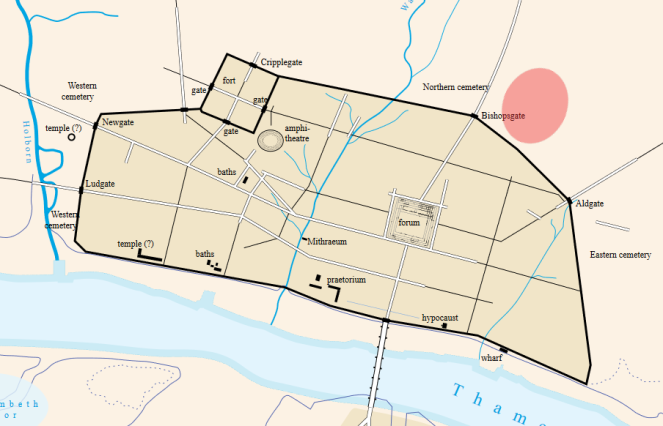
You can see from the map above the outline of old Roman London and the main thoroughfares within. The Romans naturally didn’t like to bury people right in the centre of the City so many were buried just outside the city walls in Spitalfields and past Aldgate in what is now Whitechapel as well as west of Ludgate across the River Fleet in what is now Fleet Street.
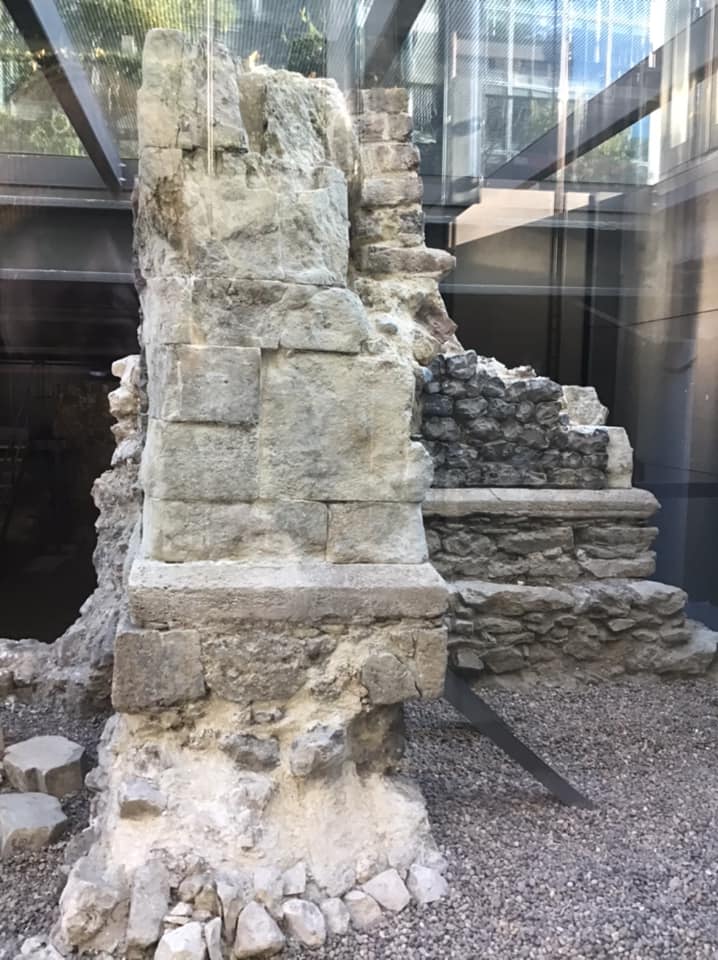
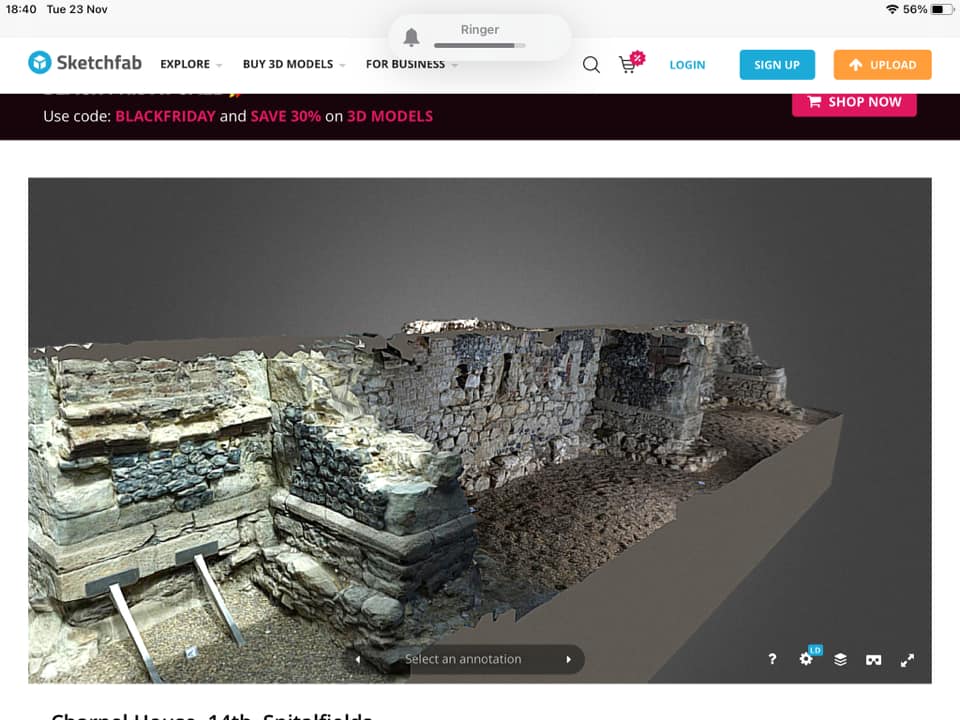
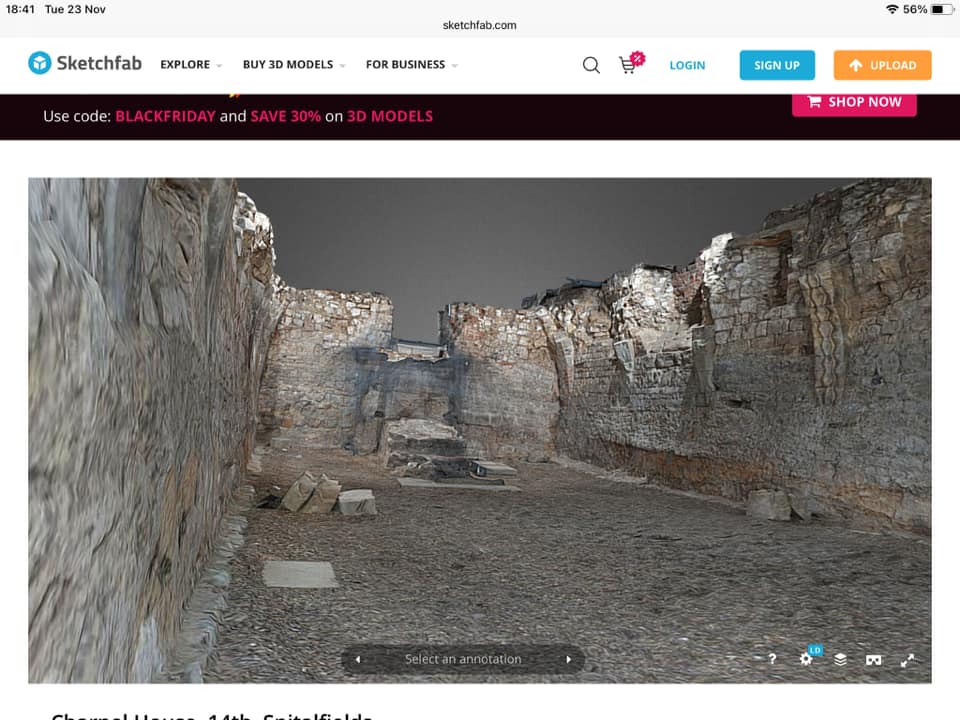
I’d come to take another look at Bishop’s Square as I’m looking at creating a new tour in the area and whilst above ground is a mixture of old markets and some very new corporate builtins, under the glass pavement if one cares to look then you can see the cavernous medieval Charnel House which was built around 1320AD. Inside the building was where the dis-articulated bones of many thousands who died here during the Great Famine in the thirteenth century.
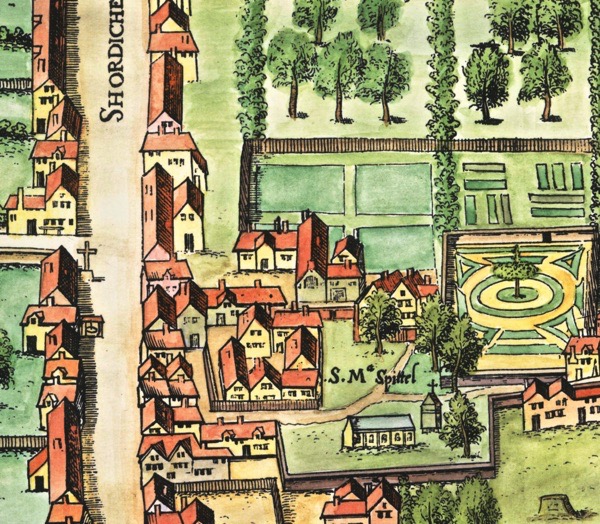
It is thought that starving people flooded into London from the neighbouring county of Essex seeking food after successive crop failures and reached the Priory of St Mary Spital where they died of hunger and were buried here. In particular skulls and leg bones were kept here as they were thought to be the most important bones as they allowed the dead to be able to talk and walk upon Judgement Day and their resurrection and presumably where you get the famous pirates skull and crossbones flag from.
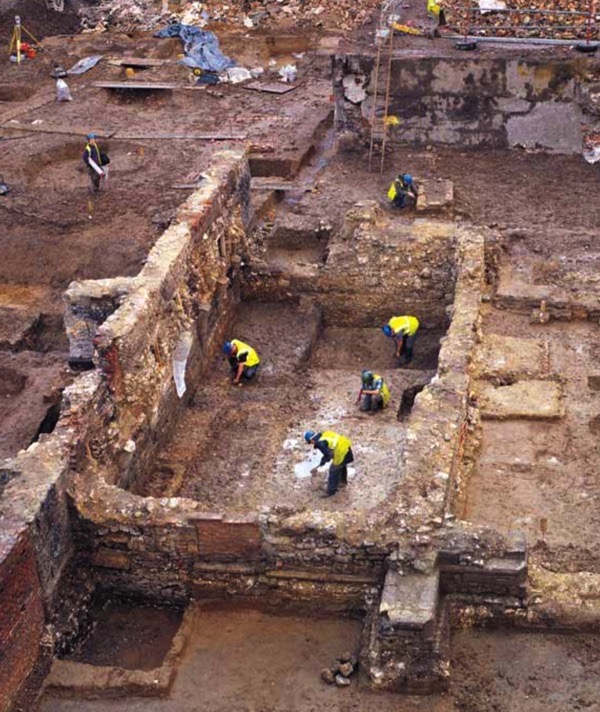
That old rotter King Henry VIII dissolved the Priory of St Mary Spital in 1540 and the bones were rather thoughtlessly disposed of before the building likely became a basement of kitchen for a large house. Eventually though, the main body of the house was levelled as Spitalfields developed whilst the section underground was filled in with debris, likely from the Great Fire of London. It was entirely forgotten about until its re-discovery in 1999 and the architects thoughtfully made a public feature of it and adapted their building plans accordingly.
Following a set of steps down from the square and you can see a number of information boards as well as large glass windows that allow one to see the ruins as they are today after their excavation and preservation.
Interestingly and immediately obvious is the fact the walls have knapped flints set into them as way of decoration and you can see similar styles at Southwark Cathedral and St Bartholomew the Great. A great deal of expense and sophistication was put into the building that was likely supported by wealthy benefactors.
If you look closely through the window you can just about see individual lumps of masonry with the marks of the mason who worked on them which would allow them to claim their pay.
It’s all rather fascinating to think of the history of this place and that you can see the remains of this 700 year old plus house of the dead. One can’t help but wonder where the one time residents are now resting.
If you’re interested in some of the other bone related blog posts then take a look at Dancing on the Dead at Enon Chapel – The Victorian Sensation! and Cross Bones Graveyard – A resting place for the ‘Single women’ of London

 Stephen Liddell