Two weeks ago you may have seen my post on the Painted Hall in Greenwich which is often referred to as the Sistine Chapel of England. The artwork is 300 years old however and due to age, wear and tear and earlier attempts at preservation, the imagery had become very dark and rather indistinguishable from now on the floor.
As such since September 2016, access to the Painted Hall has been largely restricted and the ceiling obscured during a mammoth restoration project.
Recently I had the opportunity to take some of my tourists 60 feet up scaffolding to take a once in a life-time opportunity to get up close and personal with this fantastic work of art.
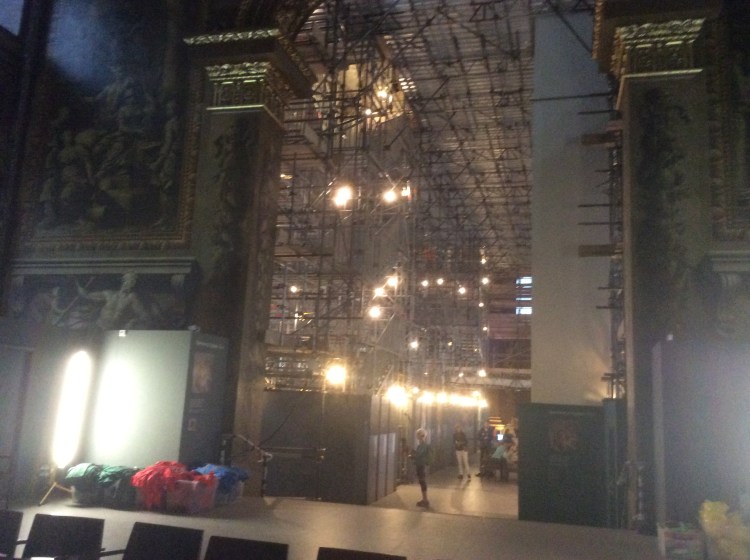
So we headed up in a small group and climbed 60 feet of scaffolding which itself took months to assemble even before restoration work could commence.
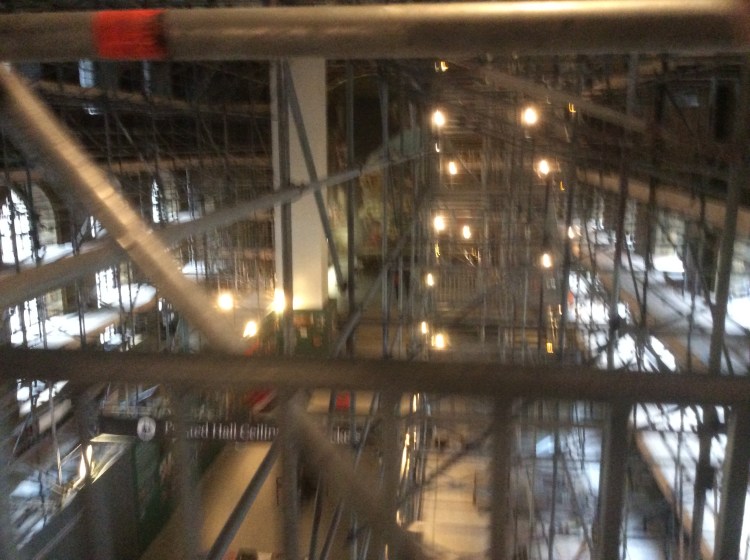
The traipse up the stairs was well worth to end up in touching distance of one of the largest and most ornate paintings in the world.
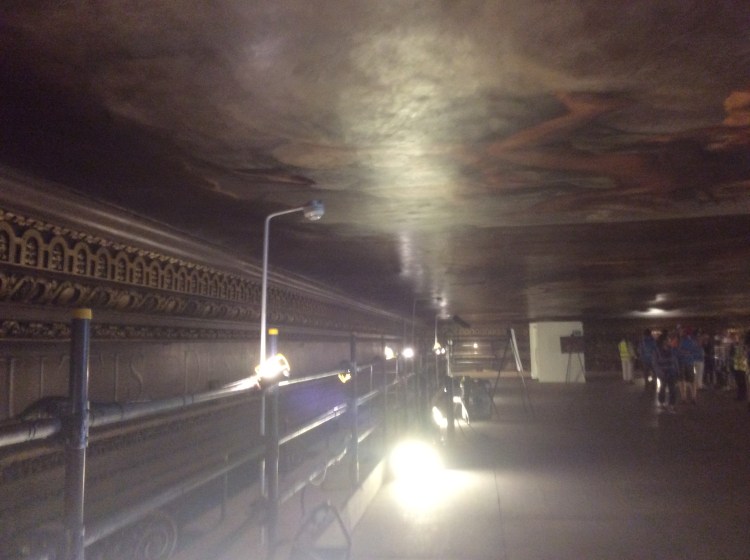
Part of our 50 minutes up by the ceiling was a guided tour but we also had plenty of time to go off and explore. It must be hard for the conservation artists to paint, not screw up and have onlookers gawping at them, even if from a respectful distance.
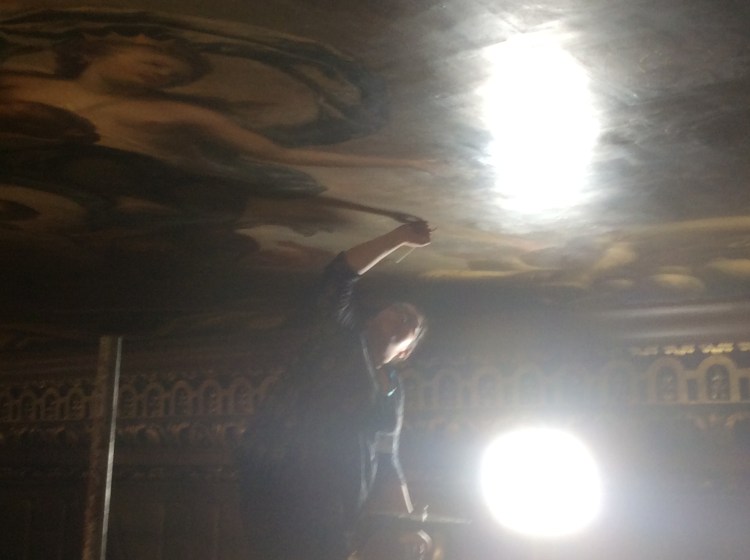
To most people today, the artwork is simply a beautiful thing to behold but at the time, almost everything depicted would illustrate subtle and not so subtle messages about our grandeur with quite a few digs at out enemies with special mentions to France.
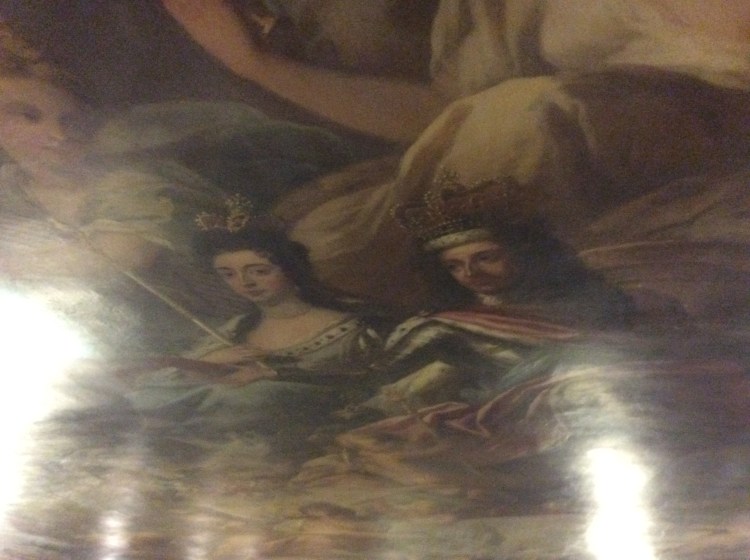
The history of Greenwich is the history of Royalty, the history of Science and the history of the Royal Navy and all three aspects can be found in painted ceiling too.
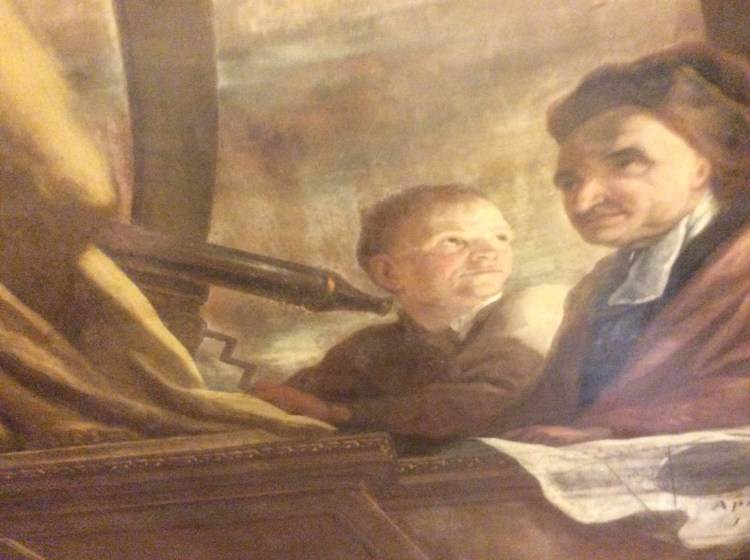
The restoration work has uncovered many secrets. Some were surprising such as the scale of the art which due to the use of forced perspective appear even more different up close than from the ground than specialists believed to be the case.
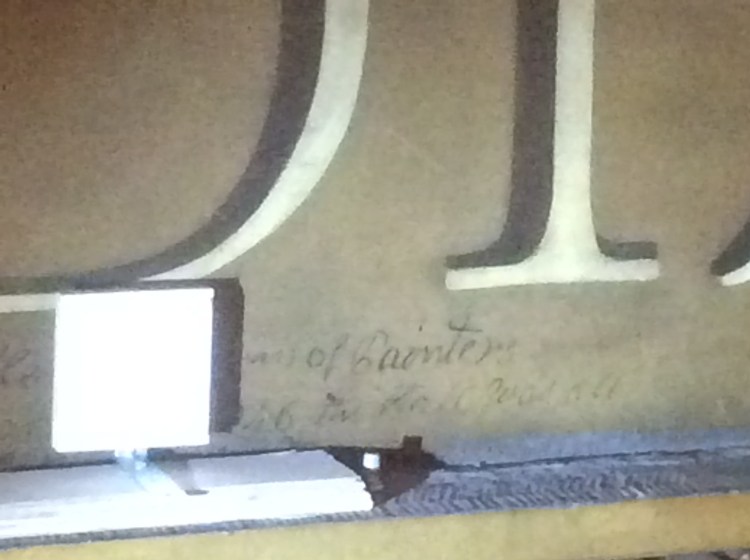
Hidden around the place though are secrets left behind by the artists or earlier restorations such as this cunningly hidden signing of a painter right on the edge of the ceiling and entirely out of site from the ground. The number of such finds number at least in the teens with one very close to the breasts of the queen. The artist must have been confident that the royalty of the day weren’t going to go up and inspect the work personally!
Restoration works in previous centuries did the best they could but sometimes their repairs almost did more damage than good but this time around, conservators have found ways make good on these old repairs as well as bringing vibrancy back to the art itself.
All materials and techniques used have been deliberately chosen so as not to damage the material in any way and be totally reversible if need be by specialists in the future.
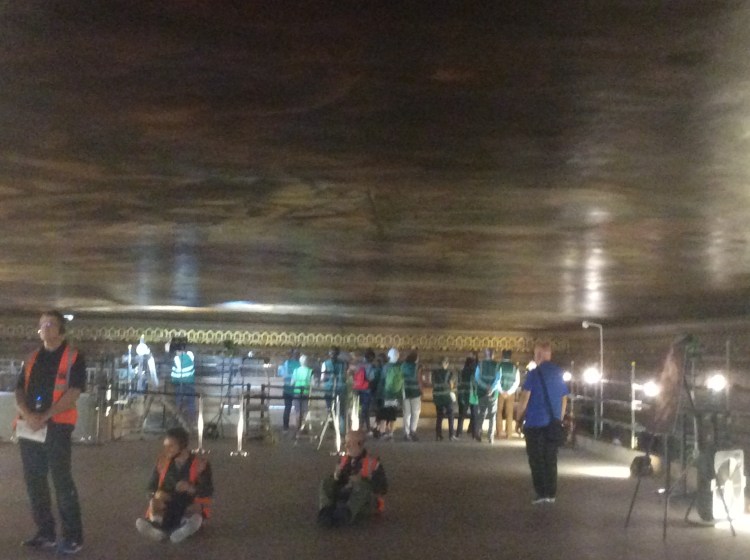
To be honest, I could have stayed up here all day, admiring the work, decoding the hidden meanings that are depicted and watching the conservators at work but am thankful that I am amongst the relative few who will ever get this close to the ceiling, this side of the 22nd century at least.
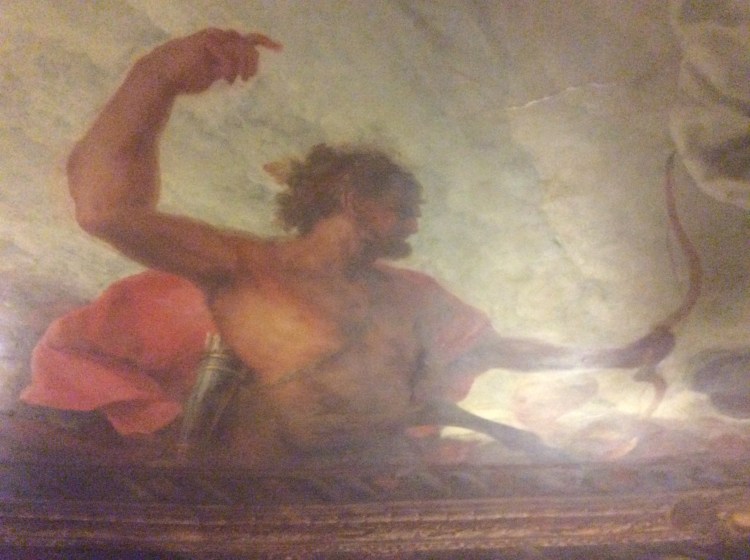
The great ceiling is vast, measuring around 30 metres long by 15 metres wide. It is not surprising that as the artist and his team of assistants worked away they sometimes changed their minds, adjusting the composition slightly by painting over earlier details. They used oil paints on a dry plaster surface, building up the painting in layers or glazes. This technique is sometimes called fresco secco in Italian. Unlike true frescos which have to be painted quickly whilst the plaster is still wet, Thornhill’s technique allowed him to make small adjustments by painting over earlier paint layers.
These adjustments or alterations are called pentimenti (from the Italian verb pentirsi, meaning to repent or change your mind). Pentimenti are usually hidden beneath a subsequent paint layer but in some instances they become visible because the paint layer above has become more transparent with time. They can also be detected using infrared light. They are interesting because they show the development of the artist’s design and how his ideas evolved.
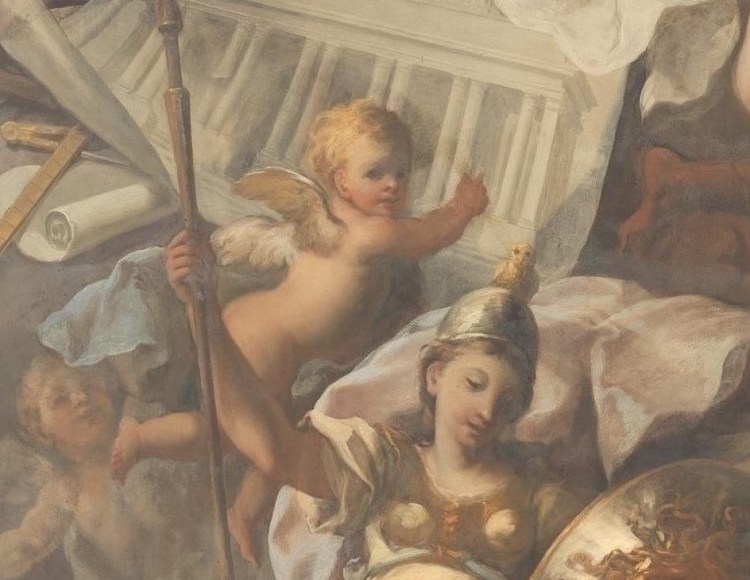
Ceiling Tours are still available but only until the 30th September so if you are in London and want a very special treat then check out their official Ceiling Tours website.

 Stephen Liddell
Who (& when) was Thornhill (original designer? One of the painters? A conservator maybe?)?
LikeLiked by 1 person
Yes, Sir James Thornhill designed and painted the ceiling between 1707 and 1726. How incredible that his memory lives on through his work 3 centuries later.
LikeLike