Originally I started composing this blog post for halloween but then I noticed how today is the anniversary of this awful crime so I thought it was rather fitting to post today.
Just 3 or 4 miles from where I live is the scarily affluent town of Radlett, brimming with actors, socialites and premier league footballers. Go back exactly 200 years to the 24th October 1823 and it was a whole other story.
William Weare was a solicitor of Lyons Inn and was a gambler and like many gamblers, he had enemies. One of which was a man called John Thurtell, who was the son of the Mayor of Norwich. John Thurtell had a grudge against Weare as he thought Weare had cheated him out of £300 in a game of cards.
£300 was a vast amount of money at the time and today would be getting on for £30,000. John Thurtell was convinced that he was due his money and would get it one way or the other.
John Thurtell invited William Weare to spend a weekend gambling with him and some friends at a cottage owned by another gambler called William Probert in Oaks Close in Radlett, Hertfordshire.
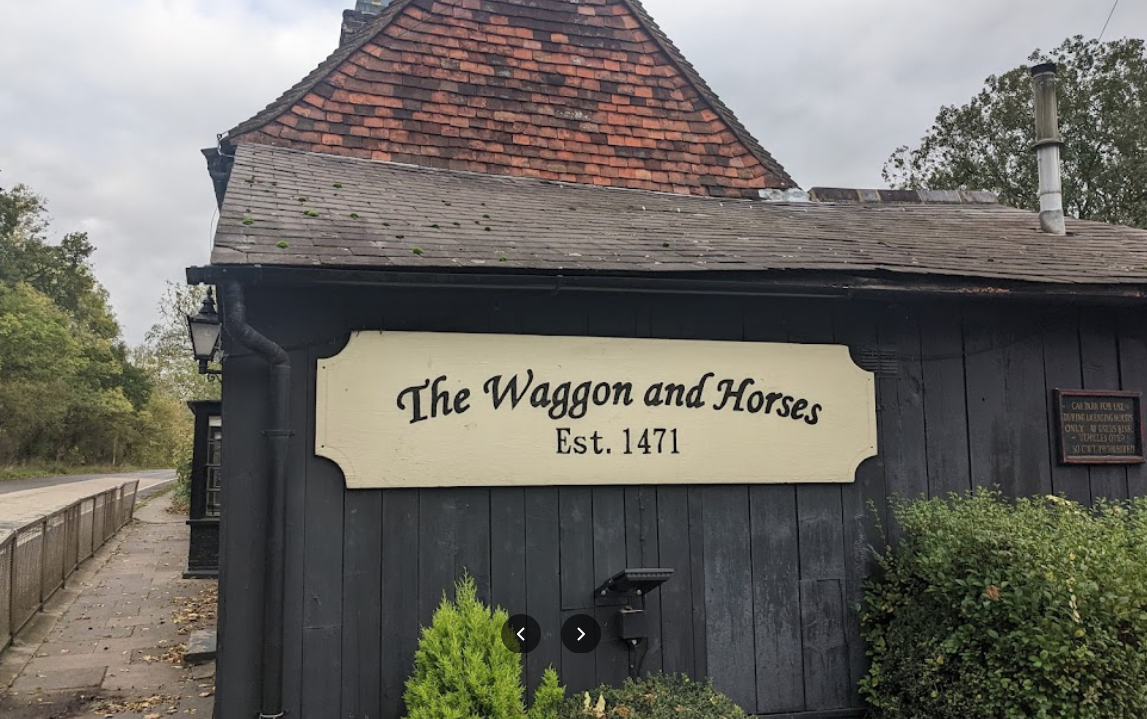
They travelled up from London on the 24th October 1823, but as they neared the cottage John Thurtell confronted William Weare over his debt outside the Wagon & Horses pub on the old Roman Watling Street a mile or two from the town.
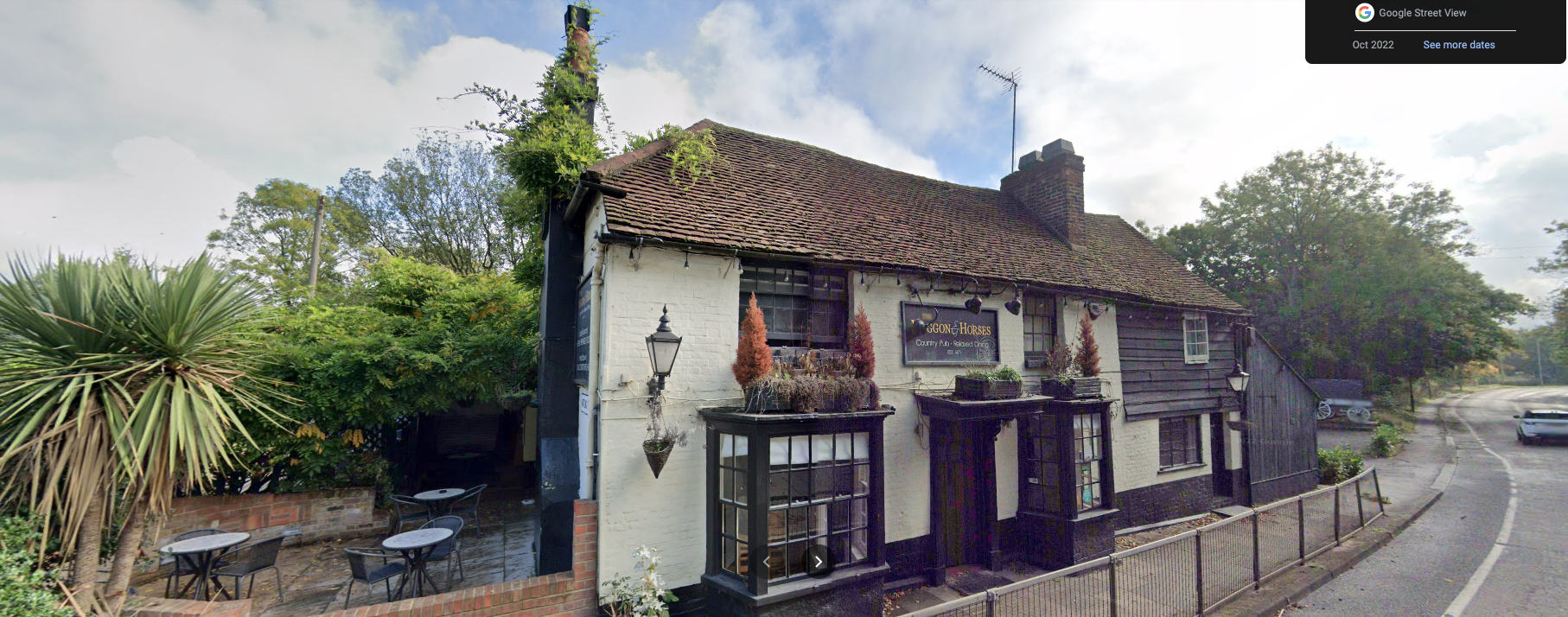
Thurtell drew out his pistol and fired a single shot in Weare’s face but the gun misfired and instead left Weare in a daze as he tried to escape.
Unfortunately he didn’t get far and a penknife was then used by Thurtell to cut Weare’s throat, before he was further beaten.
Assisted by William Probert and another friend called Joseph Hunt, the pub landlord, John Thurtell moved William Weare’s body into a pond near the cottage.
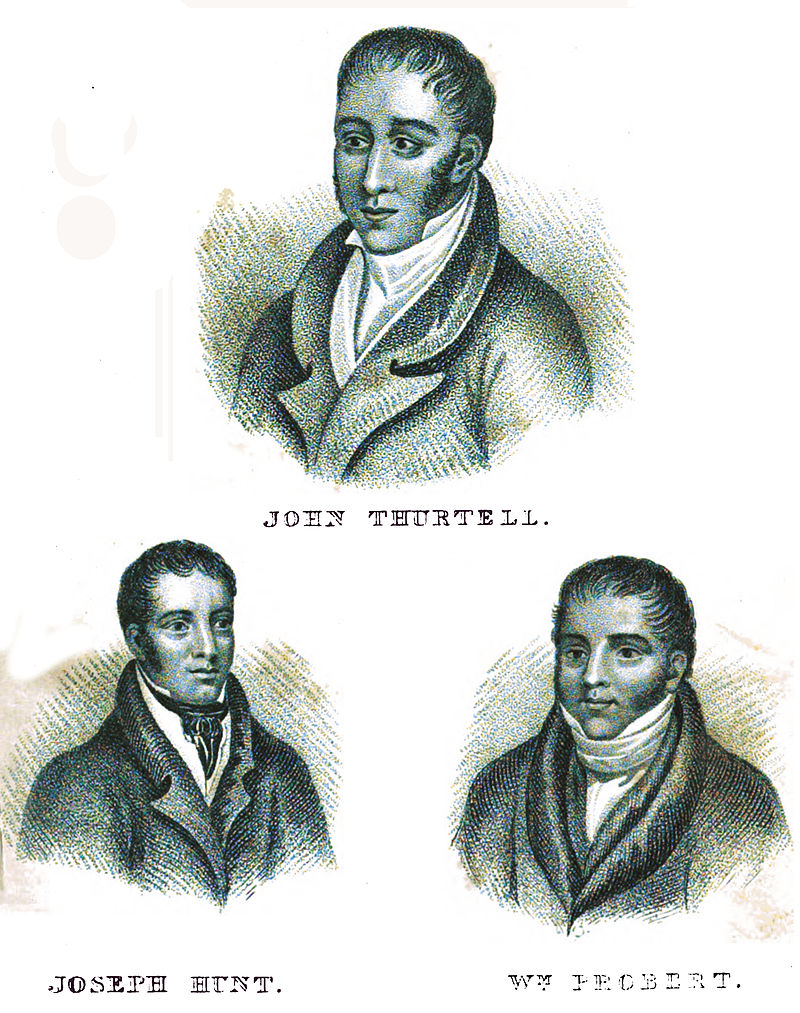
However, the hiding place was judged unsafe so they moved the body to a different pond in nearby Elstree before enjoying a hearty meal of pork chops and ale at the Waggon and Horses pub.
After killing Weare, Thurtell had stashed the gun and the knife in a hedge and was later unable to find them in the dark when he returned for the body.
The next morning a gang of roadmenders discovered a pool of blood on the roadway and found the weapons in the hedge, and promptly alerted the authorities. Meanwhile Weare’s friends soon raised the alarm when he failed to appear after his weekend away. Since Thurtell had made the mistake of hiring a gig drawn by a particularly distinctive grey horse with a white face, several people remembered seeing it and its occupants were thus soon identified.
Thurtell, Probert and Hunt were all charged with murder and they were tried at Hertford County Court.
Despite Hunt having cooperated with the authorities and even showing them where the body was, it was Probert who was offered the chance to save himself by giving evidence against the other two.
The trial attracted huge amounts of publicity to the point where questions were raised about whether it would impact the defendants’ right to a fair trial.
Rather alarmingly for those involved, the construction of the gallows had already begun before the trial, raising further questions.
The trial judge, Mr Justice Park, is reported to have said: “If these statements of evidence before trial which corrupt the purity of the administration of justice in its source are not checked, I tremble for the fate of our country.”

Regardless, he still allowed John Thurtell and Joseph Hunt to be convicted despite an incredibly eloquent defence by John Thurtell who tried to pass the blame on to his co-defendants, both of which were less good at public speaking.
John Thurtell was hanged on the 9th January 1824, aged 29 at Hertford Prison in front of a crowd of some fifteen thousand people. As he stood on the scaffold the prisoner governer a Mr Wilson said, “Good bye Mr. Thurtell, may God Almighty bless you” to which Thurtell replied, “God bless you, Mr. Wilson, God bless you.”
At two minutes past midday the hangman, one James Foxen, pulled open the trapdoor and his neck broke “with a sound like a pistol shot” according to one contemporary account, although this seems rather unlikely, the noise was probably just the sound of the trapdoors crashing down.
Jack Thurtell’s body was sent to London for dissection at Surgeon’s Hall in accordance with his sentence. Even his public dissection attracted a large crowd, many of whom made away with various bits and pieces as souvenirs. Indeed as far as is known his skeleton remains in the possession of the Royal College of Surgeons to this day. A wax figure of him was displayed in Madame Tussaud’s for about 150 years, and since it was modelled by Madame Tussaud herself, his figure is believed to still be in storage.
At the time it was common for bodies to be dissected as part of the punishment for murder, before a replica waxwork of his body was made and displayed at Madame Tussauds for 150 years.
Joseph Hunt was also sentenced to death but thanks to his cooperation his sentence was downgraded to transportation to an Australian penal colony for life.
After serving his time he started a new life in the country and even became a police constable before his death in 1861.
William Probert was never punished for the murder, however, his involvement was widely reported in the newspapers and so he became a social outcast.
Unable to find work he resorted back to crime to support himself and his wife. But just a year later in 1825 and at the age of he was hanged in London for stealing a horse worth £25 from a relative.
The murder and trial attracted huge amounts of publicity that really put the area on the map if perhaps not in a good way.
The actions before the crime itself were heavily reported on which even led to plays and books being written based on the incident.
Following the murder, the trio went to dine in the Waggon & Horses pub and they instructed Mrs Probert to cook some pork chops for supper.

The men had a joyous evening where they sang several songs and Probert presented his wife with a gold chain he had taken from Weare’s body.
A street ballad at time – The Hertfordshire Tragedy – remarked:
Although his hands were warm with blood,
He down to supper sat,
And passed the time in merry mood,
With drink and songs and chat.
The case was so famous that it is referenced by Robert Louis Stevenson and a few years after the event like many others, Sir Walter Scott visited the murder location a few years after it took place. In his diary he wrote of the “labyrinth of intricate lanes, which seemed made on purpose to afford strangers the full benefit of a dark night and a drunk driver, in order to visit Gill’s Hill, famous for the murder of Mr. Weare . . . The principal part of the house is destroyed, and only the kitchen remains standing. The garden has been dismantled, though a few laurels and flowering shrubs, run wild, continue to mark the spot. The fatal pond is now only a green swamp, but so near the house, that one cannot conceive how it was ever chosen as a place of temporary concealment for the murdered body. The dirt of the present habitation equals its desolation . . . [t]he landlord had dismantled the place because no respectable person would live there.”
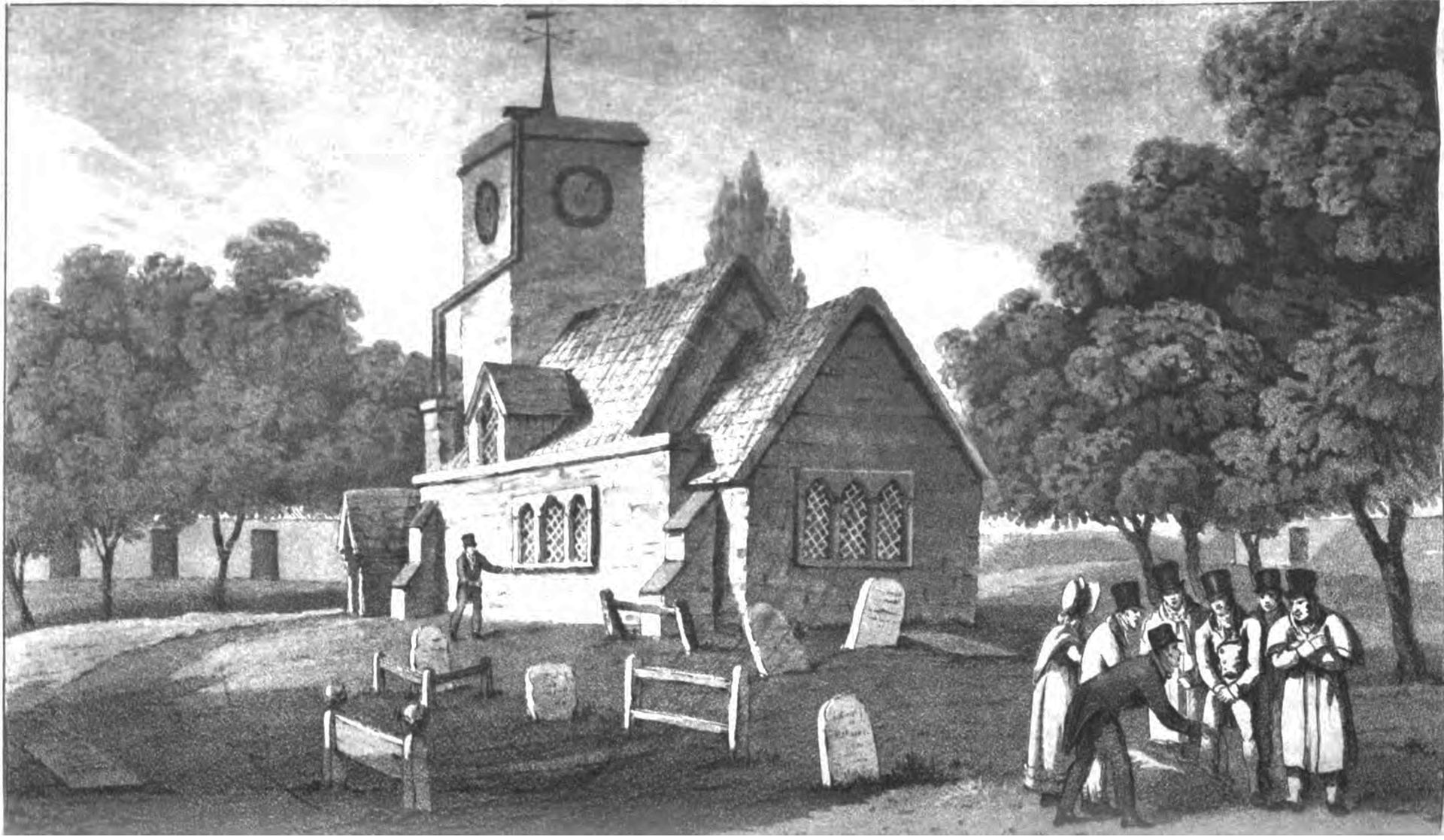
William Weare was buried in St Nicholas parish church, Elstree.
Just two years later, another rural murder shocked the country and you can read it at https://stephenliddell.co.uk/2019/11/18/visiting-the-home-of-joseph-hedley-whose-murder-in-1826-shook-the-world/
Of course you can’t talk notorious murders in these parts without thinking of the East End of London so why not head back to 1811 with the Radcliffe Highway Murders.

 Stephen Liddell
How funny that Joseph Hunt went from convict to constable. There’s hope for all!
From true crime to the fictional variety, if your on Netflix you might like ‘Bodies’ . It’s got history and murder and a complex plot twist involving time travel. Think the London/East End historical aspect might appeal to you!
LikeLiked by 1 person
Thankyou for the tip-off. I will check that out. I think I saw them filming this a year or two ago, they couldn’t say what it was but it sounds very similar and matches the costumes and street setup they had.
LikeLike