There is a lady on the tube seat opposite me who has a laugh that sounds like a heavy wooden chair being scraped on a wooden floor.
Every time a new person gets on the train they are alarmed by her laugh!
She’s busy chatting away to her boyfriend who is very somber and serious. A bit of me wondered how he could put up with that incesssnt laugh and then after 20 minutes I found out.
He has a laugh that sounds like an elephant trumpeting. Surely a match made in heaven!
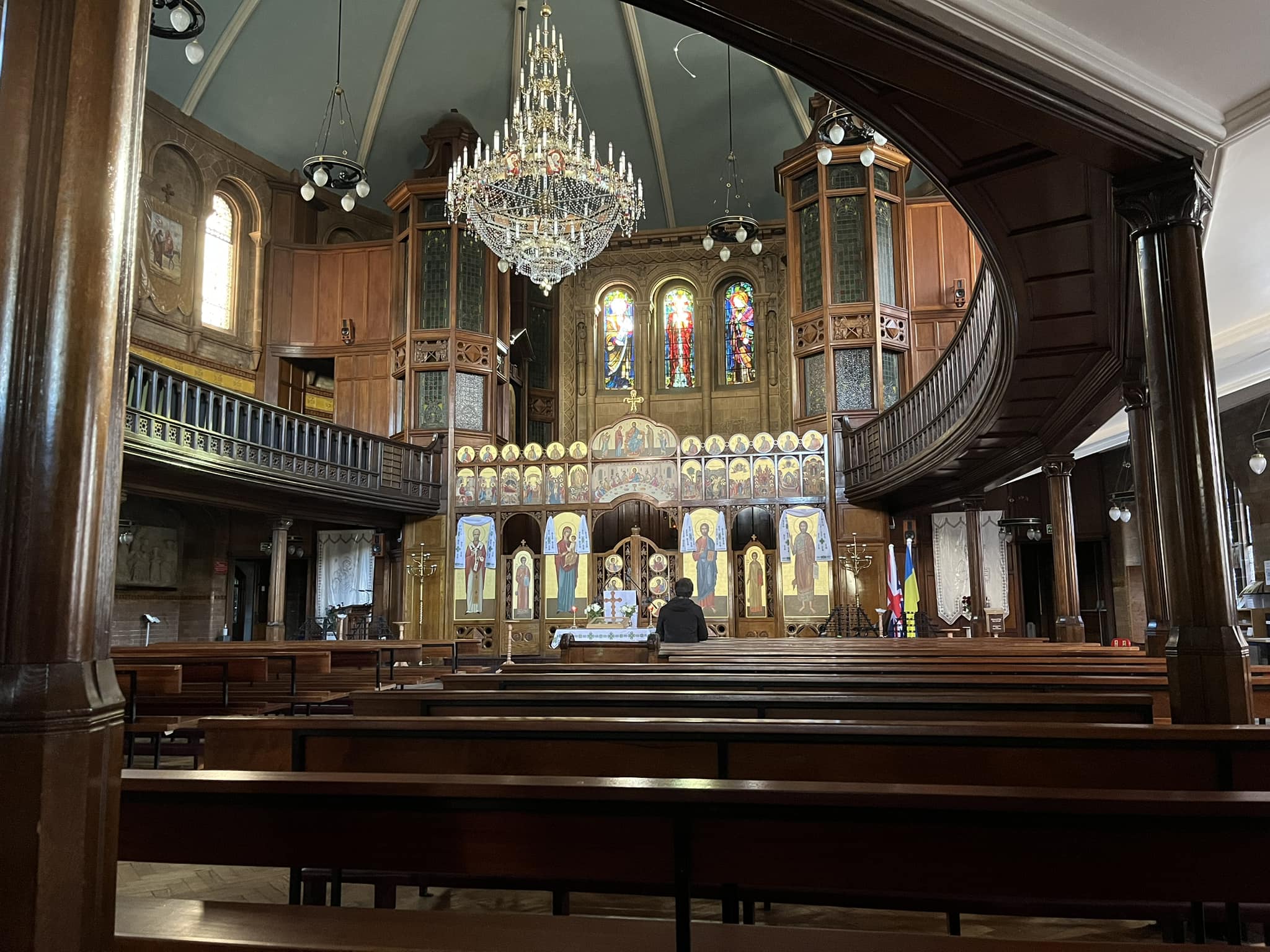
Talking of heaven, recently I found myself all but locked in a beautiful Ukranian Cathedral in London. Specifically the Ukranian Catholic Cathedral of the Holy Family. It’s not the first time I’ve been locked in somewhere on my usual pre-tour amblings and this time a priest had the good grace to inform me of how to get out.
I’m not Ukranian or even Catholic but have been visiting this cathedral for several years now. After an often arduous commute and before meeting my tourists for the day, if their hotel is within half a mile or so walk from the place then I invariably come here for a sit down and hot drink. I’m something akin to a church cat or perhaps mouse. Not really doing anything but somehow part of the furniture.
It’s a beautiful building and hasn’t always been a Ukranian Cathedral. The beginnings of the King’s Weigh House Church, (the original name of the Cathedral) is to be found in the Free Chapel (that is, free from Episcopal jurisdiction) founded by Queen Matilda in 1148, in the vicinity of the Tower of London. With the passing of the Act of Uniformity in 1662, the greater portion of the congregation seceded from the Established Church and became an independent congregation.
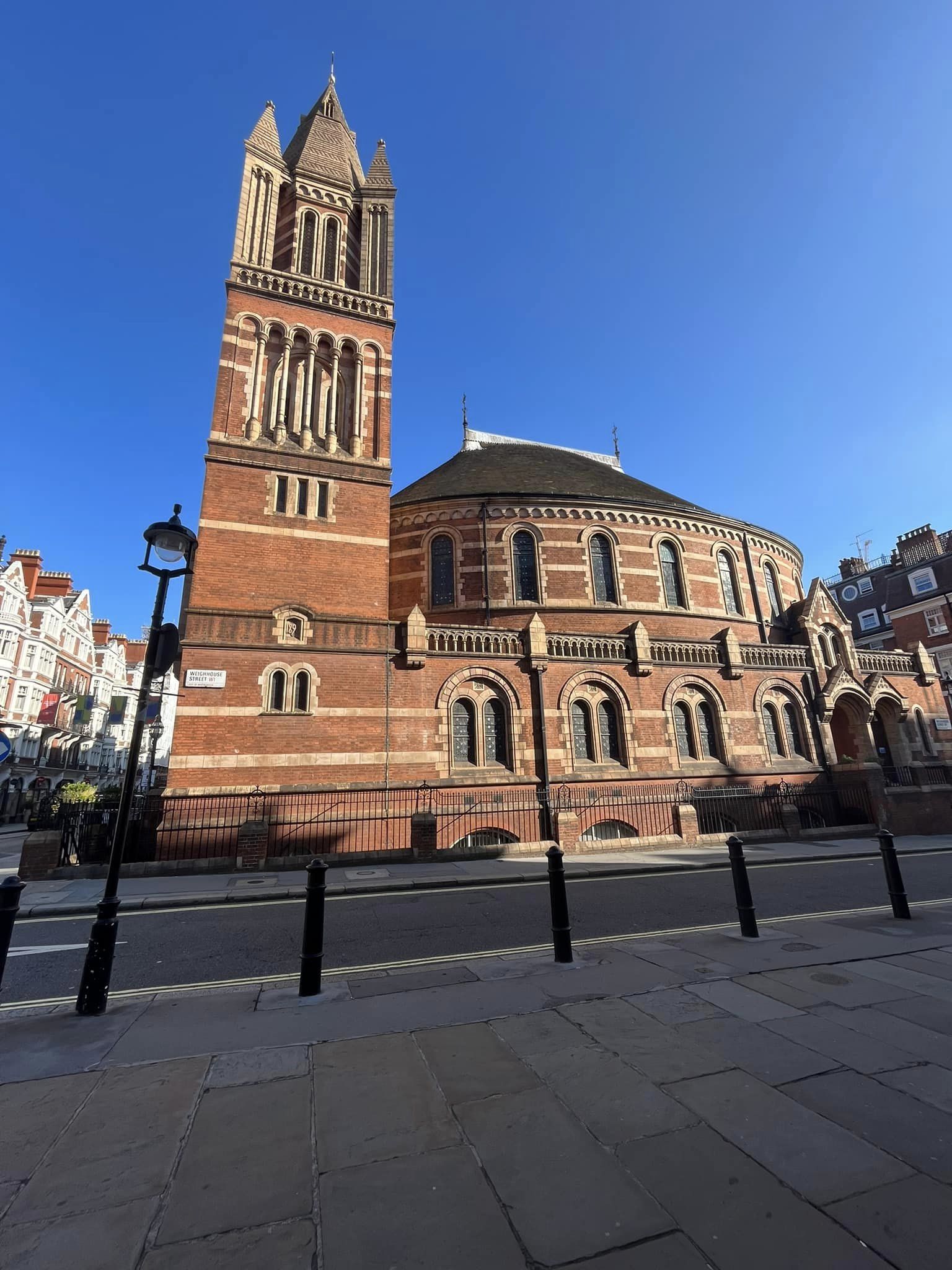
Soon afterwards they began to meet in an ancient building in Cornhil, where foreigners’ goods on entering London were compulsorily weighed on the King’s Beam “for the greater security of the citizens.” Hence the name of the place, King’s Weigh House. The name was retained when the people built their own chapel on the site of the present Monument Station. After more than two centuries occupying various sites in the City, the church moved to the West End and amalgamated with a similar congregation in Robert Street (later renamed Weigh House Street), off Oxford Street, where the present church was built in 1889-91.
The architect of the Natural History Museum, Alfred Waterhouse, designed the church. The Ukranian Cathedral is a masterpiece of compact planning with an oval nave and gallery, the Cathedral seats 900. The round-arched Italianate classical design, using hard brick and buff terracotta, is typical of Waterhouse and is evident also in his better known Natural History Museum.
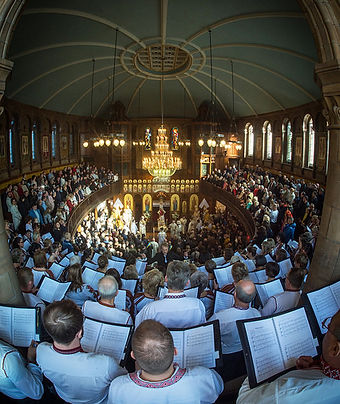
The incredible domed ceiling, a World War II casualty, has been restored. Sir John Burnet, also an architect of many London buildings, adapted the chancel and produced the terracotta framework of the east end, with figures of the Four Beasts of the Apocalypse. He also designed a towering organ which sadly is no more.
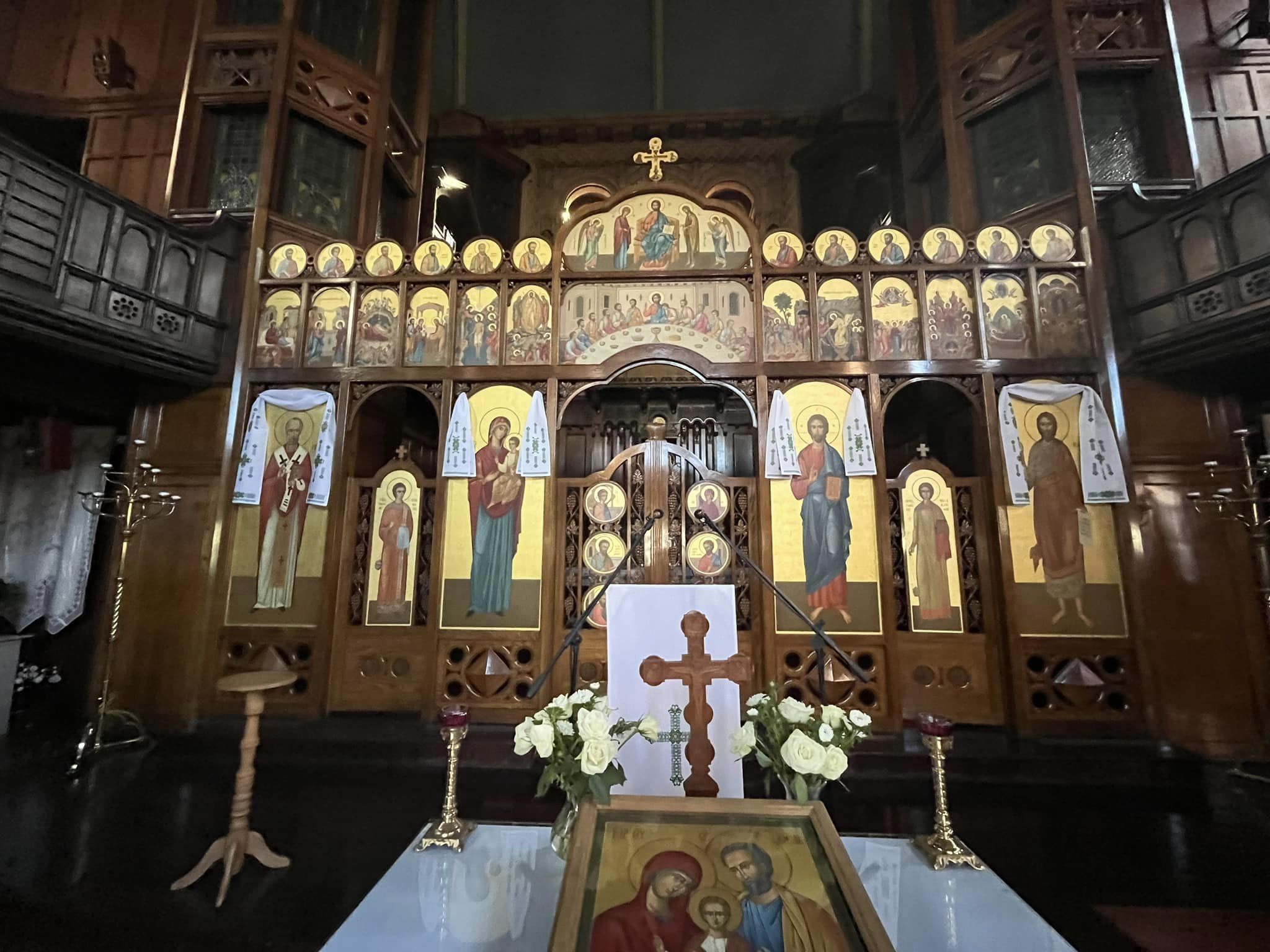
Anning Bell designed the east window glass; the reredos (screen at the rear of the alter) was designed by A. E. Henderson in 1927 and carved by Allan Wyon. Of Waterhouse’s original details the embossed column facings, the curved wooden gallery front, and the Art Nouveau window patterns are especially noteworthy. On the ambulatory wall near the northeast entrance is a stone carving of the Holy Family, salvaged from the Saffron Hill Church, the original place of worship of the Ukrainian Catholic community in London.
In 1940 the building suffered serious bomb damage resulting in the building being requisitioned as a fire watching centre and rest centre. It was not until 1953 that the King’s Weigh House was fully restored, by which time the congregation had almost totally declined.
After several years as the Protestant Chapel for members of the United States Navy stationed in London, this historic church closed and its future seemed very uncertain. Dust gathered on the steps and the King’s Weigh House looked forlorn and unwanted.
However, in June 1968 it entered upon a completely new phase of existence, having been acquired on behalf of Ukrainian Catholics in this country, under the newly enthroned Bishop Augustine Hornyak OSBM for their Cathedral of the Holy Family of Exile. Necessary internal changes were made in order to adapt it to the Byzantine worship but the structure of the King’s Weigh House is the same, its red brick apse glowing warmly in a fashion that always lifts my heart when I glimpse it from round a corner.
I stayed for a while and sat at the back enjoying my drink and solace in what is my usual seat. I try and keep out of the way and sometimes cause a little confusion amongst London Ukranians who don’t expect a local to visit. One might wonder why I don’t look Ukranian but as politically incorrect as some might think it to be, I don’t!
After a while a priest came to tell me they were locking up for a while and how to exit the building through a less than obvious doorway. You certainly don’t get this in St Pauls or Westminster Abbey!
My tourists that day were staying in a VERY expensive hotel, one of those that have someone in the toilets who give you towels or sprays and expect a little something in return. It’s all a bit annoying and a faff and to me a waste of money as I can generally go through life drying my own hands. I thought surely the Cathedral must have some toilets somewhere so on my way I sought them out.
It involved doing a little exploration and it was an interesting place to say the least. I won’t put many photos that give anything away and it is only interesting in the fact it is Ukranian in the middle of London.
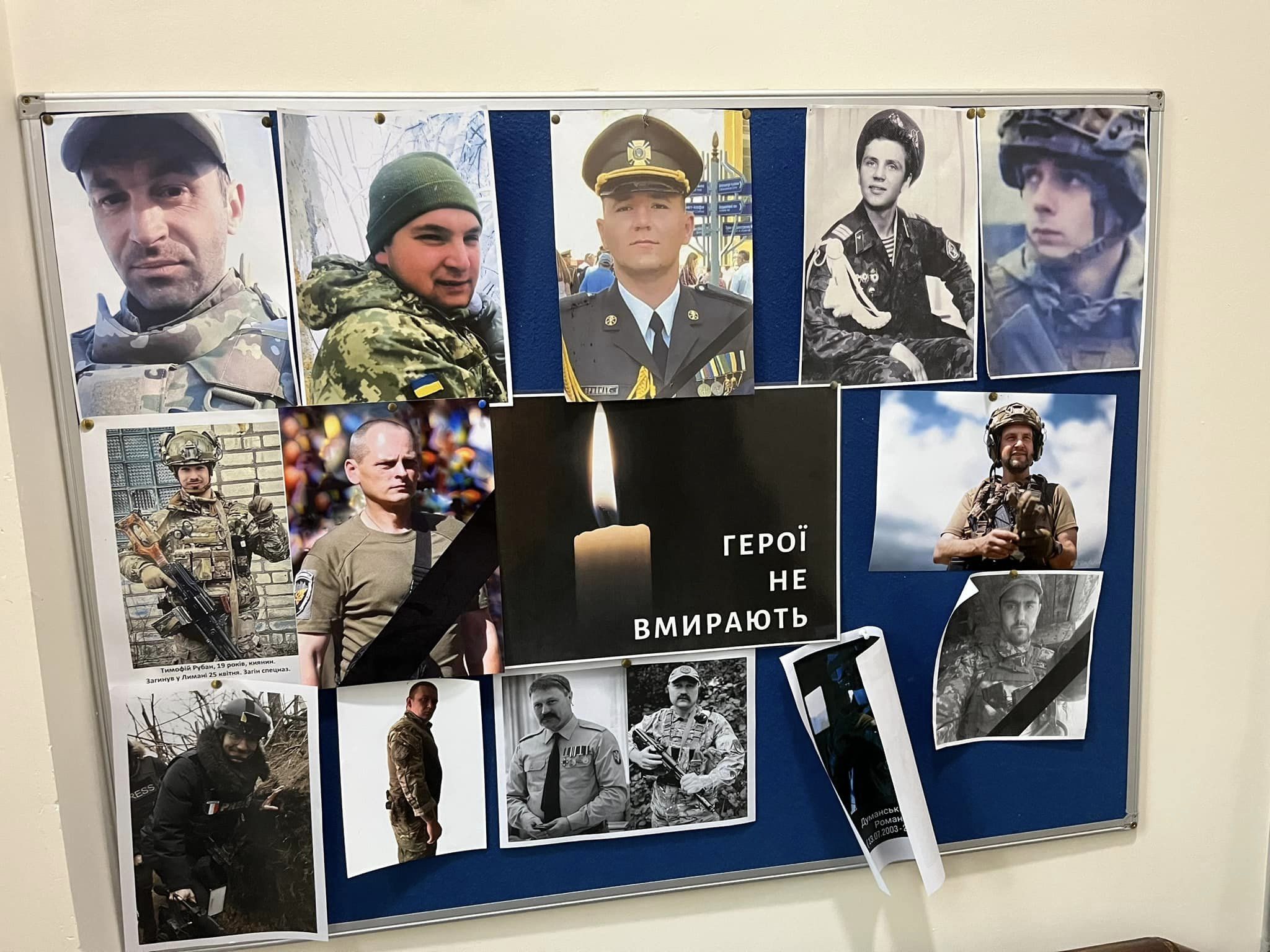
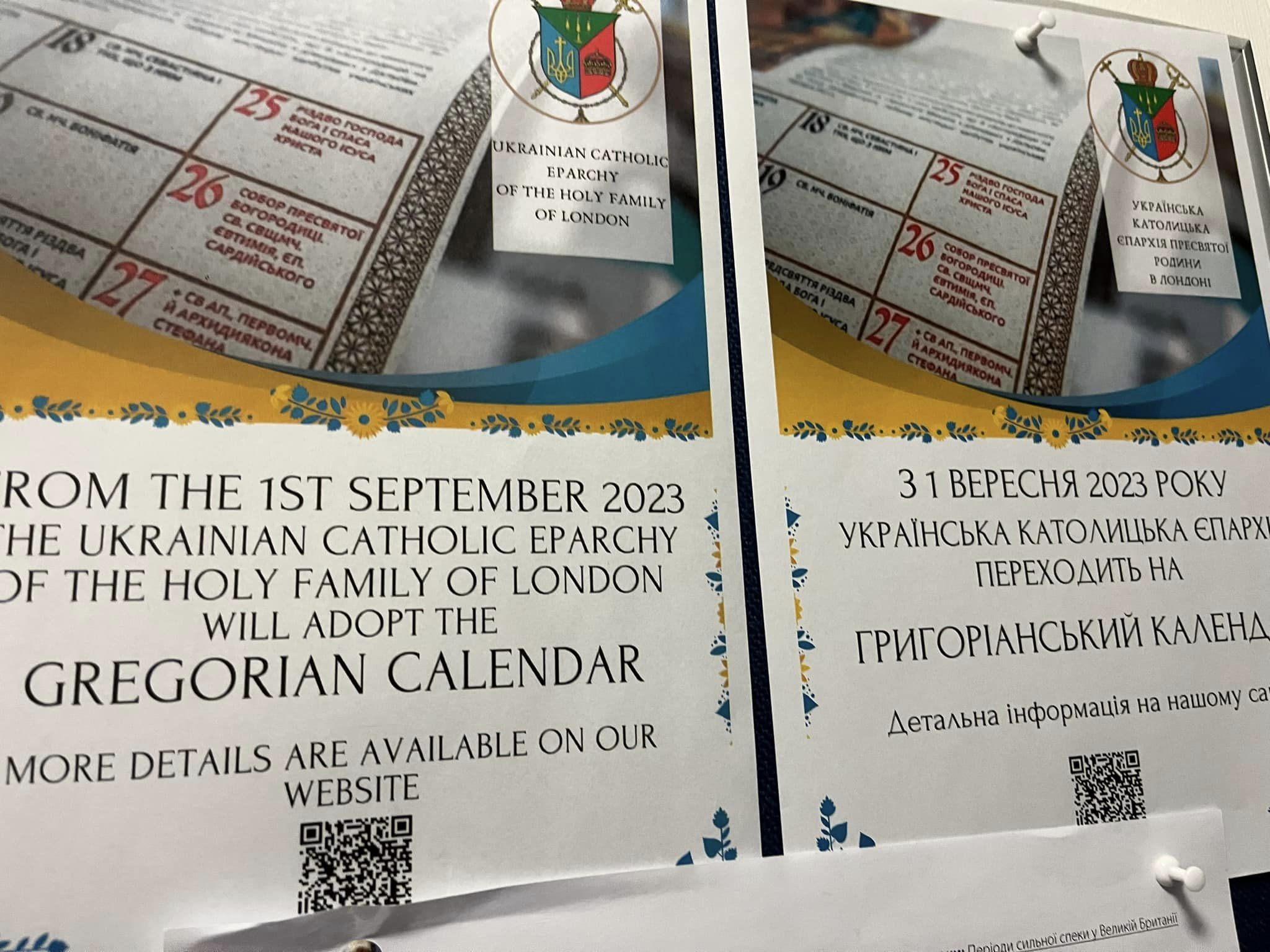
I found the toilet rather hidden away below ground level and was grateful to avoid frittering away a pound or two at the hotel so instead gave a little something to my beautiful Ukranian refuge just a short walk from Oxford Street.
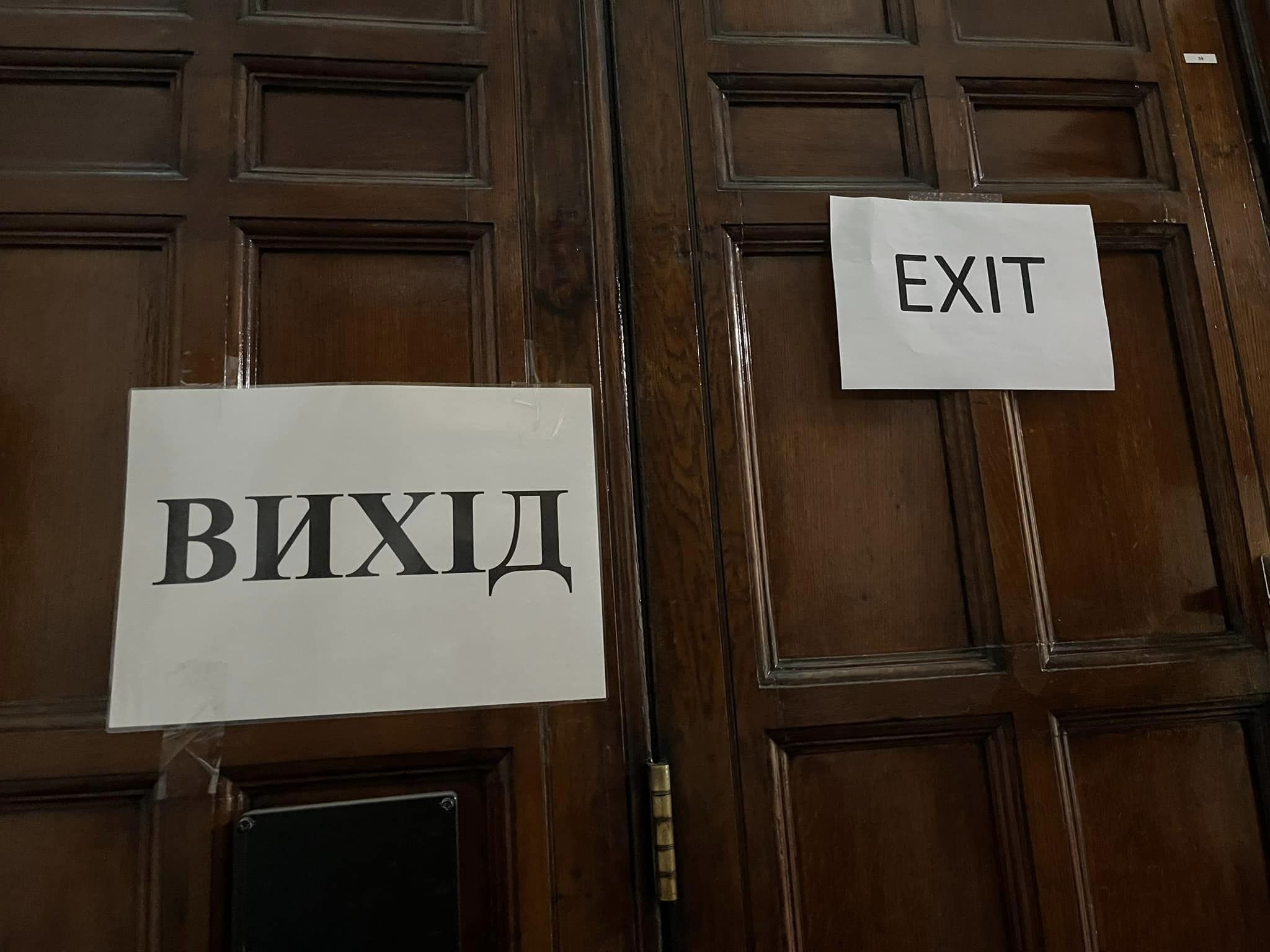
If you want to get away from the busy shops of Oxford Street, it’s all worth seeking out. Everyone there is very welcoming, even if like me you just sit in the corner at the back like a Hobbit.

 Stephen Liddell